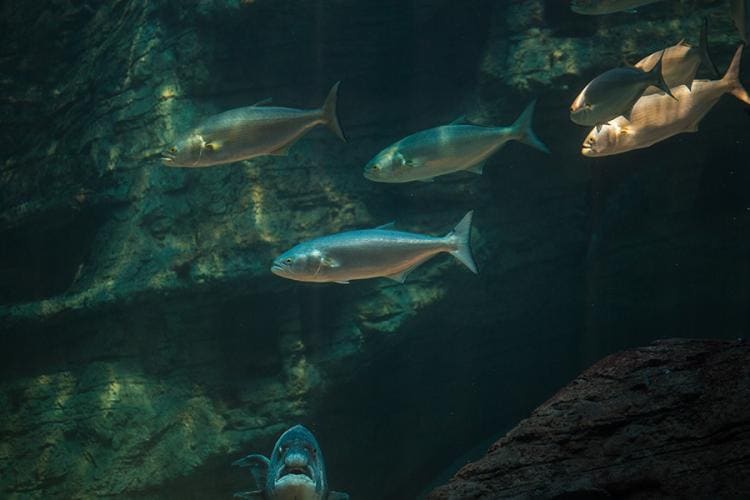
Hickory shad & American shad — Ocean City area
Hickory shad are a spring anadromous run that sends anglers toward Delmarva tributaries with silver sides and a deep fork. Most weeks are regulation-first and often catch-and-release under modern management, so verify rules before you fish.
Not in our directory yet? Browse the committed Charter Boat Directory listings grid (marketplace crosswalk).
Editorial only. Shad management straddles state and coastwide addenda. Read Maryland DNR and Atlantic States Marine Commission / NOAA-linked references for the current year before you build a trip. Many spring scenarios are C&R or gear-restricted—your grandfather’s “everyone kept a creel” story may not be legal on your date. Official portals for the public stack; DNR/NOAA for the rule text.

Hickory shad
Hickory shad (Alosa mediocris) is the smaller, earlier cousin in the spring gossip: scutes along the belly, a dark shoulder spot, and a fight that feels oversized on light darts. Anglers on the Delaware River system often compare notes with Jersey’s Raritan culture—your MD/DNR rules still apply where you are standing that day, not a forum thread.
American shad
American shad (Alosa sapidissima) is larger, with a clear lateral line in adults and a “founding fish” conservation history in the broader Atlantic. If you are lucky enough to meet one, treat it like a public trust: wet hands, quick support, and a release plan if retention is not clearly legal in your pocket digest.
Darts, floats, and courtesy
- Casting darts, spoons, and shad-appropriate jigs matched to a river’s wading depth; leave trash and braid snarls out of a spring that other families use for photography walks.
- Parking, access, and private land in trib corridors—if the sign says no, the fish will still be there for someone who read the sign.
- Water temperature and hypoxia: fight fish quickly in warm marginal trib ends; a hero photo is not a license to exhaust a broodstock fish.
Ocean City as a home base
Many spring shad chasers drive to trib access for a long morning, then return to the island for family dinner—plan the bridge buffer the same way you would for a charter meet time on travel tips.