Fireworks ear protection: kids need it more than you think
Elena Vasquez on fireworks ear protection for kids in Ocean City—why boardwalk shows are louder than vacation memory suggests, and how foam plugs saved a Fourth of July night.

I’m Elena Vasquez. Hoboken mom, project coordinator brain, sucker for Boardwalk fireworks until I watched my younger kid flinch at the first burst and realize we had brought snacks but not ear protection.
Ocean City fireworks are part of the postcard—summer nights, crowds, the sky over the ocean. They are also loud in a way vacation memory edits out. Kids’ ears are not miniature adult ears. What feels exciting to you can feel assaultive to a six-year-old three blocks from the barge.
The habit we keep now: fireworks ear protection for kids, decided and packed before the event—not negotiated on the sand when the first shell goes up.
Start with events for schedules and crowd notes. Come back here for the small gear that separates “magic night” from “covering ears and crying.”
Mid-week is when fireworks ear protection shows up
Fourth of July week, beach blanket set up early because everyone told us to. We had glow sticks, fruit snacks, and the smug feeling of a parent who found parking before six. Classic Ocean City event energy: blankets creeping closer, speakers testing, kids vibrating with anticipation.
The first fireworks burst lit the sky. My older kid yelled “again!” My younger kid folded in half like the sound was a physical push. Hands over ears. Face buried in my lap. By the third sequence she was done—not tired, done. The rest of the show happened to us, not with us.
Walking back through the crowd afterward, every subsequent pop made her flinch. We left early. The older kid felt cheated. I felt like I had brought one kid to a concert without checking the decibel chart.
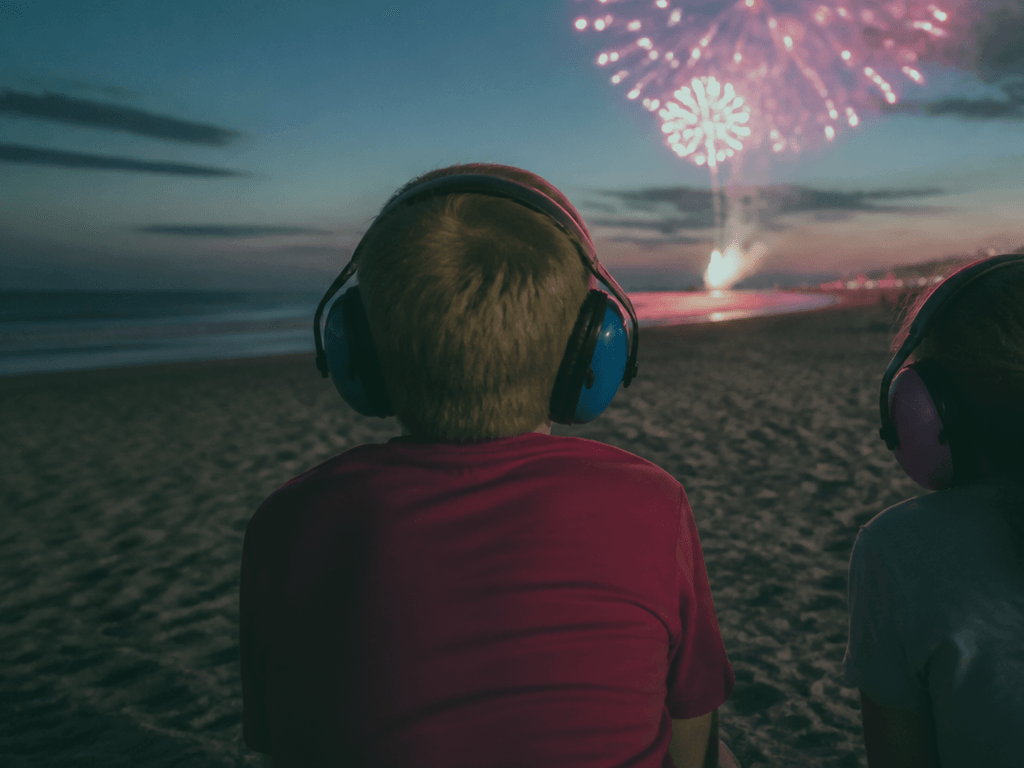
The next summer I bought kid-sized foam earplugs and over-ear muffs—both, because kids are picky about feel. We practiced wearing them at home for thirty seconds so they were not a surprise. We also picked a spot slightly farther from the loudest reflection zones—not hero front row, not missing the show.
Same fireworks. Different kid experience. She watched the whole display with muffs on, chin tipped up, actually seeing the colors instead of bracing for the boom.
The useful truth under fireworks ear protection
Fireworks produce sharp impulse noise—brief, intense, repeated. Adult ears tolerate it with excitement. Many kids tolerate it poorly, especially:
Younger children with narrower ear canals and less ability to “get used to it” mid-show.
Sound-sensitive kids who already struggle with arcade noise, motorcycle bursts on Coastal Highway, or thunder.
Close proximity setups where beach blankets migrate toward the water and the reflection off buildings amplifies sound.
Multi-night weeks when you might attend more than one show—Air Show weekend, holiday extras, pier-adjacent bursts you did not plan for.
This is not fearmongering. It is proportion. You wear sunscreen for a long beach day; ear protection for a twenty-minute fireworks show is the same instinct—reduce avoidable intensity.
Follow product guidance for age limits. Supervise so plugs and muffs stay seated. Nothing smaller than recommended for infants without professional advice.
Stage fireworks ear protection before the day gets loud
Before any events night that includes shells:
- Buy kid-rated muffs or foam plugs before the trip. Local stores sell out on peak holiday weekends.
- Let kids choose color/fit at home. Ownership reduces fight-at-the-blanket drama.
- Pack a spare set. Plugs fall in sand. Cousins forget.
- Pick distance deliberately. Front row is not mandatory for a good view on a flat beach skyline.
- Cover babies’ ears with approved protection and consider skipping the loudest zones entirely.
- Plan an exit if it fails. Some kids will never love the noise. A partial show beats a traumatic full show.
Pair with medical awareness if a child has ear tubes, hearing devices, or sensory processing needs—ask your clinician what protection fits.
Local friction around fireworks ear protection
Crowd compression. Blankets creep. You arrive with space and end up closer than planned. Muffs matter more when the crowd tightens.
Multiple noise sources. Boardwalk speakers, car horns on exit, random firecrackers on side streets—protection helps on the walk home too.
Air Show and holiday stacks. Event weeks compound noise exposure. Reuse the same gear across nights.
Hotel balconies. Some families watch from balconies facing the bay. Glass reflects sound. Protection still applies.
The non-negotiables for fireworks ear protection
- Forcing a terrified kid to stay for the full show. Exit early without shame.
- Adult plugs only. If kids are present, plan for kids.
- Loose plugs in toddlers’ hands. Choking hazard—use fitted muffs when appropriate.
- Assuming one bad year means forever. Retry with better gear and better placement later.
If your crew already owns muffs and picks sensible distances, keep doing that. This is for the families who brought glow sticks and learned the hard way.
Thursday truth for fireworks ear protection
- Kid muffs or foam plugs, packed before event week
- Spare set for sand losses and cousin forgetfulness
- Spot picked with exit path—not just best photo angle
- Practice wear at home once—thirty seconds counts
- Events schedule plus medical map if sensory needs apply
The takeaway on fireworks ear protection
Fireworks should look like wonder, not like something to survive. Kids need ear protection more than vacation nostalgia admits—pack it before the first burst, not after the first flinch.
Next step: order or buy kid muffs before your next Ocean City event week. Let your kids pick the color. Then go see the sky without covering ears in your lap.
Also on OCEANCITY.MD: events · medical · Elena Vasquez · Beach Blog