Beach Blog · Plan a fishing day
Fishing pier fee and etiquette basics: pay, space, and no rainbow casts over kids
Ryan Shaw on paying the pier fee, sharing rail space, and why a sideways cast over a family with toddlers is how you lose the morning—and the respect of everyone fishing beside you.

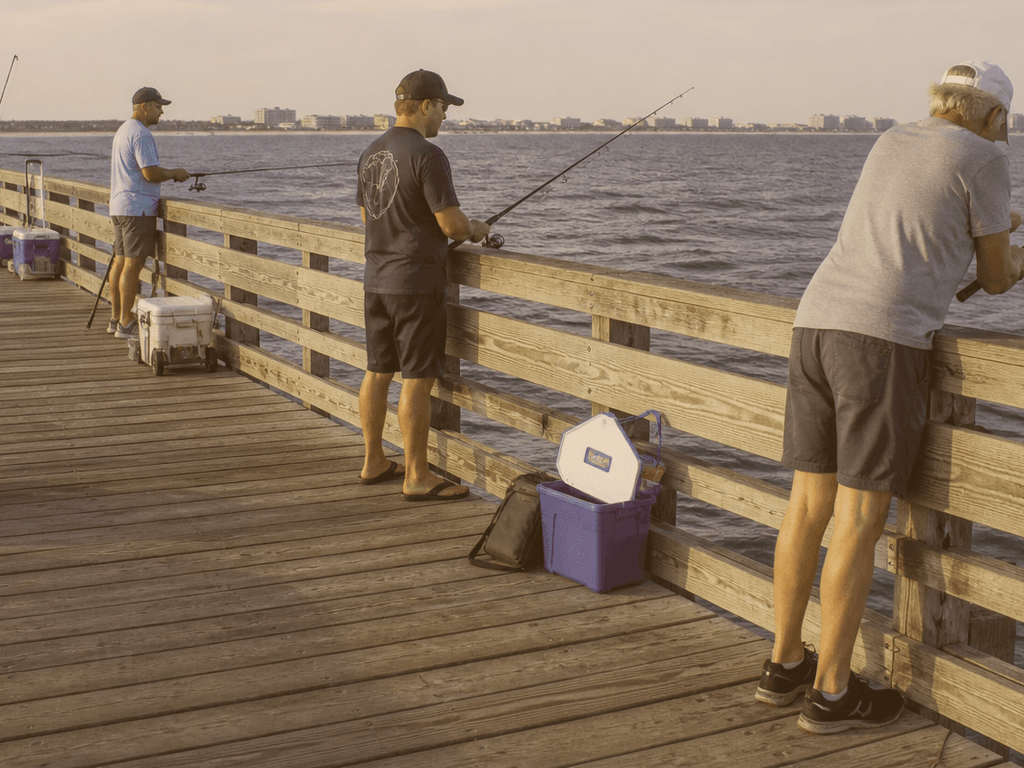
I’m Ryan Shaw. West Ocean City local, youth coach, dawn marina habits. I’ve written the regulation pages and the tide charts. This is the pier morning—the one where a family from Pennsylvania almost learned about fishing courtesy the hard way, and a regular named Vic saved them from becoming a cautionary tale.
Making fishing pier fee etiquette work here
It was not even crowded. Mid-July, but a weekday, which on Ocean City piers means you can still find six feet of rail without negotiating like it’s a holiday weekend checkout line. I had my coffee, a bucket of bloodworms from the shop, and a spot near the middle where the current does something useful without requiring hero casts.
The family showed up ten minutes later: dad with a combo rod still in the wrapper, two kids under ten, mom carrying snacks and the patience of someone who had already been asked “are we there yet” in a parking garage. They stopped at the gate. Dad patted pockets. No pier pass.
That part matters more than newcomers think. Ocean City’s fishing piers are not anonymous beach sand. You pay. You get a pass or a wristband depending on which pier you’re on. The fee keeps the structure maintained and tells the staff who’s supposed to be on the rail after hours. Dad went back to the booth. Good. The morning was still salvageable.
What almost wasn’t salvageable happened when he returned, found an open stretch of rail, and did what a lot of first-timers do: he claimed space by spreading sideways. Cooler on the deck. Three rods set at angles like a fan. Kids running behind the rail to look at crabs. And then—the rainbow cast.
You’ve seen it. Maybe you’ve done it. Full overhead sweep, line arcing ten feet to the left over the guy who’d been there since five a.m., then ten feet to the right over a grandmother teaching her grandson to hold a rod still. The hook didn’t connect with flesh. It connected with Vic’s temper, which has been seasoning on this pier since before that dad learned to drive.
What your crew needs for fishing pier fee etiquette
Pier fishing etiquette is not maritime law written in calligraphy. It’s shared space math. You bought a slice of rail. So did everyone else. Your cast lane is mostly in front of you, not above the heads of people who paid the same fee and got there earlier.
Pay first. Settle the pier fee before you walk out with gear. Have licenses sorted if Maryland requires them for your age and residency—our fishing regulations page exists because guessing is expensive.
Claim space honestly. One person, one primary rod lane unless the pier is empty and staff says otherwise. Coolers belong where feet won’t trip on them. Kids belong beside you, not weaving through other people’s lines.
Cast with neighbors in mind. Overhead casts have a place. So do sidearm pitches. The person down-rail should not need to duck because you’re practicing for a distance contest. If you’re teaching a child, start with a sinker and a short drop until the rod feels like a tool, not a helicopter blade.
Hooks are sharp; lines are invisible. That’s the whole safety argument. A rainbow cast over strangers isn’t bold. It’s how pier arguments start and how a vacation week gets a story nobody wants to retell at dinner.
Vic didn’t yell. He’d seen worse. He walked over, showed the dad where his arc should live, moved one rod to a safer angle, and said the sentence that pier regulars use like a blessing: “You’re fine. Just fish in your lane.”
The dad flushed. The kid asked if they were in trouble. Vic said no, you’re learning. Mom exhaled. The morning continued.
Our repeatable sequence for fishing pier fee etiquette
Ocean City piers have their own rhythm. Weekends fill early—sometimes before the coffee shop line on Coastal Highway. Shoulder season gives you room to spread out and still be wrong about casting. Summer heat turns the rail into a sun deck by eleven; shade and water aren’t soft extras, they’re how you keep kids from melting before the fish cooperate.
Fees vary by pier. Know which one you’re hitting—the inlet, the beach-side options, the structures that show up on your rental map with a pin and a prayer. Pay at the booth. Keep the pass where staff can see it.
Species change courtesy. When blues are in and cutting gear, tempers shorten. When it’s a slow flounder morning, people talk. Either way, the rail belongs to everyone who paid.
Night fishing has a different tone. Lights, fewer families, more regulars who know your silhouette. Same rules. Quieter voices. More respect for lines you can’t see in the dark.
About fishing pier fee etiquette on a real Ocean City week
- Assuming beach rules apply. Open sand forgives wide casts. A pier does not.
- Letting kids “explore” behind other anglers. Exploration is great. Line tangles and hook snags are not.
- Skipping the fee because “we’re only staying an hour.” The hour isn’t the point. The infrastructure is.
- Casting before you’ve looked left and right. Three seconds of awareness beats one apology tour.
- Treating the pier like a photo set. It’s a working space. The background is other people’s mornings.
I write for visitors who want Ocean City fishing to feel welcoming, not territorial. Most regulars want you to succeed. They also want you to notice that the person next to you has been standing in the same spot since before your alarm went off.
Quiet ways fishing pier fee etiquette still fails
Before we step on the rail, I say it out loud with my crew—nieces, nephews, the occasional buddy who thinks pier fishing is “just like the lake”:
- Pass and license handled at the gate.
- Pick a lane. One rod active unless the pier is empty.
- Look before every cast until it’s habit.
- Kids stay in my shadow until they earn a longer leash.
- If someone offers advice without sneering, take it. Vic types are worth their weight in bloodworms.
Our fishing hub covers species and seasons. Fishing planning helps you pack shade, bait, and an end time. This story is the social layer—the one that keeps the pier from turning into a comment section with hooks.
The takeaway on fishing pier fee etiquette
Pay the fee. Fish your lane. Cast like the family beside you matters—because they do, and because the pier remembers who made the morning easier.
Next step: before your first cast on an Ocean City pier, pause, look both ways, and ask yourself where your line will live. Then enjoy the part that can’t be checklisted—the tug, the salt air, and a regular nodding you into the rhythm of the rail.
Also on OCEANCITY.MD: fishing planning · fishing · fishing regulations · Ryan Shaw · Beach Blog











