Keep a throw rope in the boat day bag—reachable, not buried
Drew Nolan on staging a throw rope (throw bag) in your Ocean City boat day bag where any adult can grab it in one move—before somebody is in the water and the cooler is in the way.

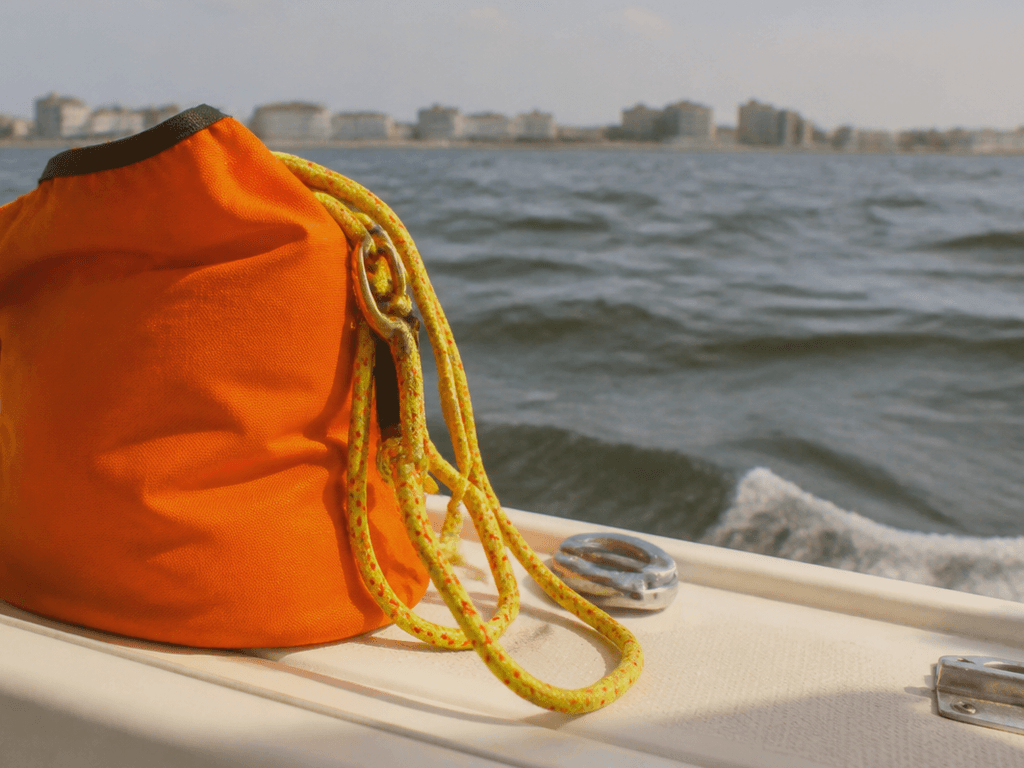
I’m Drew Nolan. Lewes, Delaware. Marine electronics tech by day, recreational boater always. “Captain” is a nickname from people who have watched me fix their plotters—not a license to lecture you into a panic. I do care about one boring habit that keeps a bay day from turning into a scramble: put a throw rope in the boat day bag, and stage it where any adult can grab it in one move.
Not under the cooler. Not behind the towel pile. Not “somewhere in the console” that only the person who packed remembers.
If you are still building your water-day systems, start with boating safety, then come back here for the piece of kit that only matters when somebody is already in the water and every second feels longer than it should.
What a throw rope actually is
A throw rope—often a throw bag—is a floating line packed in a bright bag so you can toss it toward a person in the water and haul them closer without becoming a second victim. It is not a climbing rope fantasy. It is not a ski tow. It is a short-range rescue tool for the moment somebody slips off the swim step, drifts from an inflatable, or loses the grip on a tube handle while the boat is still figuring out what to do next.
On Ocean City and Assawoman Bay days, that moment is more common than the brochure admits. Busy weekends put a lot of boats, a lot of wake, and a lot of casual swimming in the same shallow-looking water. The postcard shows calm glass. The Saturday afternoon shows traffic, chop from every direction, and a cooler lid that somehow became a seat.
I am not writing operating instructions for an emergency. Use official guidance, your vessel’s equipment list, and local rules. Treat this as a staging habit from a second-home boater who would rather look slightly over-prepared than invent a plan mid-shout.
The Saturday that taught me “reachable”
We had a soft morning planned: short bay loop, snacks, maybe a float if the wind stayed honest. Classic second-home optimism. Gear was “on the boat,” which is how people say “technically present.”
Someone went in for a quick cool-off near the stern. Not dramatic. Not far. Then a little more wake than expected, a little more drift than anyone had budgeted, and the tone on deck changed from vacation voice to work voice. We needed a line in the water. The throw bag was on board. It was also buried under sunscreen bottles, a dry bag of phones, and the “just in case” sweatshirts nobody wears until the ride home.
We got the person back. Nobody made the evening news. But the lesson stuck harder than the salt: a throw rope you cannot reach in one move is decoration.
That is why I talk about a boat day bag. Not a mystery tote with every gadget from the marine aisle—just the few items you stage where hands can find them without a scavenger hunt. For me, the throw bag sits with the obvious safety kit: PFDs fitted and assigned, a whistle where it belongs, and the throw rope somewhere an adult who is not the “boat person” can still grab it.
How we stage it now
Before we leave the slip—or before a rental briefing ends and everyone starts photographing the skyline—I do a thirty-second reach test.
- Name the bag out loud. “Orange throw bag—here.” Point. Adults only need one clear sentence.
- Put it where the walkway is. Cockpit side pocket, open bin, or a clip point that is not behind the cooler. If you have to move two soft coolers to see it, you have buried it.
- Keep the bag packed and dry-ready. A throw bag works when the rope feeds cleanly. Tangled line under wet towels is how you discover friction at the worst time.
- Assign a second adult. The person at the helm may be busy. Someone else should know they own the throw if needed.
- Do not improvise with random dock line. Dock line has jobs. A dedicated floating throw rope is the tool for the person-in-the-water job.
Related planning that belongs in the same calm brain: match the outing to wind, tide, and daylight on boating, and keep Inlet humility when the ocean side looks prettier than it is safe.
Bay-day realities that change the packing
Ocean City boating is often a bay day with condo skyline in the background and weekend boat traffic in the foreground. That changes the throw-rope conversation in a few practical ways.
Swim-off-the-boat culture. People treat warm bay water like a pool with better scenery. Fine—until someone underestimates current, fatigue, or how fast a boat can drift when everyone is looking at a phone. Stage the throw rope before the first person gets in, not after the first person looks small against the wake.
Crowded water. More boats means more wake stacked from multiple directions. A person in the water needs a bright line and a calm crew more than they need a motivational speech about “everybody stay chill.”
Mixed experience crews. Second-home weeks often mean cousins, kids, and friends who boat twice a year. The throw bag is for them as much as for you. If only the most experienced person knows where it is, you have built a single point of failure into the day.
Heat and hurry. July and August punish improvisation. Shoulder season forgives a little more. Either way, stage the gear while patience is still high—before Coastal Highway traffic and “we’re already late” energy decide the packing order for you.
Quiet ways crews still fail the habit
- Buying the bag and never staging it. Ownership is not readiness.
- Hiding it “so kids don’t play with it” without telling adults where it lives. Kid-proofing should not equal adult-mystery.
- Skipping the brief because “we’re just going for an hour.” Short trips still have water.
- Turning a throw into a hero stunt. The goal is a line to the person and a controlled recovery—not a second person jumping in without a plan, flotation, or a clue.
- Letting the day bag become a junk drawer. If the throw rope shares space with half-eaten chips and spare flip-flops, it will lose the reach test.
I write for people who like Ocean City enough to protect the fun on purpose. If your crew already runs a clean safety brief and a visible throw bag, steal the reach test and ignore the pep talk.
Pocket list for the boat day bag
Keep this short on purpose.
- Throw bag / throw rope, staged and named out loud
- PFDs that fit the actual people on board (not the ones who “might come later”)
- Whistle where it can be used without a treasure hunt
- Basic first-aid and a dry place for phones
- One adult who owns “stop the boat / point / throw” language before anyone swims
- A return-time buffer so you are not rushing a recovery mindset into a dinner reservation
For the wider habit stack—briefings, local hazards, and not treating the Inlet like a shortcut—stay inside boating safety.
What I want you to remember
A throw rope is a small orange honesty check. If it is reachable, you respected the day. If it is buried, you assumed the bay would stay polite.
Next step: before your next Ocean City launch, put the throw bag where any adult can grab it in one move, say where it is once, and then go enjoy the part that cannot be checklisted—glass mornings, skyline in the distance, and a crew that comes back with the same number of people who left.
Also on OCEANCITY.MD: boating safety · boating · Drew Nolan · Beach Blog


