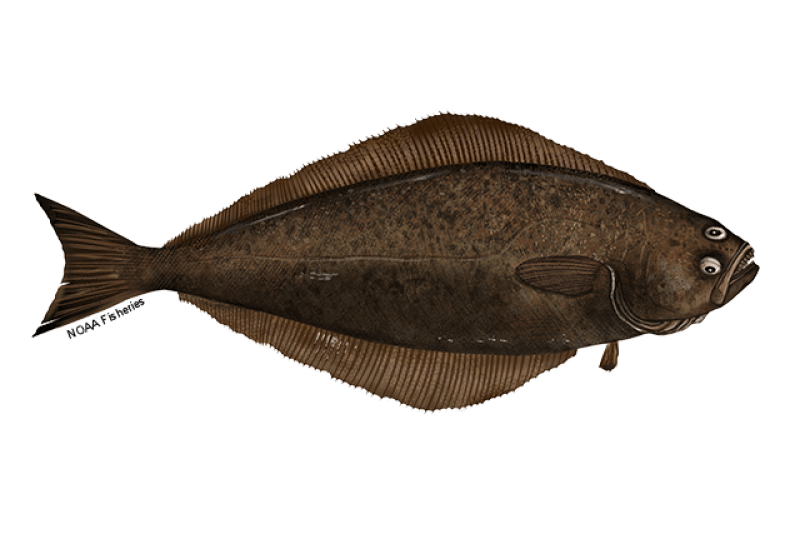
Hippoglossus hippoglossus , also known as Atlantic halibut, Halibut. Although populations are well below target levels, U.S. wild-caught Atlantic halibut is still a smart seafood choice because it is sustainably managed under a rebuilding plan that
Source: Species facts, status language, and imagery adapted from the NOAA Fisheries species profile (last updated 06/26/2026). Ocean City charter and Maryland
record notes are editorial orientation for OCEANCITY.MD readers. Always confirm current seasons, sizes, and
bag limits before you fish—rules change.
Although populations are well below target levels, U.S. wild-caught Atlantic halibut is still a smart seafood choice because it is sustainably managed under a rebuilding plan that allows limited harvest by U.S. fishermen.
Maryland record catch
Confirm whether Maryland DNR publishes an Atlantic state-record category for Atlantic Halibut on the current sport-fish record board.
Maryland’s Atlantic recreational seasons/sizes/creel summary does not publish a dedicated line for Atlantic Halibut. Verify COMAR, DNR public notices, and federal rules for your exact waters before you keep fish.
Rule
Maryland / applicable detail
Maryland minimum size
Not listed — no dedicated Atlantic Halibut line on the MD Atlantic recreational table
Maryland daily creel (bag)
Not listed — no MD species-specific bag for Atlantic Halibut
Maryland open season
Not listed on the MD Atlantic Ocean / Coastal Bays summary table
Verify
Check DNR eRegulations, COMAR, and NOAA for your date and coordinates before you keep fish.
Atlantic halibut can be distinguished from other right-eyed flounders by their large size, concave caudal fin, large, gaping mouth, and arched lateral line.
One of the largest fish found in the Gulf of Maine.
Biology Atlantic halibut is the largest species of flatfish in the world.
Atlantic halibut can reach up to 15 feet in length The largest Atlantic halibut recorded was taken off Cape Ann, Massachusetts, and weighed 615 pounds (eviscerated with the head still attached).
It likely weighed 700 pounds when it was alive.
It is a long-lived, late-maturing species that can live up to 50 years.
Appearance
Atlantic halibut is the largest species of flatfish in the world.
Atlantic halibut can reach up to 15 feet in length The largest Atlantic halibut recorded was taken off Cape Ann, Massachusetts, and weighed 615 pounds (eviscerated with the head still attached).
It likely weighed 700 pounds when it was alive.
It is a long-lived, late-maturing species that can live up to 50 years.
Average age at maturity is about 10 years.
Full grown females average 100 to 150 pounds, while males tend to be smaller.
Females are batch spawners, producing several batches of eggs each year.
In Canadian waters, Atlantic halibut spawn from late winter to early spring, while spawning can last through September for fish from Georges Bank to the Grand Banks.
Halibut food preferences vary by fish size: smaller fish (up to 12 inches in length) feed almost exclusively on invertebrates.
The proportion of fish in the diet increases as the fish grow in size until they feed almost exclusively on fishes when they reach approximately 31 inches.
Where They Live Range Atlantic halibut are found from Labrador and Greenland to Iceland, and from the Barents Sea south to the Bay of Biscay and Virginia.
In U.S. waters, halibut is most common in the Gulf of Maine.
Habitat Atlantic halibut are found in the temperate and arctic waters of the northern Atlantic.
They live in coastal to upper slope areas.
Atlantic halibut are demersal fish that live on or near sand, gravel or clay bottoms at depths of between 160 and 6,560 feet.
Fishery Management NOAA Fisheries and the New England Fishery Management Council manage Atlantic halibut.
Atlantic halibut, along with other groundfish in New England waters, are managed under the Northeast Multispecies Fishery Management Plan, which includes: Permitting requirements for commercial vessels.
Separate management measures for recreational vessels.
Year-round and seasonal area closures to protect spawning fish and habitat.
Minimum fish sizes to prevent harvest of juvenile fish.
Annual catch limits, based on best available science.
An optional sector ( catch share ) program can be used for cod and other groundfish species.
The sector program allows fishermen to form harvesting cooperatives and work together to decide when, where, and how they harvest fish.
A rebuilding plan to rebuild the stock to the target population level is in place with a target date of 2055.
Harvest Commercial fishery: In 2024, commercial landings of Atlantic halibut totaled 76,000 pounds and were valued at approximately $480,000, according to the NOAA Fisheries commercial fishing landings database .
Regulations include a minimum fish size and a limit of one fish per vessel per trip in federal waters.
Gear types, habitat impacts, and bycatch: Halibut are commonly harvested using trawl nets, bottom longlines, and rod and reel.
Trawl gear used to harvest halibut can impact habitat, depending on where they are used.
Trawl gear can incidentally catch other fish and marine mammals.
Longlines, and rod and reel used to harvest halibut have little to no impact on habitat.
Regulations close key areas to fishing year-round or seasonally to protect habitat and spawning aggregations.
Restrictions on the size of gear that makes contact with the bottom in certain areas also help reduce habitat impacts.
Fishermen follow a number of strict regulations and use modified fishing gear to reduce bycatch of other species.
Recreational fishery: Halibut are sometimes targeted by recreational anglers, but are most often encountered when targeting other groundfish species like cod and haddock.
Regulations include a minimum fish size and a limit of one fish per vessel per trip in federal waters.
Scientific Classification Kingdom Animalia Phylum Chordata Class Actinopterygii Order Pleuronectiformes Family Pleuronectidae Genus Hippoglossus Species hippoglossus Last updated by NOAA Fisheries on 06/26/2026
Biology
Atlantic halibut are found from Labrador and Greenland to Iceland, and from the Barents Sea south to the Bay of Biscay and Virginia.
In U.S. waters, halibut is most common in the Gulf of Maine.
Habitat Atlantic halibut are found in the temperate and arctic waters of the northern Atlantic.
They live in coastal to upper slope areas.
Atlantic halibut are demersal fish that live on or near sand, gravel or clay bottoms at depths of between 160 and 6,560 feet.
Fishery Management NOAA Fisheries and the New England Fishery Management Council manage Atlantic halibut.
Atlantic halibut, along with other groundfish in New England waters, are managed under the Northeast Multispecies Fishery Management Plan, which includes: Permitting requirements for commercial vessels.
Separate management measures for recreational vessels.
Year-round and seasonal area closures to protect spawning fish and habitat.
Minimum fish sizes to prevent harvest of juvenile fish.
Annual catch limits, based on best available science.
An optional sector ( catch share ) program can be used for cod and other groundfish species.
The sector program allows fishermen to form harvesting cooperatives and work together to decide when, where, and how they harvest fish.
A rebuilding plan to rebuild the stock to the target population level is in place with a target date of 2055.
Harvest Commercial fishery: In 2024, commercial landings of Atlantic halibut totaled 76,000 pounds and were valued at approximately $480,000, according to the NOAA Fisheries commercial fishing landings database .
Regulations include a minimum fish size and a limit of one fish per vessel per trip in federal waters.
Gear types, habitat impacts, and bycatch: Halibut are commonly harvested using trawl nets, bottom longlines, and rod and reel.
Trawl gear used to harvest halibut can impact habitat, depending on where they are used.
Trawl gear can incidentally catch other fish and marine mammals.
Longlines, and rod and reel used to harvest halibut have little to no impact on habitat.
Regulations close key areas to fishing year-round or seasonally to protect habitat and spawning aggregations.
Restrictions on the size of gear that makes contact with the bottom in certain areas also help reduce habitat impacts.
Fishermen follow a number of strict regulations and use modified fishing gear to reduce bycatch of other species.
Recreational fishery: Halibut are sometimes targeted by recreational anglers, but are most often encountered when targeting other groundfish species like cod and haddock.
Regulations include a minimum fish size and a limit of one fish per vessel per trip in federal waters.
Scientific Classification Kingdom Animalia Phylum Chordata Class Actinopterygii Order Pleuronectiformes Family Pleuronectidae Genus Hippoglossus Species hippoglossus Last updated by NOAA Fisheries on 06/26/2026
Where they live
Range
Atlantic halibut are found from Labrador and Greenland to Iceland, and from the Barents Sea south to the Bay of Biscay and Virginia.
In U.S. waters, halibut is most common in the Gulf of Maine.
Habitat
NOAA Fisheries and the New England Fishery Management Council manage Atlantic halibut.
Atlantic halibut, along with other groundfish in New England waters, are managed under the Northeast Multispecies Fishery Management Plan, which includes: Permitting requirements for commercial vessels.
Separate management measures for recreational vessels.
Year-round and seasonal area closures to protect spawning fish and habitat.
Minimum fish sizes to prevent harvest of juvenile fish.
Annual catch limits, based on best available science.
An optional sector ( catch share ) program can be used for cod and other groundfish species.
The sector program allows fishermen to form harvesting cooperatives and work together to decide when, where, and how they harvest fish.
A rebuilding plan to rebuild the stock to the target population level is in place with a target date of 2055.
Harvest Commercial fishery: In 2024, commercial landings of Atlantic halibut totaled 76,000 pounds and were valued at approximately $480,000, according to the NOAA Fisheries commercial fishing landings database .
Regulations include a minimum fish size and a limit of one fish per vessel per trip in federal waters.
Gear types, habitat impacts, and bycatch: Halibut are commonly harvested using trawl nets, bottom longlines, and rod and reel.
Trawl gear used to harvest halibut can impact habitat, depending on where they are used.
Trawl gear can incidentally catch other fish and marine mammals.
Longlines, and rod and reel used to harvest halibut have little to no impact on habitat.
Regulations close key areas to fishing year-round or seasonally to protect habitat and spawning aggregations.
Restrictions on the size of gear that makes contact with the bottom in certain areas also help reduce habitat impacts.
Fishermen follow a number of strict regulations and use modified fishing gear to reduce bycatch of other species.
Recreational fishery: Halibut are sometimes targeted by recreational anglers, but are most often encountered when targeting other groundfish species like cod and haddock.
Regulations include a minimum fish size and a limit of one fish per vessel per trip in federal waters.
Scientific Classification Kingdom Animalia Phylum Chordata Class Actinopterygii Order Pleuronectiformes Family Pleuronectidae Genus Hippoglossus Species hippoglossus Last updated by NOAA Fisheries on 06/26/2026
Ocean City & Mid-Atlantic context
From Ocean City, Maryland, use this Atlantic Halibut profile as NOAA Mid-Atlantic directory context—not a promise you will meet the species on every charter.
Always verify current Maryland and federal size, season, and bag rules for your exact date and coordinates before you keep any catch.
Source facts and imagery are adapted from the NOAA Fisheries species profile for Atlantic Halibut.
What charter to book from Ocean City
Atlantic Halibut may appear on Ocean City trips depending on season and habitat—use the NOAA biology below and book the charter archetype that matches how you will actually fish.
Possible / related
Bay guide — Possible overlap depending on season, water, and boat program.
Inshore charter — Possible overlap depending on season, water, and boat program.
Commercial fishery: In 2024, commercial landings of Atlantic halibut totaled 76,000 pounds and were valued at approximately $480,000, according to the NOAA Fisheries commercial fishing landings database .
Regulations include a minimum fish size and a limit of one fish per vessel per trip in federal waters.
Gear types, habitat impacts, and bycatch: Halibut are commonly harvested using trawl nets, bottom longlines, and rod and reel.
Trawl gear used to harvest halibut can impact habitat, depending on where they are used.
Trawl gear can incidentally catch other fish and marine mammals.
Longlines, and rod and reel used to harvest halibut have little to no impact on habitat.
Regulations close key areas to fishing year-round or seasonally to protect habitat and spawning aggregations.
Restrictions on the size of gear that makes contact with the bottom in certain areas also help reduce habitat impacts.
Harvest
See the NOAA wild-caught fishery section for landings and gear notes when published for this species.
Landings and management details matter most for the waters where Atlantic Halibut is actually fished—see the
NOAA species profile
.
Seafood facts
Fact
Detail
Sustainability
Although populations are well below target levels, U.S. wild-caught Atlantic halibut is still a smart seafood choice because it is sustainably managed under a rebuilding plan that allows limited harvest by U.S. fishermen.
Availability
Year-round.
Source
Wild-caught from Maine to Connecticut.
Taste
Halibut has a very mild, sweet taste.
Texture
A lean fish with fine-grained, dense meat. When cooked, the meat is firm yet flaky and tender.
Color
Uncooked, white and almost translucent. It should not look dull, yellowish or dried out. When cooked, the meat is white.
Health
Halibut is low in saturated fat and sodium, and is a very good source of protein, niacin, phosphorus, and selenium.
After a real OC boat day or market stop for Atlantic Halibut, Seafood after boat days covers
dock buffer and cook-your-catch pacing.