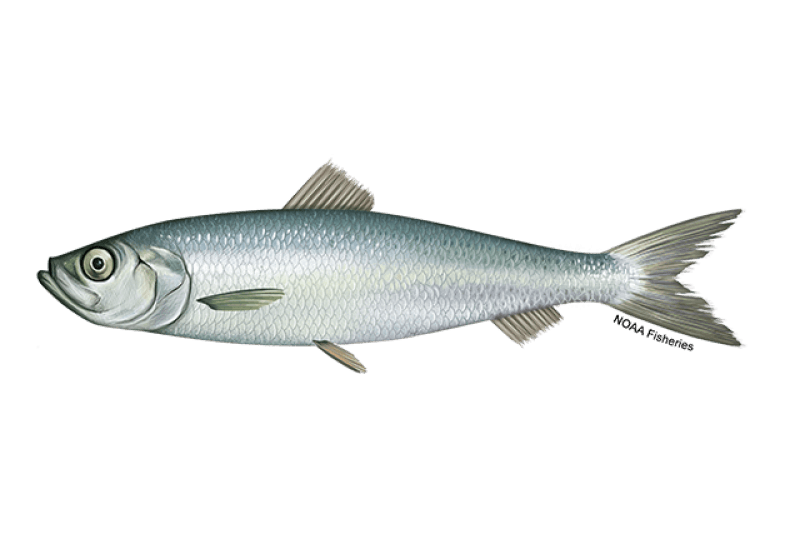
Clupea harengus , also known as Herring, Sea herring, Sild, Common herring, Labrador herring, Sardine, Sperling. U.S. wild-caught Atlantic herring is a smart seafood choice because it is sustainably managed and responsibly harvested under U.S. regulations.
Source: Species facts, status language, and imagery adapted from the NOAA Fisheries species profile (last updated 06/26/2026). Ocean City charter and Maryland
record notes are editorial orientation for OCEANCITY.MD readers. Always confirm current seasons, sizes, and
bag limits before you fish—rules change.
Maryland’s Atlantic recreational seasons/sizes/creel summary does not publish a dedicated line for Atlantic Herring. Verify COMAR, DNR public notices, and federal rules for your exact waters before you keep fish.
Rule
Maryland / applicable detail
Maryland minimum size
Not listed — no dedicated Atlantic Herring line on the MD Atlantic recreational table
Maryland daily creel (bag)
Not listed — no MD species-specific bag for Atlantic Herring
Maryland open season
Not listed on the MD Atlantic Ocean / Coastal Bays summary table
Verify
Check DNR eRegulations, COMAR, and NOAA for your date and coordinates before you keep fish.
They are silvery in color, with a bluish or greenish-blue back.
Biology Atlantic herring are one of nearly 200 herring species in the family Clupeidae .
They grow quickly, up to 14 inches.
They are able to reproduce when they reach age 4.
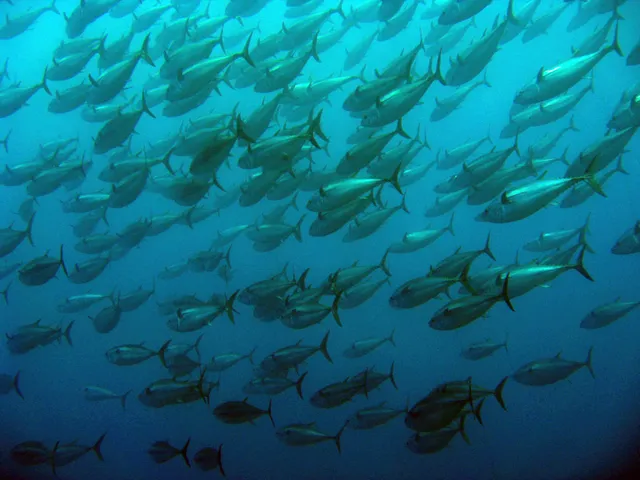
Atlantic herring migrate in schools to areas where they feed, spawn, and spend the winter.
Appearance
Atlantic herring are one of nearly 200 herring species in the family Clupeidae .
They grow quickly, up to 14 inches.
They are able to reproduce when they reach age 4.
Atlantic herring migrate in schools to areas where they feed, spawn, and spend the winter.
They spawn as early as August in Nova Scotia and eastern Maine and from October through November in the southern Gulf of Maine, Georges Bank, and Nantucket Shoals.
Female herring can produce 30,000 to 200,000 eggs.
They deposit their eggs on rock, gravel, or sand ocean bottom.
Schools of herring can produce so many eggs that they cover the ocean bottom in a dense carpet of eggs several centimeters thick.
The eggs usually hatch in 7 to 10 days, depending on temperature.
By late spring, larvae grow into juvenile herring, which form large schools in coastal waters during the summer.
Atlantic herring is an important species in the food web of the northwest Atlantic Ocean.
A variety of bottom-dwelling fish—including winter flounder, cod, haddock, and red hake—feed on herring eggs.
Juvenile herring are heavily preyed upon due to their abundance and small size.
A number of fish, sharks, skates, marine mammals, and seabirds prey on herring.
Atlantic herring feed on zooplankton (tiny floating animals), krill, and fish larvae.
Where They Live Range Atlantic herring are found on both sides of the North Atlantic.
In the western North Atlantic, they are found from Labrador to Cape Hatteras, North Carolina.
Habitat Atlantic herring are found in coastal and continental shelf waters.
Fishery Management The Atlantic States Marine Fisheries Commission coordinates management of the herring fishery in state waters, and the New England Fishery Management Council manages the fishery in federal waters.
The two entities develop their regulations in close coordination.
Individual states are responsible for implementing regulations recommended by the Atlantic States Marine Fisheries Commission, and NOAA Fisheries is responsible for implementing regulations recommended by the New England Fishery Management Council.
Managed under the Atlantic Herring Fishery Management Plan and Interstate Fishery Management Plan for Atlantic Herring : Managed using an annual catch limit for the entire herring fishery that is based upon scientific information on the status of the stock.
The annual catch limit is divided into four area-specific sub-annual catch limits.
When an area-specific limit is reached, the directed fishery in that area is closed and only incidental catches of herring are allowed.
A limited access permit program limits the number of vessels that can participate in the directed fishery for herring.
Vessels that do not qualify for a limited access permit can be issued an open access permit, allowing them to harvest a small amount of herring (6,600 pounds) per day or per trip.
Managers limit the amount of herring a vessel can possess in one day or on one trip, depending on the type of permit it holds.
The Interstate Fishery Management Plan for Atlantic Herring contains measures that close areas to herring fishing when herring are spawning.
A rebuilding plan to rebuild the stock to the target population level is in place with a target date of 2031.
Harvest Commercial fishery: In 2024, commercial landings of Atlantic herring totaled approximately 21.7 million pounds and were valued at $8.4 million, according to the NOAA Fisheries commercial fishing landings database .
During the past decade, the United States has accounted for 78 percent of the total herring harvest, with Canada harvesting the remainder.
The Atlantic herring fishery is extremely valuable to the economy in the Northeast United States.
Herring are sold frozen, salted, or canned as sardines in both U.S. and international markets and provide affordable bait to fishermen targeting lobster, blue crab, and tuna.
Gear types, habitat impacts, and bycatch: Historically, Gulf of Maine herring were harvested along the coast in fixed-gear weirs (a fence of long stakes driven into the ground with nets arranged in a circle).
Today, herring are primarily harvested by mid-water trawlers and purse seiners.
Mid-water trawlers deploy and tow a net in the water column to catch schooling fish such as herring.
The large front end of the net herds schooling fish toward the narrow back end, where they become trapped.
Purse seiners catch schooling fish near the surface by encircling them with a net.
When the net is around the school, fishermen lift up a wire that runs through the bottom of the net, closing the “purse” from below.
Fisheries that harvest groundfish (such as cod and haddock) and herring operate in the same areas during the same seasons.
Herring vessels may incidentally catch groundfish (mainly haddock).
Managers set a cap on the amount of haddock that can be caught by the herring midwater trawl fishery.
The Atlantic herring fishery can incidentally catch marine mammals.
Currently, these takes are below limits that would require mitigation under the Marine Mammal Protection Act.
Management measures to reduce marine mammal interactions include research, outreach to educate fisherman about actions they can take in the event of a marine mammal interaction, and efforts to communicate interaction hotspots to fishermen.
In 2023, recreational anglers landed 462,000 pounds of Atlantic herring, according to the NOAA Fisheries recreational fishing landings database .
Scientific Classification Kingdom Animalia Phylum Chordata Class Actinopterygii Order Clupeiformes Family Clupeidae Genus Clupea Species harengus Last updated by NOAA Fisheries on 06/26/2026
Biology
Atlantic herring are found on both sides of the North Atlantic.
In the western North Atlantic, they are found from Labrador to Cape Hatteras, North Carolina.
Habitat Atlantic herring are found in coastal and continental shelf waters.
Fishery Management The Atlantic States Marine Fisheries Commission coordinates management of the herring fishery in state waters, and the New England Fishery Management Council manages the fishery in federal waters.
The two entities develop their regulations in close coordination.
Individual states are responsible for implementing regulations recommended by the Atlantic States Marine Fisheries Commission, and NOAA Fisheries is responsible for implementing regulations recommended by the New England Fishery Management Council.
Managed under the Atlantic Herring Fishery Management Plan and Interstate Fishery Management Plan for Atlantic Herring : Managed using an annual catch limit for the entire herring fishery that is based upon scientific information on the status of the stock.
The annual catch limit is divided into four area-specific sub-annual catch limits.
When an area-specific limit is reached, the directed fishery in that area is closed and only incidental catches of herring are allowed.
A limited access permit program limits the number of vessels that can participate in the directed fishery for herring.
Vessels that do not qualify for a limited access permit can be issued an open access permit, allowing them to harvest a small amount of herring (6,600 pounds) per day or per trip.
Managers limit the amount of herring a vessel can possess in one day or on one trip, depending on the type of permit it holds.
The Interstate Fishery Management Plan for Atlantic Herring contains measures that close areas to herring fishing when herring are spawning.
A rebuilding plan to rebuild the stock to the target population level is in place with a target date of 2031.
Harvest Commercial fishery: In 2024, commercial landings of Atlantic herring totaled approximately 21.7 million pounds and were valued at $8.4 million, according to the NOAA Fisheries commercial fishing landings database .
During the past decade, the United States has accounted for 78 percent of the total herring harvest, with Canada harvesting the remainder.
The Atlantic herring fishery is extremely valuable to the economy in the Northeast United States.
Herring are sold frozen, salted, or canned as sardines in both U.S. and international markets and provide affordable bait to fishermen targeting lobster, blue crab, and tuna.
Gear types, habitat impacts, and bycatch: Historically, Gulf of Maine herring were harvested along the coast in fixed-gear weirs (a fence of long stakes driven into the ground with nets arranged in a circle).
Today, herring are primarily harvested by mid-water trawlers and purse seiners.
Mid-water trawlers deploy and tow a net in the water column to catch schooling fish such as herring.
The large front end of the net herds schooling fish toward the narrow back end, where they become trapped.
Purse seiners catch schooling fish near the surface by encircling them with a net.
When the net is around the school, fishermen lift up a wire that runs through the bottom of the net, closing the “purse” from below.
Fisheries that harvest groundfish (such as cod and haddock) and herring operate in the same areas during the same seasons.
Herring vessels may incidentally catch groundfish (mainly haddock).
Managers set a cap on the amount of haddock that can be caught by the herring midwater trawl fishery.
The Atlantic herring fishery can incidentally catch marine mammals.
Currently, these takes are below limits that would require mitigation under the Marine Mammal Protection Act.
Management measures to reduce marine mammal interactions include research, outreach to educate fisherman about actions they can take in the event of a marine mammal interaction, and efforts to communicate interaction hotspots to fishermen.
In 2023, recreational anglers landed 462,000 pounds of Atlantic herring, according to the NOAA Fisheries recreational fishing landings database .
Scientific Classification Kingdom Animalia Phylum Chordata Class Actinopterygii Order Clupeiformes Family Clupeidae Genus Clupea Species harengus Last updated by NOAA Fisheries on 06/26/2026
Where they live
Range
Atlantic herring are found on both sides of the North Atlantic.
In the western North Atlantic, they are found from Labrador to Cape Hatteras, North Carolina.
Habitat
The Atlantic States Marine Fisheries Commission coordinates management of the herring fishery in state waters, and the New England Fishery Management Council manages the fishery in federal waters.
The two entities develop their regulations in close coordination.
Individual states are responsible for implementing regulations recommended by the Atlantic States Marine Fisheries Commission, and NOAA Fisheries is responsible for implementing regulations recommended by the New England Fishery Management Council.
Managed under the Atlantic Herring Fishery Management Plan and Interstate Fishery Management Plan for Atlantic Herring : Managed using an annual catch limit for the entire herring fishery that is based upon scientific information on the status of the stock.
The annual catch limit is divided into four area-specific sub-annual catch limits.
When an area-specific limit is reached, the directed fishery in that area is closed and only incidental catches of herring are allowed.
A limited access permit program limits the number of vessels that can participate in the directed fishery for herring.
Vessels that do not qualify for a limited access permit can be issued an open access permit, allowing them to harvest a small amount of herring (6,600 pounds) per day or per trip.
Managers limit the amount of herring a vessel can possess in one day or on one trip, depending on the type of permit it holds.
The Interstate Fishery Management Plan for Atlantic Herring contains measures that close areas to herring fishing when herring are spawning.
A rebuilding plan to rebuild the stock to the target population level is in place with a target date of 2031.
Harvest Commercial fishery: In 2024, commercial landings of Atlantic herring totaled approximately 21.7 million pounds and were valued at $8.4 million, according to the NOAA Fisheries commercial fishing landings database .
During the past decade, the United States has accounted for 78 percent of the total herring harvest, with Canada harvesting the remainder.
The Atlantic herring fishery is extremely valuable to the economy in the Northeast United States.
Herring are sold frozen, salted, or canned as sardines in both U.S. and international markets and provide affordable bait to fishermen targeting lobster, blue crab, and tuna.
Gear types, habitat impacts, and bycatch: Historically, Gulf of Maine herring were harvested along the coast in fixed-gear weirs (a fence of long stakes driven into the ground with nets arranged in a circle).
Today, herring are primarily harvested by mid-water trawlers and purse seiners.
Mid-water trawlers deploy and tow a net in the water column to catch schooling fish such as herring.
The large front end of the net herds schooling fish toward the narrow back end, where they become trapped.
Purse seiners catch schooling fish near the surface by encircling them with a net.
When the net is around the school, fishermen lift up a wire that runs through the bottom of the net, closing the “purse” from below.
Fisheries that harvest groundfish (such as cod and haddock) and herring operate in the same areas during the same seasons.
Herring vessels may incidentally catch groundfish (mainly haddock).
Managers set a cap on the amount of haddock that can be caught by the herring midwater trawl fishery.
The Atlantic herring fishery can incidentally catch marine mammals.
Currently, these takes are below limits that would require mitigation under the Marine Mammal Protection Act.
Management measures to reduce marine mammal interactions include research, outreach to educate fisherman about actions they can take in the event of a marine mammal interaction, and efforts to communicate interaction hotspots to fishermen.
In 2023, recreational anglers landed 462,000 pounds of Atlantic herring, according to the NOAA Fisheries recreational fishing landings database .
Scientific Classification Kingdom Animalia Phylum Chordata Class Actinopterygii Order Clupeiformes Family Clupeidae Genus Clupea Species harengus Last updated by NOAA Fisheries on 06/26/2026
Ocean City & Mid-Atlantic context
From Ocean City, Maryland, use this Atlantic Herring profile as NOAA Mid-Atlantic directory context—not a promise you will meet the species on every charter.
Always verify current Maryland and federal size, season, and bag rules for your exact date and coordinates before you keep any catch.
Source facts and imagery are adapted from the NOAA Fisheries species profile for Atlantic Herring.
What charter to book from Ocean City
Atlantic Herring may appear on Ocean City trips depending on season and habitat—use the NOAA biology below and book the charter archetype that matches how you will actually fish.
Possible / related
Bay guide — Possible overlap depending on season, water, and boat program.
Inshore charter — Possible overlap depending on season, water, and boat program.
Commercial fishery: In 2024, commercial landings of Atlantic herring totaled approximately 21.7 million pounds and were valued at $8.4 million, according to the NOAA Fisheries commercial fishing landings database .
During the past decade, the United States has accounted for 78 percent of the total herring harvest, with Canada harvesting the remainder.
The Atlantic herring fishery is extremely valuable to the economy in the Northeast United States.
Herring are sold frozen, salted, or canned as sardines in both U.S. and international markets and provide affordable bait to fishermen targeting lobster, blue crab, and tuna.
Gear types, habitat impacts, and bycatch: Historically, Gulf of Maine herring were harvested along the coast in fixed-gear weirs (a fence of long stakes driven into the ground with nets arranged in a circle).
Today, herring are primarily harvested by mid-water trawlers and purse seiners.
Mid-water trawlers deploy and tow a net in the water column to catch schooling fish such as herring.
The large front end of the net herds schooling fish toward the narrow back end, where they become trapped.
Harvest
See the NOAA wild-caught fishery section for landings and gear notes when published for this species.
Landings and management details matter most for the waters where Atlantic Herring is actually fished—see the
NOAA species profile
.
Seafood facts
Fact
Detail
Sustainability
U.S. wild-caught Atlantic herring is a smart seafood choice because it is sustainably managed and responsibly harvested under U.S. regulations.
Availability
Year-round. Most of the herring eaten in the United States is canned and either pickled or smoked.
Source
U.S. wild-caught from Maine to North Carolina.
Taste
Small fresh herring have a more delicate flavor, while larger herring have a fuller, oilier flavor.
Texture
The meat of fresh herring is soft.
Color
The meat of fresh herring is off-white.
Health
Atlantic herring are a great source of omega-3s, vitamin B12, and iron.
After a real OC boat day or market stop for Atlantic Herring, Seafood after boat days covers
dock buffer and cook-your-catch pacing.