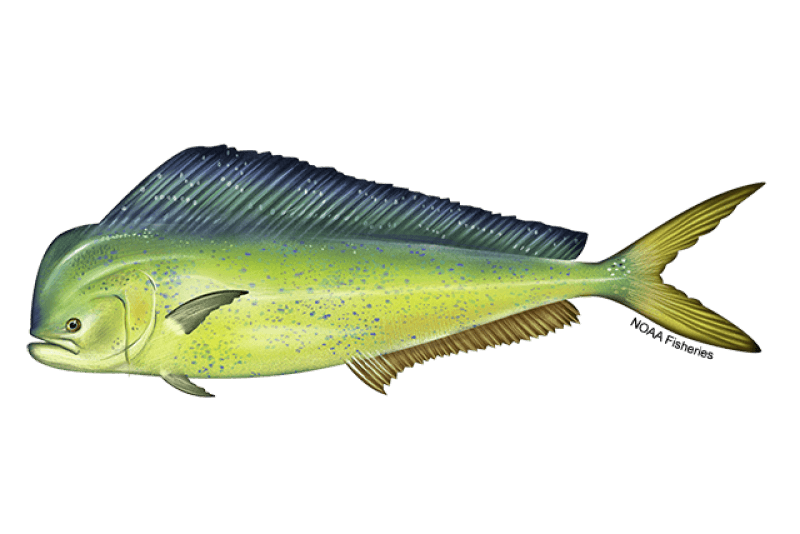
Coryphaena hippurus , also known as Mahimahi, Dolphinfish, Dolphin, Dorado. Mahi mahi are highly sought for sport fishing and commercial purposes. They are pelagic fish found in off-shore temperate, tropical, and subtropical waters. Mahi dishes have become
Source: Species facts, status language, and imagery adapted from the NOAA Fisheries species profile (last updated 06/26/2026). Ocean City charter and Maryland
record notes are editorial orientation for OCEANCITY.MD readers. Always confirm current seasons, sizes, and
bag limits before you fish—rules change.
Mahi mahi are highly sought for sport fishing and commercial purposes. They are pelagic fish found in off-shore temperate, tropical, and subtropical waters. Mahi dishes have become a staple in many restaurants, though much of what we see in restaurants and grocery stores across the country comes from the Pacific .
Maryland record catch
Confirm whether Maryland DNR publishes an Atlantic state-record category for Atlantic Mahi Mahi on the current sport-fish record board.
Atlantic mahi mahi are brightly-colored fish—back is an electric greenish blue, lower body is gold or sparkling silver, and sides have a mixture of dark and light spots. Bright pattern fades almost immediately after mahi mahi is harvested.
Adult males have a square head and females have a rounded head.
Atlantic mahi mahi can be distinguished from the pompano dolphin by its 55 to 66 dorsal fin rays and a very wide, square tooth patch on the tongue.
Biology Atlantic mahi mahi grow up to almost 7 feet and 88 pounds. They live up to 5 years and are capable of reproducing at 4 to 5 months old. Mahi mahi are believed to spawn every 2 to 3 days during the spawning season, releasing between 33,000 and 66,000 eggs each time. In the Atlantic, these fish spawn under patches of floating brown algae called Sargassum .
Mahi mahi are top predators that feed in surface water during the day. They eat a wide variety of species, including small pelagic fish, juvenile tuna, invertebrates, billfish, jacks, pompano, and pelagic larvae of nearshore, bottom-living species. Predators of mahi mahi include large tuna, marine mammals, marlin, sailfish, and swordfish.
Where They Live Range Atlantic mahi mahi are found in the Atlantic, Gulf of America (formerly Gulf of Mexico), and Caribbean, and are caught from Massachusetts to Texas.
Appearance
Atlantic mahi mahi grow up to almost 7 feet and 88 pounds. They live up to 5 years and are capable of reproducing at 4 to 5 months old. Mahi mahi are believed to spawn every 2 to 3 days during the spawning season, releasing between 33,000 and 66,000 eggs each time. In the Atlantic, these fish spawn under patches of floating brown algae called Sargassum .
Mahi mahi are top predators that feed in surface water during the day. They eat a wide variety of species, including small pelagic fish, juvenile tuna, invertebrates, billfish, jacks, pompano, and pelagic larvae of nearshore, bottom-living species. Predators of mahi mahi include large tuna, marine mammals, marlin, sailfish, and swordfish.
Where They Live Range Atlantic mahi mahi are found in the Atlantic, Gulf of America (formerly Gulf of Mexico), and Caribbean, and are caught from Massachusetts to Texas.
About one-third of U.S. commercial harvest (excluding imports) of mahi mahi comes from the Atlantic, Gulf of America, and Caribbean. The rest comes from the Pacific , mainly Hawaii.
Habitat Atlantic mahi mahi live near the surface in tropical and subtropical waters. Juveniles swim together in schools while older fish are usually found alone. Larger males prefer open ocean habitat. Females and smaller males are commonly found near natural and artificial floating objects, including floating brown algae called Sargassum (in the Atlantic and the Caribbean).
Fishery Management NOAA Fisheries , the Caribbean Council , and the South Atlantic Fishery Management Council (in cooperation with the Mid-Atlantic and New England Fishery Management Councils) manage Atlantic mahi mahi.
In the U.S. South Atlantic, mahi mahi are managed under the Fishery Management Plan for the Dolphin and Wahoo Fishery of the Atlantic . Regulations include:
Permits are required to sell mahi mahi Minimum size limit for mahi mahi caught off the coasts of Georgia, Florida, and South Carolina Recreational bag limits Commercial trip limits Annual catch limits View detailed federal regulations for mahi mahi in the South Atlantic
In the U.S. Caribbean, mahi mahi are managed under the Puerto Rico Fishery Management Plan , the St. Croix Fishery Management Plan , and the St. Thomas and St. John Fishery Management Plan . Regulations include:
Annual catch limits in federal waters around Puerto Rico, St. Croix and St. Thomas/St. John Harvest Commercial Fishery In 2024, commercial fishermen harvested approximately 75,000 pounds of mahi mahi in the Atlantic and Gulf of America valued at $249,000, according to the NOAA Fisheries commercial fishing landings database .
Gear Types, Habitat Impacts, and Bycatch Hook-and-line gear (including handlines and longlines) is used for commercial harvest. Hook-and-line gear has minimal impact on habitat because it does not contact the ocean floor.
Longlines can incidentally catch sea turtles, marine mammals, and other species. Longline fishermen follow measures to prevent bycatch and protect other species. These include using specific gear and safe handling techniques to reduce impacts on sea turtles, as well as not fishing in certain areas to protect species such as billfish.
Recreational Fishery The mahi mahi fishery in the Atlantic, Caribbean, and Gulf of America has historically been recreational.
In 2024, recreational fishermen harvested 8.2 million pounds of mahi mahi in the Atlantic and the Gulf of America , according to the NOAA Fisheries recreational fishing landings database .
Scientific Classification Kingdom Animalia Phylum Chordata Class Actinopterygii Order Carangiformes Family Coryphaenidae Genus Coryphaena Species hippurus Last updated by NOAA Fisheries on 06/26/2026
Biology
Atlantic mahi mahi are found in the Atlantic, Gulf of America (formerly Gulf of Mexico), and Caribbean, and are caught from Massachusetts to Texas.
About one-third of U.S. commercial harvest (excluding imports) of mahi mahi comes from the Atlantic, Gulf of America, and Caribbean. The rest comes from the Pacific , mainly Hawaii.
Habitat Atlantic mahi mahi live near the surface in tropical and subtropical waters. Juveniles swim together in schools while older fish are usually found alone. Larger males prefer open ocean habitat. Females and smaller males are commonly found near natural and artificial floating objects, including floating brown algae called Sargassum (in the Atlantic and the Caribbean).
Fishery Management NOAA Fisheries , the Caribbean Council , and the South Atlantic Fishery Management Council (in cooperation with the Mid-Atlantic and New England Fishery Management Councils) manage Atlantic mahi mahi.
In the U.S. South Atlantic, mahi mahi are managed under the Fishery Management Plan for the Dolphin and Wahoo Fishery of the Atlantic . Regulations include:
Permits are required to sell mahi mahi Minimum size limit for mahi mahi caught off the coasts of Georgia, Florida, and South Carolina Recreational bag limits Commercial trip limits Annual catch limits View detailed federal regulations for mahi mahi in the South Atlantic
In the U.S. Caribbean, mahi mahi are managed under the Puerto Rico Fishery Management Plan , the St. Croix Fishery Management Plan , and the St. Thomas and St. John Fishery Management Plan . Regulations include:
Annual catch limits in federal waters around Puerto Rico, St. Croix and St. Thomas/St. John Harvest Commercial Fishery In 2024, commercial fishermen harvested approximately 75,000 pounds of mahi mahi in the Atlantic and Gulf of America valued at $249,000, according to the NOAA Fisheries commercial fishing landings database .
Gear Types, Habitat Impacts, and Bycatch Hook-and-line gear (including handlines and longlines) is used for commercial harvest. Hook-and-line gear has minimal impact on habitat because it does not contact the ocean floor.
Longlines can incidentally catch sea turtles, marine mammals, and other species. Longline fishermen follow measures to prevent bycatch and protect other species. These include using specific gear and safe handling techniques to reduce impacts on sea turtles, as well as not fishing in certain areas to protect species such as billfish.
Recreational Fishery The mahi mahi fishery in the Atlantic, Caribbean, and Gulf of America has historically been recreational.
In 2024, recreational fishermen harvested 8.2 million pounds of mahi mahi in the Atlantic and the Gulf of America , according to the NOAA Fisheries recreational fishing landings database .
Scientific Classification Kingdom Animalia Phylum Chordata Class Actinopterygii Order Carangiformes Family Coryphaenidae Genus Coryphaena Species hippurus Last updated by NOAA Fisheries on 06/26/2026
Where they live
Range
Atlantic mahi mahi are found in the Atlantic, Gulf of America (formerly Gulf of Mexico), and Caribbean, and are caught from Massachusetts to Texas.
About one-third of U.S. commercial harvest (excluding imports) of mahi mahi comes from the Atlantic, Gulf of America, and Caribbean. The rest comes from the Pacific , mainly Hawaii.
Habitat
NOAA Fisheries , the Caribbean Council , and the South Atlantic Fishery Management Council (in cooperation with the Mid-Atlantic and New England Fishery Management Councils) manage Atlantic mahi mahi.
In the U.S. South Atlantic, mahi mahi are managed under the Fishery Management Plan for the Dolphin and Wahoo Fishery of the Atlantic . Regulations include:
Permits are required to sell mahi mahi Minimum size limit for mahi mahi caught off the coasts of Georgia, Florida, and South Carolina Recreational bag limits Commercial trip limits Annual catch limits View detailed federal regulations for mahi mahi in the South Atlantic
In the U.S. Caribbean, mahi mahi are managed under the Puerto Rico Fishery Management Plan , the St. Croix Fishery Management Plan , and the St. Thomas and St. John Fishery Management Plan . Regulations include:
Annual catch limits in federal waters around Puerto Rico, St. Croix and St. Thomas/St. John Harvest Commercial Fishery In 2024, commercial fishermen harvested approximately 75,000 pounds of mahi mahi in the Atlantic and Gulf of America valued at $249,000, according to the NOAA Fisheries commercial fishing landings database .
Gear Types, Habitat Impacts, and Bycatch Hook-and-line gear (including handlines and longlines) is used for commercial harvest. Hook-and-line gear has minimal impact on habitat because it does not contact the ocean floor.
Longlines can incidentally catch sea turtles, marine mammals, and other species. Longline fishermen follow measures to prevent bycatch and protect other species. These include using specific gear and safe handling techniques to reduce impacts on sea turtles, as well as not fishing in certain areas to protect species such as billfish.
Recreational Fishery The mahi mahi fishery in the Atlantic, Caribbean, and Gulf of America has historically been recreational.
In 2024, recreational fishermen harvested 8.2 million pounds of mahi mahi in the Atlantic and the Gulf of America , according to the NOAA Fisheries recreational fishing landings database .
Scientific Classification Kingdom Animalia Phylum Chordata Class Actinopterygii Order Carangiformes Family Coryphaenidae Genus Coryphaena Species hippurus Last updated by NOAA Fisheries on 06/26/2026
Ocean City & Mid-Atlantic context
From Ocean City, Maryland, use this Atlantic Mahi Mahi profile as NOAA Mid-Atlantic directory context—not a promise you will meet the species on every charter.
Always verify current Maryland and federal size, season, and bag rules for your exact date and coordinates before you keep any catch.
Source facts and imagery are adapted from the NOAA Fisheries species profile for Atlantic Mahi Mahi.
What charter to book from Ocean City
Atlantic Mahi Mahi fits Ocean City offshore and trolling programs more than bay guide mornings—book the trip for the pelagic menu you actually want.
Best fit
Offshore charter — Best OC trip family when you are specifically chasing Atlantic Mahi Mahi.
Possible / related
Trolling charter — Possible overlap depending on season, water, and boat program.
Head / party boat — Possible overlap depending on season, water, and boat program.
Not typical from OC
Bay guide — Not a typical Ocean City bay guide target for Atlantic Mahi Mahi.
Inshore charter — Not a typical Ocean City inshore charter target for Atlantic Mahi Mahi.
Casting / light tackle — Not a typical Ocean City casting / light tackle target for Atlantic Mahi Mahi.
Nearshore wreck / bottom — Not a typical Ocean City nearshore wreck / bottom target for Atlantic Mahi Mahi.
Start with the charter directory trip-type picker so you compare boats inside the right
archetype—not a bay-guide quote against a canyon invoice.
Commercial Fishery In 2024, commercial fishermen harvested approximately 75,000 pounds of mahi mahi in the Atlantic and Gulf of America valued at $249,000, according to the NOAA Fisheries commercial fishing landings database .
Gear Types, Habitat Impacts, and Bycatch Hook-and-line gear (including handlines and longlines) is used for commercial harvest. Hook-and-line gear has minimal impact on habitat because it does not contact the ocean floor.
Longlines can incidentally catch sea turtles, marine mammals, and other species. Longline fishermen follow measures to prevent bycatch and protect other species. These include using specific gear and safe handling techniques to reduce impacts on sea turtles, as well as not fishing in certain areas to protect species such as billfish.
Recreational Fishery The mahi mahi fishery in the Atlantic, Caribbean, and Gulf of America has historically been recreational.
In 2024, recreational fishermen harvested 8.2 million pounds of mahi mahi in the Atlantic and the Gulf of America , according to the NOAA Fisheries recreational fishing landings database .
Scientific Classification Kingdom Animalia Phylum Chordata Class Actinopterygii Order Carangiformes Family Coryphaenidae Genus Coryphaena Species hippurus Last updated by NOAA Fisheries on 06/26/2026
Harvest
See the NOAA wild-caught fishery section for landings and gear notes when published for this species.
Landings and management details matter most for the waters where Atlantic Mahi Mahi is actually fished—see the
NOAA species profile
.
Seafood facts
Fact
Detail
Sustainability
U.S. wild-caught mahi mahi is a smart seafood choice because it is sustainably managed and responsibly harvested under U.S. regulations.
Availability
Year-round.
Source
Wild-caught from Massachusetts to Texas.
Taste
Mahi mahi has a sweet, mild flavor. For a milder flavor, trim away darker portions of the meat.
Texture
Mahi mahi is lean and fairly firm with large, moist flakes.
Color
The raw flesh is pinkish to grayish-white, although the flesh along the lateral line is dark. When cooked, the meat is off-white.
Health
Low in saturated fat and a good source of vitamin B12, phosphorus, and potassium.
After a real OC boat day or market stop for Atlantic Mahi Mahi, Seafood after boat days covers
dock buffer and cook-your-catch pacing.