Pandalus borealis , also known as Pink shrimp, Salad shrimp, Coldwater shrimp, Deep water prawn. Commercial fishing for northern shrimp is prohibited due to its extremely depleted state.
Source: Species facts, status language, and imagery adapted from the NOAA Fisheries species profile (last updated 04/23/2026). Ocean City charter and Maryland
record notes are editorial orientation for OCEANCITY.MD readers. Always confirm current seasons, sizes, and
bag limits before you fish—rules change.
Maryland’s Atlantic recreational seasons/sizes/creel summary does not publish a dedicated line for Atlantic Northern Shrimp. Verify COMAR, DNR public notices, and federal rules for your exact waters before you keep fish.
Rule
Maryland / applicable detail
Maryland minimum size
Not listed — no dedicated Atlantic Northern Shrimp line on the MD Atlantic recreational table
Maryland daily creel (bag)
Not listed — no MD species-specific bag for Atlantic Northern Shrimp
Maryland open season
Not listed on the MD Atlantic Ocean / Coastal Bays summary table
Verify
Check DNR eRegulations, COMAR, and NOAA for your date and coordinates before you keep fish.
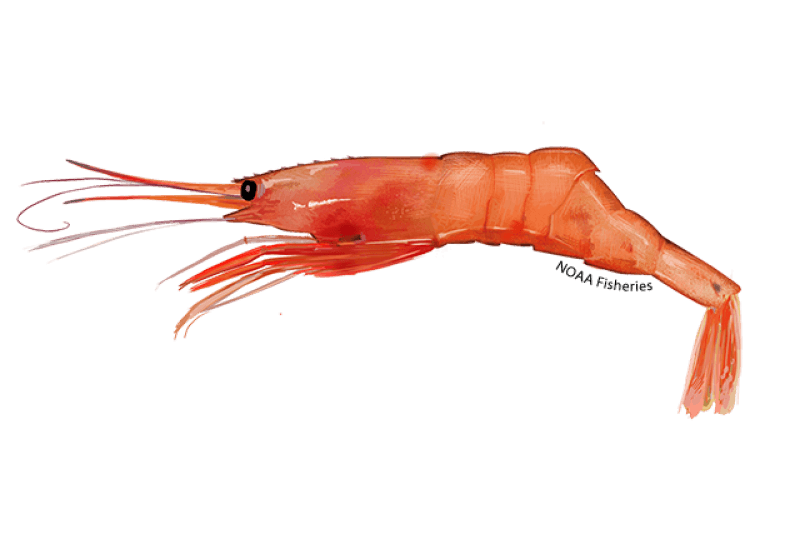
Northern shrimp are crustaceans, like lobsters and crabs.
They are much smaller than warm-water shrimp, averaging 2 to 4 inches in length.
When alive, the tails and bodies of northern shrimp are more red than pink, and the shells are translucent.
They have appendages called pleopods on their tail that act like paddles and enable them to move with remarkable agility over considerable distances.
Biology Northern shrimp are protandrous hermaphrodites – they begin life as males and sexually mature at roughly 2½ years old.
They transform to females at about 3½ years old.
Appearance
Northern shrimp are protandrous hermaphrodites – they begin life as males and sexually mature at roughly 2½ years old.
They transform to females at about 3½ years old.
They start spawning in late July in offshore waters, mainly in deep mud basins in the southwestern Gulf of Maine.
By early fall, most adult females have pushed their eggs out onto their abdomen.
In late fall through winter, egg-bearing females move inshore where the eggs hatch.
Juveniles remain in coastal waters for a year or more before migrating to deeper offshore waters, where they mature as males.
Their reproductive success, growth, and development can be affected by temperature.
They can grow up to 3 or 4 inches long, and most do not live past age 5.
They prey on plankton (tiny floating plants and animals) and bottom-dwelling invertebrates.
They are eaten by many important fish species such as cod, redfish, and silver and white hake.
Northern shrimp are an important part of the marine food chain, and maintaining a healthy population is important to supporting a balanced Gulf of Maine ecosystem.
Where They Live Range Northern shrimp are found in the western North Atlantic from Maine to Massachusetts, but the bulk of the harvest comes from Maine.
They are also found and harvested on the West Coast and in Alaska, as well as in Canada, Greenland, Iceland, and Norway.
Habitat Northern shrimp are found in the cold waters of the North Atlantic, North Pacific, and Arctic Oceans.
Atlantic coast, northern shrimp are mainly found in waters off of Maine, New Hampshire, and Massachusetts.
They live on soft mud bottoms in waters approximately 30 to 1,000 feet deep.
Northern shrimp appear to travel with seasonal changes in water temperature.
They’re only common in nearshore waters during late winter and spring when these waters are coldest.
Egg-bearing females move inshore in late fall and winter when nearshore waters have cooled.
After their eggs hatch (February to April), females return to offshore waters in the western Gulf of Maine.
Larvae and young juveniles remain in nearshore waters for up to 20 months as they develop.
After 1 year, juveniles begin to migrate offshore to deeper waters.
Fishery Management The states of Maine, New Hampshire, and Massachusetts cooperatively manage the northern shrimp resource under the framework of the Atlantic States Marine Fisheries Commission's Interstate Fishery Management Plan for Northern Shrimp .
Fishery closed since 2014 due to depleted stock conditions.
Annual catch limits with seasonal closures when a percentage of the catch limit is projected to be caught.
Limits on the amount of northern shrimp that can be harvested per fishing trip.
Limits on the number of traps fishermen can set during a season.
Days out of the fishery – certain days during the fishing season are closed to fishing to slow catch rates and prolong the fishing season, or to make shrimp available when demand is greatest.
Minimum mesh size in trawl nets to prevent bycatch of undersized shrimp.
Requirement to use finfish excluder devices to reduce bycatch in the fishery.
Due to the variability in population size from year to year, managers annually adjust management measures (e.g., fishing season length, harvest limits, etc.), based on the results of annual stock assessments and stakeholder input.
Amendment 3 to the Interstate Fisheries Management Plan for Northern Shrimp outlines measures to improve management in the event that the fishery re-opens.
These measures include: State-specific allocations of the total allowable catch.
Required use of a double- Nordmore grate or compound grate system to minimize catch of small male shrimp.
Strengthened reporting requirements for catch and landings.
Harvest Commercial fishery: The fishery has been closed by moratorium since 2014 because the stock has collapsed.
Due to continued low population levels the moratorium has been extended each year.
Following high landings in the late 1960s and early 1970s, the fishery was closed in 1978 due to a stock collapse.
It was reopened the following year, and landings increased throughout the 1980s and 1990s before dropping again.
For several seasons prior to the 2014 fishing moratorium, the commercial season was closed early due to landings exceeding the catch limit.
The fishery is seasonal in nature, peaking in late winter when egg-bearing females move into inshore waters where the eggs hatch.
Gear types, habitat impacts, and bycatch: Fishermen mainly use otter trawls to harvest northern shrimp, although some Maine fishermen use traps.
Northern shrimp are harvested over soft mud bottoms, which are more resilient to the impacts of trawling compared to structured habitats such as corals.
Also, the small mesh in the shrimp otter trawls creates more drag than a groundfish net and can’t be towed as fast for the same size net, reducing the potential impact on shrimp habitat.
Minimum mesh size in trawls to prevent bycatch of small male shrimp.
Finfish excluder devices and size-sorting grates in the gear to prevent bycatch of groundfish and small male shrimp.
Scientific Classification Kingdom Animalia Phylum Arthropoda Class Malacostraca Order Decapoda Family Pandalidae Genus Pandalus Species borealis Last updated by NOAA Fisheries on 04/23/2026
Biology
Northern shrimp are found in the western North Atlantic from Maine to Massachusetts, but the bulk of the harvest comes from Maine.
They are also found and harvested on the West Coast and in Alaska, as well as in Canada, Greenland, Iceland, and Norway.
Habitat Northern shrimp are found in the cold waters of the North Atlantic, North Pacific, and Arctic Oceans.
Atlantic coast, northern shrimp are mainly found in waters off of Maine, New Hampshire, and Massachusetts.
They live on soft mud bottoms in waters approximately 30 to 1,000 feet deep.
Northern shrimp appear to travel with seasonal changes in water temperature.
They’re only common in nearshore waters during late winter and spring when these waters are coldest.
Egg-bearing females move inshore in late fall and winter when nearshore waters have cooled.
After their eggs hatch (February to April), females return to offshore waters in the western Gulf of Maine.
Larvae and young juveniles remain in nearshore waters for up to 20 months as they develop.
After 1 year, juveniles begin to migrate offshore to deeper waters.
Fishery Management The states of Maine, New Hampshire, and Massachusetts cooperatively manage the northern shrimp resource under the framework of the Atlantic States Marine Fisheries Commission's Interstate Fishery Management Plan for Northern Shrimp .
Fishery closed since 2014 due to depleted stock conditions.
Annual catch limits with seasonal closures when a percentage of the catch limit is projected to be caught.
Limits on the amount of northern shrimp that can be harvested per fishing trip.
Limits on the number of traps fishermen can set during a season.
Days out of the fishery – certain days during the fishing season are closed to fishing to slow catch rates and prolong the fishing season, or to make shrimp available when demand is greatest.
Minimum mesh size in trawl nets to prevent bycatch of undersized shrimp.
Requirement to use finfish excluder devices to reduce bycatch in the fishery.
Due to the variability in population size from year to year, managers annually adjust management measures (e.g., fishing season length, harvest limits, etc.), based on the results of annual stock assessments and stakeholder input.
Amendment 3 to the Interstate Fisheries Management Plan for Northern Shrimp outlines measures to improve management in the event that the fishery re-opens.
These measures include: State-specific allocations of the total allowable catch.
Required use of a double- Nordmore grate or compound grate system to minimize catch of small male shrimp.
Strengthened reporting requirements for catch and landings.
Harvest Commercial fishery: The fishery has been closed by moratorium since 2014 because the stock has collapsed.
Due to continued low population levels the moratorium has been extended each year.
Following high landings in the late 1960s and early 1970s, the fishery was closed in 1978 due to a stock collapse.
It was reopened the following year, and landings increased throughout the 1980s and 1990s before dropping again.
For several seasons prior to the 2014 fishing moratorium, the commercial season was closed early due to landings exceeding the catch limit.
The fishery is seasonal in nature, peaking in late winter when egg-bearing females move into inshore waters where the eggs hatch.
Gear types, habitat impacts, and bycatch: Fishermen mainly use otter trawls to harvest northern shrimp, although some Maine fishermen use traps.
Northern shrimp are harvested over soft mud bottoms, which are more resilient to the impacts of trawling compared to structured habitats such as corals.
Also, the small mesh in the shrimp otter trawls creates more drag than a groundfish net and can’t be towed as fast for the same size net, reducing the potential impact on shrimp habitat.
Minimum mesh size in trawls to prevent bycatch of small male shrimp.
Finfish excluder devices and size-sorting grates in the gear to prevent bycatch of groundfish and small male shrimp.
Scientific Classification Kingdom Animalia Phylum Arthropoda Class Malacostraca Order Decapoda Family Pandalidae Genus Pandalus Species borealis Last updated by NOAA Fisheries on 04/23/2026
Where they live
Range
Northern shrimp are found in the western North Atlantic from Maine to Massachusetts, but the bulk of the harvest comes from Maine.
They are also found and harvested on the West Coast and in Alaska, as well as in Canada, Greenland, Iceland, and Norway.
Habitat
The states of Maine, New Hampshire, and Massachusetts cooperatively manage the northern shrimp resource under the framework of the Atlantic States Marine Fisheries Commission's Interstate Fishery Management Plan for Northern Shrimp .
Fishery closed since 2014 due to depleted stock conditions.
Annual catch limits with seasonal closures when a percentage of the catch limit is projected to be caught.
Limits on the amount of northern shrimp that can be harvested per fishing trip.
Limits on the number of traps fishermen can set during a season.
Days out of the fishery – certain days during the fishing season are closed to fishing to slow catch rates and prolong the fishing season, or to make shrimp available when demand is greatest.
Minimum mesh size in trawl nets to prevent bycatch of undersized shrimp.
Requirement to use finfish excluder devices to reduce bycatch in the fishery.
Due to the variability in population size from year to year, managers annually adjust management measures (e.g., fishing season length, harvest limits, etc.), based on the results of annual stock assessments and stakeholder input.
Amendment 3 to the Interstate Fisheries Management Plan for Northern Shrimp outlines measures to improve management in the event that the fishery re-opens.
These measures include: State-specific allocations of the total allowable catch.
Required use of a double- Nordmore grate or compound grate system to minimize catch of small male shrimp.
Strengthened reporting requirements for catch and landings.
Harvest Commercial fishery: The fishery has been closed by moratorium since 2014 because the stock has collapsed.
Due to continued low population levels the moratorium has been extended each year.
Following high landings in the late 1960s and early 1970s, the fishery was closed in 1978 due to a stock collapse.
It was reopened the following year, and landings increased throughout the 1980s and 1990s before dropping again.
For several seasons prior to the 2014 fishing moratorium, the commercial season was closed early due to landings exceeding the catch limit.
The fishery is seasonal in nature, peaking in late winter when egg-bearing females move into inshore waters where the eggs hatch.
Gear types, habitat impacts, and bycatch: Fishermen mainly use otter trawls to harvest northern shrimp, although some Maine fishermen use traps.
Northern shrimp are harvested over soft mud bottoms, which are more resilient to the impacts of trawling compared to structured habitats such as corals.
Also, the small mesh in the shrimp otter trawls creates more drag than a groundfish net and can’t be towed as fast for the same size net, reducing the potential impact on shrimp habitat.
Minimum mesh size in trawls to prevent bycatch of small male shrimp.
Finfish excluder devices and size-sorting grates in the gear to prevent bycatch of groundfish and small male shrimp.
Scientific Classification Kingdom Animalia Phylum Arthropoda Class Malacostraca Order Decapoda Family Pandalidae Genus Pandalus Species borealis Last updated by NOAA Fisheries on 04/23/2026
Ocean City & Mid-Atlantic context
From Ocean City, Maryland, use this Atlantic Northern Shrimp profile as NOAA Mid-Atlantic directory context—not a promise you will meet the species on every charter.
Always verify current Maryland and federal size, season, and bag rules for your exact date and coordinates before you keep any catch.
Source facts and imagery are adapted from the NOAA Fisheries species profile for Atlantic Northern Shrimp.
What charter to book from Ocean City
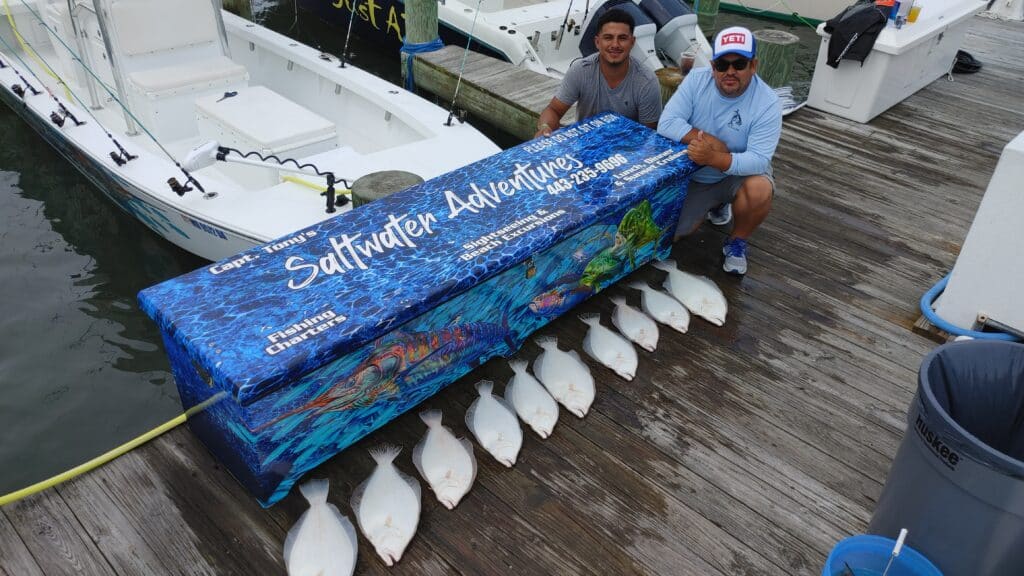
Atlantic Northern Shrimp is more of a bay, inshore, or specialty harvest story than a typical OC six-pack trolling day—match the trip type to the animal.
Possible / related
Bay guide — Possible overlap depending on season, water, and boat program.
Inshore charter — Possible overlap depending on season, water, and boat program.
Commercial fishery: The fishery has been closed by moratorium since 2014 because the stock has collapsed.
Due to continued low population levels the moratorium has been extended each year.
Following high landings in the late 1960s and early 1970s, the fishery was closed in 1978 due to a stock collapse.
It was reopened the following year, and landings increased throughout the 1980s and 1990s before dropping again.
For several seasons prior to the 2014 fishing moratorium, the commercial season was closed early due to landings exceeding the catch limit.
The fishery is seasonal in nature, peaking in late winter when egg-bearing females move into inshore waters where the eggs hatch.
Gear types, habitat impacts, and bycatch: Fishermen mainly use otter trawls to harvest northern shrimp, although some Maine fishermen use traps.
Northern shrimp are harvested over soft mud bottoms, which are more resilient to the impacts of trawling compared to structured habitats such as corals.
Harvest
See the NOAA wild-caught fishery section for landings and gear notes when published for this species.
Landings and management details matter most for the waters where Atlantic Northern Shrimp is actually fished—see the
NOAA species profile
.