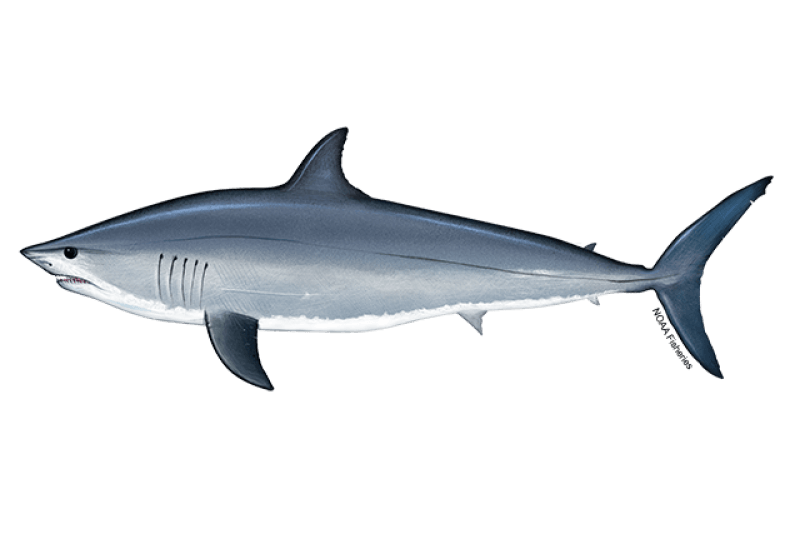
Isurus oxyrinchus , also known as Mako shark, Blue pointer, Bonito shark, Atlantic mako shark. U.S. fishermen may not land or retain Atlantic shortfin mako sharks.
Source: Species facts, status language, and imagery adapted from the NOAA Fisheries species profile (last updated 06/20/2025). Ocean City charter and Maryland
record notes are editorial orientation for OCEANCITY.MD readers. Always confirm current seasons, sizes, and
bag limits before you fish—rules change.
Maryland’s Atlantic recreational seasons/sizes/creel summary does not publish a dedicated line for Atlantic Shortfin Mako Shark. Verify COMAR, DNR public notices, and federal rules for your exact waters before you keep fish.
Rule
Maryland / applicable detail
Maryland minimum size
Not listed — no dedicated Atlantic Shortfin Mako Shark line on the MD Atlantic recreational table
Maryland daily creel (bag)
Not listed — no MD species-specific bag for Atlantic Shortfin Mako Shark
Maryland open season
Not listed on the MD Atlantic Ocean / Coastal Bays summary table
Verify
Check DNR eRegulations, COMAR, and NOAA for your date and coordinates before you keep fish.
Shortfin mako sharks have very pointed snouts and long gill slits.
They have dark blue/gray backs, light metallic blue sides, and white undersides.
Shortfin mako sharks can be differentiated from longfin mako sharks.
Compared to shortfin mako sharks, longfin mako sharks have much longer pectoral fins and larger eyes, a different body shape, and the underside of their snout is darker.
Biology Shortfin mako sharks grow slowly, reach up to 13 feet long, and can live to be over 30 years old.
They are not able to reproduce until about 8 years old (~6 feet) for males and 19 years old (~9 feet) for females.
Appearance
Shortfin mako sharks grow slowly, reach up to 13 feet long, and can live to be over 30 years old.
They are not able to reproduce until about 8 years old (~6 feet) for males and 19 years old (~9 feet) for females.
They have a 3-year reproductive cycle and a gestation period of approximately 18 months.
Mating occurs from summer to fall.
Eggs are fertilized internally and develop inside the mother.
Females bear live pups, which are approximately 2 feet long when born.
This large size at birth helps reduce the number of potential predators and enhances the pups’ chance of survival.
Mean litter size is 12, and up to 30 pups have been reported, though scientists have only examined a handful of litters.
Shortfin mako sharks are aggressive predators that feed near the top of the food web on marine fishes such as bluefish, swordfish, tuna, marine mammals, and other sharks.
They have few predators, mainly larger sharks that may prey on smaller shortfin mako sharks.
Where They Live Range Off the East Coast, Atlantic shortfin mako sharks are found from New England to Florida, in the Gulf of America (formerly Gulf of Mexico) from Florida to Texas, and in the Caribbean Sea.
They are highly migratory and can travel across entire oceans.
Habitat Shortfin mako sharks are a pelagic species.
Their habitat ranges widely in the upper zones of the oceans.
Juveniles are common in coastal waters, from the low-tide line to the edge of the continental shelf.
Adults are primarily found offshore.
Fishery Management NOAA Fisheries , through the Atlantic Highly Migratory Species Division , manage the Atlantic shortfin mako shark fishery in the United States.
NOAA Fisheries implemented regulations consistent with new ICCAT requirements adopted in 2021, based on the 2017 stock assessment.
U.S. fishermen may not land or retain Atlantic shortfin mako sharks.
If retention is allowed by ICCAT in the future, NOAA Fisheries could increase the shortfin mako shark retention limit, based on regulatory criteria and the amount of retention allowed by ICCAT.
Until that happens, the retention limit will remain at zero.
Atlantic sharks are managed under the Consolidated Atlantic Highly Migratory Species Fishery Management Plan : Permits are required, and only a limited number of permits are available.
Commercial quotas and limits on how many sharks can be landed per fishing trip.
Gear restrictions and requirements.
Fishing season is generally year-round, but individual commercial shark fisheries close when the quota is reached.
Shark dealers are required to attend Atlantic shark identification workshops to help them better identify shark species.
Prohibited species—there are more than 20 species of sharks that cannot be landed (e.g., white, dusky, basking, longfin mako, night).
Some of these species look similar to the species that can be landed.
The recreational shark identification can help with identification.
The Shark Conservation Act requires that all sharks, with one exception, be brought to shore with their fins naturally attached.
Compliance guides are available for all commercial and recreational regulations across Atlantic highly migratory species fisheries.
Management of highly migratory species, such as mako sharks, is complicated and requires international cooperation.
A shark that is off the coast of Florida one week could be caught off the coast of Mexico the next.
These resources must be managed both in the United States and at the international level.
The United States negotiates with Regional Fisheries Management Organizations—including the International Commission for the Conservation of Atlantic Tunas , the Food and Agriculture Organization of the United Nations , and the Convention on International Trade in Endangered Species of Wild Fauna and Flora —to enhance shark management worldwide.
While U.S. fishermen caught approximately 3 percent of the overall harvest of shortfin mako shark in the North Atlantic in 2020, NOAA Fisheries continues to take action at the international level to end overfishing of this species.
A domestic rebuilding plan is in place for this stock.
Harvest As of July 5, 2022, U.S. fishermen may not land or retain Atlantic shortfin mako sharks, Scientific Classification Kingdom Animalia Phylum Chordata Class Chondrichthyes Order Lamniformes Family Lamnidae Genus Isurus Species oxyrinchus Last updated by NOAA Fisheries on 06/20/2025
Biology
Off the East Coast, Atlantic shortfin mako sharks are found from New England to Florida, in the Gulf of America (formerly Gulf of Mexico) from Florida to Texas, and in the Caribbean Sea.
They are highly migratory and can travel across entire oceans.
Habitat Shortfin mako sharks are a pelagic species.
Their habitat ranges widely in the upper zones of the oceans.
Juveniles are common in coastal waters, from the low-tide line to the edge of the continental shelf.
Adults are primarily found offshore.
Fishery Management NOAA Fisheries , through the Atlantic Highly Migratory Species Division , manage the Atlantic shortfin mako shark fishery in the United States.
NOAA Fisheries implemented regulations consistent with new ICCAT requirements adopted in 2021, based on the 2017 stock assessment.
U.S. fishermen may not land or retain Atlantic shortfin mako sharks.
If retention is allowed by ICCAT in the future, NOAA Fisheries could increase the shortfin mako shark retention limit, based on regulatory criteria and the amount of retention allowed by ICCAT.
Until that happens, the retention limit will remain at zero.
Atlantic sharks are managed under the Consolidated Atlantic Highly Migratory Species Fishery Management Plan : Permits are required, and only a limited number of permits are available.
Commercial quotas and limits on how many sharks can be landed per fishing trip.
Gear restrictions and requirements.
Fishing season is generally year-round, but individual commercial shark fisheries close when the quota is reached.
Shark dealers are required to attend Atlantic shark identification workshops to help them better identify shark species.
Prohibited species—there are more than 20 species of sharks that cannot be landed (e.g., white, dusky, basking, longfin mako, night).
Some of these species look similar to the species that can be landed.
The recreational shark identification can help with identification.
The Shark Conservation Act requires that all sharks, with one exception, be brought to shore with their fins naturally attached.
Compliance guides are available for all commercial and recreational regulations across Atlantic highly migratory species fisheries.
Management of highly migratory species, such as mako sharks, is complicated and requires international cooperation.
A shark that is off the coast of Florida one week could be caught off the coast of Mexico the next.
These resources must be managed both in the United States and at the international level.
The United States negotiates with Regional Fisheries Management Organizations—including the International Commission for the Conservation of Atlantic Tunas , the Food and Agriculture Organization of the United Nations , and the Convention on International Trade in Endangered Species of Wild Fauna and Flora —to enhance shark management worldwide.
While U.S. fishermen caught approximately 3 percent of the overall harvest of shortfin mako shark in the North Atlantic in 2020, NOAA Fisheries continues to take action at the international level to end overfishing of this species.
A domestic rebuilding plan is in place for this stock.
Harvest As of July 5, 2022, U.S. fishermen may not land or retain Atlantic shortfin mako sharks, Scientific Classification Kingdom Animalia Phylum Chordata Class Chondrichthyes Order Lamniformes Family Lamnidae Genus Isurus Species oxyrinchus Last updated by NOAA Fisheries on 06/20/2025
Where they live
Range
Off the East Coast, Atlantic shortfin mako sharks are found from New England to Florida, in the Gulf of America (formerly Gulf of Mexico) from Florida to Texas, and in the Caribbean Sea.
They are highly migratory and can travel across entire oceans.
Habitat
NOAA Fisheries , through the Atlantic Highly Migratory Species Division , manage the Atlantic shortfin mako shark fishery in the United States.
NOAA Fisheries implemented regulations consistent with new ICCAT requirements adopted in 2021, based on the 2017 stock assessment.
U.S. fishermen may not land or retain Atlantic shortfin mako sharks.
If retention is allowed by ICCAT in the future, NOAA Fisheries could increase the shortfin mako shark retention limit, based on regulatory criteria and the amount of retention allowed by ICCAT.
Until that happens, the retention limit will remain at zero.
Atlantic sharks are managed under the Consolidated Atlantic Highly Migratory Species Fishery Management Plan : Permits are required, and only a limited number of permits are available.
Commercial quotas and limits on how many sharks can be landed per fishing trip.
Gear restrictions and requirements.
Fishing season is generally year-round, but individual commercial shark fisheries close when the quota is reached.
Shark dealers are required to attend Atlantic shark identification workshops to help them better identify shark species.
Prohibited species—there are more than 20 species of sharks that cannot be landed (e.g., white, dusky, basking, longfin mako, night).
Some of these species look similar to the species that can be landed.
The recreational shark identification can help with identification.
The Shark Conservation Act requires that all sharks, with one exception, be brought to shore with their fins naturally attached.
Compliance guides are available for all commercial and recreational regulations across Atlantic highly migratory species fisheries.
Management of highly migratory species, such as mako sharks, is complicated and requires international cooperation.
A shark that is off the coast of Florida one week could be caught off the coast of Mexico the next.
These resources must be managed both in the United States and at the international level.
The United States negotiates with Regional Fisheries Management Organizations—including the International Commission for the Conservation of Atlantic Tunas , the Food and Agriculture Organization of the United Nations , and the Convention on International Trade in Endangered Species of Wild Fauna and Flora —to enhance shark management worldwide.
While U.S. fishermen caught approximately 3 percent of the overall harvest of shortfin mako shark in the North Atlantic in 2020, NOAA Fisheries continues to take action at the international level to end overfishing of this species.
A domestic rebuilding plan is in place for this stock.
Harvest As of July 5, 2022, U.S. fishermen may not land or retain Atlantic shortfin mako sharks, Scientific Classification Kingdom Animalia Phylum Chordata Class Chondrichthyes Order Lamniformes Family Lamnidae Genus Isurus Species oxyrinchus Last updated by NOAA Fisheries on 06/20/2025
Ocean City & Mid-Atlantic context
From Ocean City, Maryland, use this Atlantic Shortfin Mako Shark profile as NOAA Mid-Atlantic directory context—not a promise you will meet the species on every charter.
Always verify current Maryland and federal size, season, and bag rules for your exact date and coordinates before you keep any catch.
Source facts and imagery are adapted from the NOAA Fisheries species profile for Atlantic Shortfin Mako Shark.
What charter to book from Ocean City
Atlantic Shortfin Mako Shark may show on Ocean City shark, wreck, or offshore days depending on season and permits—confirm HMS/state rules before you book or keep fish.
Possible / related
Inshore charter — Possible overlap depending on season, water, and boat program.
As of July 5, 2022, U.S. fishermen may not land or retain Atlantic shortfin mako sharks, Scientific Classification Kingdom Animalia Phylum Chordata Class Chondrichthyes Order Lamniformes Family Lamnidae Genus Isurus Species oxyrinchus Last updated by NOAA Fisheries on 06/20/2025
Harvest
See the NOAA wild-caught fishery section for landings and gear notes when published for this species.
Landings and management details matter most for the waters where Atlantic Shortfin Mako Shark is actually fished—see the
NOAA species profile
.