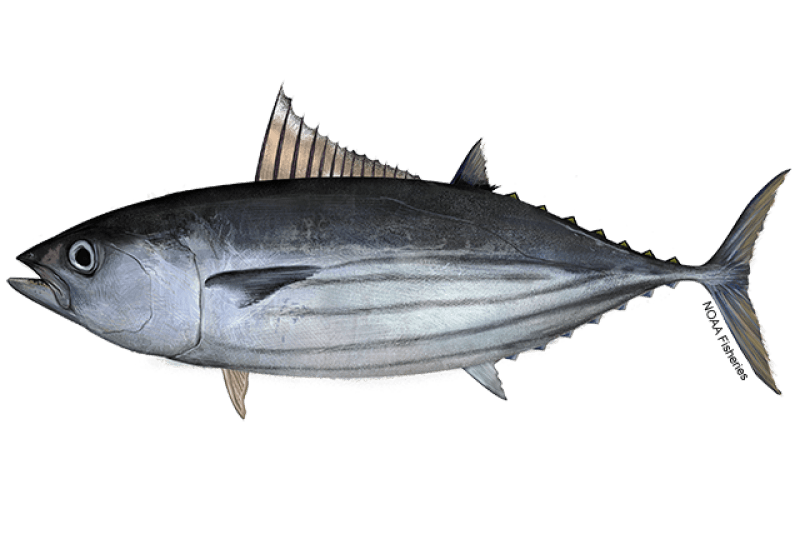
Katsuwonus pelamis , also known as Tuna, Ocean bonito, Lesser tuna, Aku. U.S. wild-caught Atlantic skipjack tuna is a smart seafood choice because it is sustainably managed and responsibly harvested under U.S. regulations.
Source: Species facts, status language, and imagery adapted from the NOAA Fisheries species profile (last updated 07/02/2026). Ocean City charter and Maryland
record notes are editorial orientation for OCEANCITY.MD readers. Always confirm current seasons, sizes, and
bag limits before you fish—rules change.
Maryland’s Atlantic recreational seasons/sizes/creel summary does not publish a dedicated line for Atlantic Skipjack Tuna. Verify COMAR, DNR public notices, and federal rules for your exact waters before you keep fish.
Rule
Maryland / applicable detail
Maryland minimum size
Not listed — no dedicated Atlantic Skipjack Tuna line on the MD Atlantic recreational table
Maryland daily creel (bag)
Not listed — no MD species-specific bag for Atlantic Skipjack Tuna
Maryland open season
Not listed on the MD Atlantic Ocean / Coastal Bays summary table
Verify
Check DNR eRegulations, COMAR, and NOAA for your date and coordinates before you keep fish.
Skipjack tuna do not have scales except on the corselet (a band of large, thick scales behind the head) and the faint lateral line running lengthwise down each side of the fish.
Their back is dark purplish blue, and their lower sides and belly are silvery with four to six conspicuous longitudinal dark bands, which may look like continuous lines of dark blotches.
Biology Like other tropical tunas, skipjack tuna grow fast, up to over 3 feet and 40 pounds, and have a relatively short life span, around 7 years.
In the eastern Atlantic, skipjack are able to reproduce when they’re 1 year old.
They spawn throughout the year in tropical waters and seasonally (spring to early fall) in subtropical areas.
Depending on their size, females can produce between 100,000 and 2 million eggs per year.
Appearance
Like other tropical tunas, skipjack tuna grow fast, up to over 3 feet and 40 pounds, and have a relatively short life span, around 7 years.
In the eastern Atlantic, skipjack are able to reproduce when they’re 1 year old.
They spawn throughout the year in tropical waters and seasonally (spring to early fall) in subtropical areas.
Depending on their size, females can produce between 100,000 and 2 million eggs per year.
Skipjack spawn more than once a season, as often as once per day.
Once fertilized, the eggs hatch in about 1 day (depending on the temperature).
Skipjack tuna are opportunistic feeders, preying on a variety of fish (e.g., herrings), crustaceans, cephalopods, mollusks, and sometimes other skipjack tunas.
Large pelagic fishes such as billfish, sharks, and other large tunas prey on skipjack tuna.
Where They Live Range Skipjack tuna are found in tropical, subtropical, and warm temperate waters of all oceans.
In the western Atlantic, skipjack is found from Massachusetts to Brazil, including in the Gulf of America (formerly Gulf of Mexico) and the Caribbean.
Habitat Skipjack tuna are a pelagic species.
They mostly live in the open ocean, but they may spend part of their life in nearshore waters.
They can be found in surface waters and to depths of 850 feet during the day and generally stay near the surface at night.
Skipjack tuna is a highly migratory species, swimming long distances to feed and reproduce.
They swim in schools, especially around floating objects or hydrographic features such as convergence zones and boundaries between cold and warm water masses.
They also school around upwelling areas, where dense, cooler, and usually nutrient-rich water is pushed toward the ocean surface, replacing the warmer, usually nutrient-depleted surface water.
Fishery Management NOAA Fisheries and the Atlantic Highly Migratory Species Division manage the Atlantic skipjack tuna fishery in the United States.
Managed under the Consolidated Atlantic Highly Migratory Species Fishery Management Plan : Commercial fishermen must have a permit to harvest skipjack.
Federal management for Atlantic tunas applies to state waters as well, except in Maine, Connecticut, and Mississippi.
NOAA Fisheries periodically reviews these states’ regulations to make sure they’re consistent with federal regulations.
Highly migratory species, such as skipjack tuna have complicated management that requires international cooperation.
The United States participates in regional fisheries management organizations, such as the International Commission for the Conservation of Atlantic Tunas (ICCAT), to enhance tuna management worldwide.
NOAA Fisheries sets regulations for the U.S. western Atlantic skipjack tuna fishery based on our science as well as conservation and management measures adopted by ICCAT.
No specific ICCAT management measures currently apply to skipjack tuna.
In 2013, ICCAT adopted a measure to expand reporting requirements for tropical tuna fisheries using fish aggregating devices (FADs).
The measure will improve data collection and allow ICCAT scientists to better characterize the fishing effort associated with FAD fishing.
In 2000, the United States established the Dolphin-Safe Tuna Tracking and Verification Program to monitor the domestic production and importation of all frozen and processed tuna products nationwide and to authenticate any associated dolphin-safe claim.
Harvest Commercial fishery: Skipjack tuna are caught by U.S. vessels in the western North Atlantic, but are only a minor component of total U.S. tuna landings and a very small percentage of the total international landings of western Atlantic skipjack tuna.
In 2020, the United States contributed less than one percent of the total western Atlantic skipjack landings.
Almost all of the U.S. commercial harvest of skipjack tuna comes from the Pacific.
Much of it is exported to foreign markets.
Gear types, habitat impacts, and bycatch: In the Atlantic, U.S. commercial fishermen mainly use handgear to harvest skipjack tuna.
Handgear includes rod-and-reel and handline gear, which consists of a mainline that is retrieved by hand with no more than two hooks attached.
Handgear is highly selective and does not contact the ocean floor.
Recreational fishery: U.S. recreational fishermen account for more of the total catch of skipjack tuna in the western Atlantic than commercial fishermen.
Recreational fishermen must have a permit to fish for skipjack tuna.
Recreational fishing for highly migratory species such as skipjack tuna provides significant economic benefits to coastal communities through individual angler expenditures, recreational charters, tournaments, and the shoreside businesses that support those activities.
Scientific Classification Kingdom Animalia Phylum Chordata Class Actinopterygii Order Scombriformes Family Scombridae Genus Katsuwonus Species pelamis Last updated by NOAA Fisheries on 07/02/2026
Biology
Skipjack tuna are found in tropical, subtropical, and warm temperate waters of all oceans.
In the western Atlantic, skipjack is found from Massachusetts to Brazil, including in the Gulf of America (formerly Gulf of Mexico) and the Caribbean.
Habitat Skipjack tuna are a pelagic species.
They mostly live in the open ocean, but they may spend part of their life in nearshore waters.
They can be found in surface waters and to depths of 850 feet during the day and generally stay near the surface at night.
Skipjack tuna is a highly migratory species, swimming long distances to feed and reproduce.
They swim in schools, especially around floating objects or hydrographic features such as convergence zones and boundaries between cold and warm water masses.
They also school around upwelling areas, where dense, cooler, and usually nutrient-rich water is pushed toward the ocean surface, replacing the warmer, usually nutrient-depleted surface water.
Fishery Management NOAA Fisheries and the Atlantic Highly Migratory Species Division manage the Atlantic skipjack tuna fishery in the United States.
Managed under the Consolidated Atlantic Highly Migratory Species Fishery Management Plan : Commercial fishermen must have a permit to harvest skipjack.
Federal management for Atlantic tunas applies to state waters as well, except in Maine, Connecticut, and Mississippi.
NOAA Fisheries periodically reviews these states’ regulations to make sure they’re consistent with federal regulations.
Highly migratory species, such as skipjack tuna have complicated management that requires international cooperation.
The United States participates in regional fisheries management organizations, such as the International Commission for the Conservation of Atlantic Tunas (ICCAT), to enhance tuna management worldwide.
NOAA Fisheries sets regulations for the U.S. western Atlantic skipjack tuna fishery based on our science as well as conservation and management measures adopted by ICCAT.
No specific ICCAT management measures currently apply to skipjack tuna.
In 2013, ICCAT adopted a measure to expand reporting requirements for tropical tuna fisheries using fish aggregating devices (FADs).
The measure will improve data collection and allow ICCAT scientists to better characterize the fishing effort associated with FAD fishing.
In 2000, the United States established the Dolphin-Safe Tuna Tracking and Verification Program to monitor the domestic production and importation of all frozen and processed tuna products nationwide and to authenticate any associated dolphin-safe claim.
Harvest Commercial fishery: Skipjack tuna are caught by U.S. vessels in the western North Atlantic, but are only a minor component of total U.S. tuna landings and a very small percentage of the total international landings of western Atlantic skipjack tuna.
In 2020, the United States contributed less than one percent of the total western Atlantic skipjack landings.
Almost all of the U.S. commercial harvest of skipjack tuna comes from the Pacific.
Much of it is exported to foreign markets.
Gear types, habitat impacts, and bycatch: In the Atlantic, U.S. commercial fishermen mainly use handgear to harvest skipjack tuna.
Handgear includes rod-and-reel and handline gear, which consists of a mainline that is retrieved by hand with no more than two hooks attached.
Handgear is highly selective and does not contact the ocean floor.
Recreational fishery: U.S. recreational fishermen account for more of the total catch of skipjack tuna in the western Atlantic than commercial fishermen.
Recreational fishermen must have a permit to fish for skipjack tuna.
Recreational fishing for highly migratory species such as skipjack tuna provides significant economic benefits to coastal communities through individual angler expenditures, recreational charters, tournaments, and the shoreside businesses that support those activities.
Scientific Classification Kingdom Animalia Phylum Chordata Class Actinopterygii Order Scombriformes Family Scombridae Genus Katsuwonus Species pelamis Last updated by NOAA Fisheries on 07/02/2026
Where they live
Range
Skipjack tuna are found in tropical, subtropical, and warm temperate waters of all oceans.
In the western Atlantic, skipjack is found from Massachusetts to Brazil, including in the Gulf of America (formerly Gulf of Mexico) and the Caribbean.
Habitat
NOAA Fisheries and the Atlantic Highly Migratory Species Division manage the Atlantic skipjack tuna fishery in the United States.
Managed under the Consolidated Atlantic Highly Migratory Species Fishery Management Plan : Commercial fishermen must have a permit to harvest skipjack.
Federal management for Atlantic tunas applies to state waters as well, except in Maine, Connecticut, and Mississippi.
NOAA Fisheries periodically reviews these states’ regulations to make sure they’re consistent with federal regulations.
Highly migratory species, such as skipjack tuna have complicated management that requires international cooperation.
The United States participates in regional fisheries management organizations, such as the International Commission for the Conservation of Atlantic Tunas (ICCAT), to enhance tuna management worldwide.
NOAA Fisheries sets regulations for the U.S. western Atlantic skipjack tuna fishery based on our science as well as conservation and management measures adopted by ICCAT.
No specific ICCAT management measures currently apply to skipjack tuna.
In 2013, ICCAT adopted a measure to expand reporting requirements for tropical tuna fisheries using fish aggregating devices (FADs).
The measure will improve data collection and allow ICCAT scientists to better characterize the fishing effort associated with FAD fishing.
In 2000, the United States established the Dolphin-Safe Tuna Tracking and Verification Program to monitor the domestic production and importation of all frozen and processed tuna products nationwide and to authenticate any associated dolphin-safe claim.
Harvest Commercial fishery: Skipjack tuna are caught by U.S. vessels in the western North Atlantic, but are only a minor component of total U.S. tuna landings and a very small percentage of the total international landings of western Atlantic skipjack tuna.
In 2020, the United States contributed less than one percent of the total western Atlantic skipjack landings.
Almost all of the U.S. commercial harvest of skipjack tuna comes from the Pacific.
Much of it is exported to foreign markets.
Gear types, habitat impacts, and bycatch: In the Atlantic, U.S. commercial fishermen mainly use handgear to harvest skipjack tuna.
Handgear includes rod-and-reel and handline gear, which consists of a mainline that is retrieved by hand with no more than two hooks attached.
Handgear is highly selective and does not contact the ocean floor.
Recreational fishery: U.S. recreational fishermen account for more of the total catch of skipjack tuna in the western Atlantic than commercial fishermen.
Recreational fishermen must have a permit to fish for skipjack tuna.
Recreational fishing for highly migratory species such as skipjack tuna provides significant economic benefits to coastal communities through individual angler expenditures, recreational charters, tournaments, and the shoreside businesses that support those activities.
Scientific Classification Kingdom Animalia Phylum Chordata Class Actinopterygii Order Scombriformes Family Scombridae Genus Katsuwonus Species pelamis Last updated by NOAA Fisheries on 07/02/2026
Ocean City & Mid-Atlantic context
From Ocean City, Maryland, use this Atlantic Skipjack Tuna profile as NOAA Mid-Atlantic directory context—not a promise you will meet the species on every charter.
Always verify current Maryland and federal size, season, and bag rules for your exact date and coordinates before you keep any catch.
Source facts and imagery are adapted from the NOAA Fisheries species profile for Atlantic Skipjack Tuna.
What charter to book from Ocean City
Atlantic Skipjack Tuna fits Ocean City offshore and trolling programs more than bay guide mornings—book the trip for the pelagic menu you actually want.
Best fit
Offshore charter — Best OC trip family when you are specifically chasing Atlantic Skipjack Tuna.
Possible / related
Trolling charter — Possible overlap depending on season, water, and boat program.
Head / party boat — Possible overlap depending on season, water, and boat program.
Not typical from OC
Bay guide — Not a typical Ocean City bay guide target for Atlantic Skipjack Tuna.
Inshore charter — Not a typical Ocean City inshore charter target for Atlantic Skipjack Tuna.
Casting / light tackle — Not a typical Ocean City casting / light tackle target for Atlantic Skipjack Tuna.
Nearshore wreck / bottom — Not a typical Ocean City nearshore wreck / bottom target for Atlantic Skipjack Tuna.
Start with the charter directory trip-type picker so you compare boats inside the right
archetype—not a bay-guide quote against a canyon invoice.
Commercial fishery: Skipjack tuna are caught by U.S. vessels in the western North Atlantic, but are only a minor component of total U.S. tuna landings and a very small percentage of the total international landings of western Atlantic skipjack tuna.
In 2020, the United States contributed less than one percent of the total western Atlantic skipjack landings.
Almost all of the U.S. commercial harvest of skipjack tuna comes from the Pacific.
Much of it is exported to foreign markets.
Gear types, habitat impacts, and bycatch: In the Atlantic, U.S. commercial fishermen mainly use handgear to harvest skipjack tuna.
Handgear includes rod-and-reel and handline gear, which consists of a mainline that is retrieved by hand with no more than two hooks attached.
Handgear is highly selective and does not contact the ocean floor.
Recreational fishery: U.S. recreational fishermen account for more of the total catch of skipjack tuna in the western Atlantic than commercial fishermen.
Harvest
See the NOAA wild-caught fishery section for landings and gear notes when published for this species.
Landings and management details matter most for the waters where Atlantic Skipjack Tuna is actually fished—see the
NOAA species profile
.
Seafood facts
Fact
Detail
Sustainability
U.S. wild-caught Atlantic skipjack tuna is a smart seafood choice because it is sustainably managed and responsibly harvested under U.S. regulations.
Availability
Fresh in late summer through early fall, and frozen and canned year-round.
Source
U.S. wild-caught from New York to Florida.
Taste
Skipjack tuna has the most pronounced taste of all of the tropical tunas.
Texture
Firm and moist with large flakes.
Color
When raw, good-quality skipjack tuna meat is deep red. Smaller fish are lighter red. Cooked skipjack becomes light gray.
Health
Skipjack is an excellent source of low-fat protein.
After a real OC boat day or market stop for Atlantic Skipjack Tuna, Seafood after boat days covers
dock buffer and cook-your-catch pacing.