Stenella frontalis . Atlantic spotted dolphins are found in warm temperate and tropical waters of the Atlantic Ocean. They usually form groups of five to 50 individuals but sometimes travel in groups o
Source: Species facts, status language, and imagery adapted from the NOAA Fisheries species profile (last updated 08/18/2025). Ocean City charter and Maryland
record notes are editorial orientation for OCEANCITY.MD readers. Always confirm current seasons, sizes, and
bag limits before you fish—rules change.
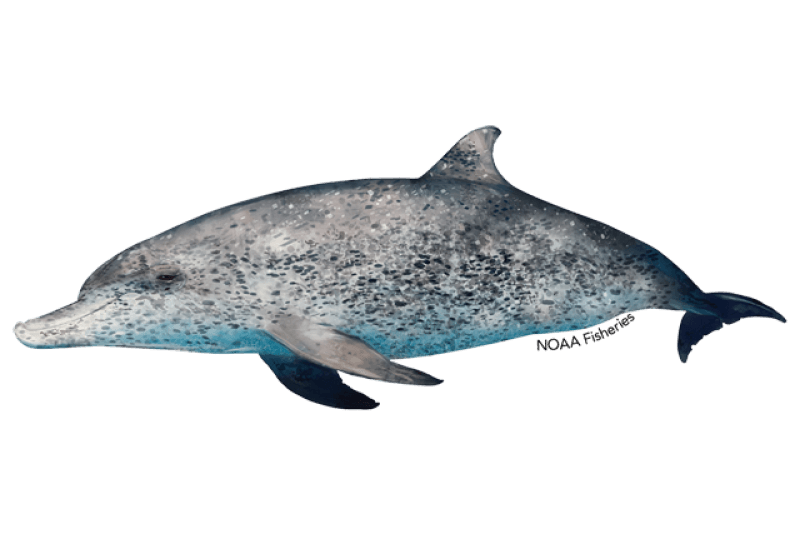
Atlantic spotted dolphins are found in warm temperate and tropical waters of the Atlantic Ocean. They usually form groups of five to 50 individuals but sometimes travel in groups of up to 200. They are fast swimmers and often “surf” in the waves created by vessels.
Young Atlantic spotted dolphins do not have spots. As a result, they can look like slender bottlenose dolphins. They have a distinctive blaze that sweeps up along their sides. Their characteristic spotted pattern starts to appear all over their bodies as they get older.
Atlantic spotted dolphins, like all marine mammals, are protected under the Marine Mammal Protection Act .
NOAA Fisheries and its partners are working to conserve Atlantic spotted dolphins and further our understanding of this species through research and conservation activities.
Maryland record catch
Confirm whether Maryland DNR publishes an Atlantic state-record category for Atlantic Spotted Dolphin on the current sport-fish record board.
Atlantic Spotted Dolphin is a protected marine species in U.S. waters. Do not harvest. This guide is biology and Ocean City context only—not a fishing target.
Atlantic spotted dolphins are about 5 to 7.5 feet long and weigh about 220 to 315 pounds. They have a robust body with a tall, curved dorsal fin located midway down their back. Their beaks are moderately long. Like other cetaceans, their head has a distinctive melon, a rounded forehead that collects sounds from the environment. They have 30 to 42 pairs of small, cone-shaped teeth in each jaw.
Atlantic spotted dolphins’ color patterns vary with age and location. Young dolphins do not have any spots. Instead, they have a dark gray back with a pale white underside. This lack of spots can make young Atlantic spotted dolphins look like slender bottlenose dolphins. An Atlantic spotted dolphin starts to develop spots after one year. As the dolphin matures, the spots become darker and more widespread, especially on its back.
Behavior and Diet Atlantic spotted dolphins are usually found in groups of less than 50 individuals but sometimes travel in groups of up to 200. In coastal waters, groups usually consist of five to 15 individuals. Within these groups, the dolphins are sometimes organized by age or sex. Atlantic spotted dolphins blow bubbles through their blowholes as one way to communicate with members of their group. They also communicate with sound.
Atlantic spotted dolphins are often described as “acrobatic” swimmers, frequently leaping out of the water or jumping at the water’s surface. They can also swim very quickly and often “surf” in the waves created by vessels. They sometimes interact with other cetacean species, such as bottlenose dolphins .
Atlantic spotted dolphins can dive up to 200 feet and have been recorded holding their breath for up to ten minutes. Most of their dives are less than 30 feet and last for 2 to 6 minutes. These dolphins eat small fish, invertebrates, and cephalopods, such as squid and octopi. They have 30 to 42 pairs of small, cone-shaped teeth in each jaw. Groups of dolphins often coordinate their movements to catch prey together. Individuals sometimes use their beaks to dig into the sand on the ocean bottom to catch hidden fish.
Where They Live Atlantic spotted dolphins are found in warm temperate, subtropical, and tropical waters throughout the Atlantic Ocean. Their range includes the waters of the U.S. East Coast (Southern New England to Gulf of America), the Bahamas, Brazil, the Azores and Canary Islands, and Gabon.
Appearance
Atlantic spotted dolphins are usually found in groups of less than 50 individuals but sometimes travel in groups of up to 200. In coastal waters, groups usually consist of five to 15 individuals. Within these groups, the dolphins are sometimes organized by age or sex. Atlantic spotted dolphins blow bubbles through their blowholes as one way to communicate with members of their group. They also communicate with sound.
Atlantic spotted dolphins are often described as “acrobatic” swimmers, frequently leaping out of the water or jumping at the water’s surface. They can also swim very quickly and often “surf” in the waves created by vessels. They sometimes interact with other cetacean species, such as bottlenose dolphins .
Atlantic spotted dolphins can dive up to 200 feet and have been recorded holding their breath for up to ten minutes. Most of their dives are less than 30 feet and last for 2 to 6 minutes. These dolphins eat small fish, invertebrates, and cephalopods, such as squid and octopi. They have 30 to 42 pairs of small, cone-shaped teeth in each jaw. Groups of dolphins often coordinate their movements to catch prey together. Individuals sometimes use their beaks to dig into the sand on the ocean bottom to catch hidden fish.
Where They Live Atlantic spotted dolphins are found in warm temperate, subtropical, and tropical waters throughout the Atlantic Ocean. Their range includes the waters of the U.S. East Coast (Southern New England to Gulf of America), the Bahamas, Brazil, the Azores and Canary Islands, and Gabon.
Atlantic spotted dolphins prefer the waters along the continental shelf (the edge of a continent below the ocean’s surface). They usually live in coastal or continental shelf waters that are 65 to 820 feet deep, but are also found in deeper oceanic waters. Warm currents such as the Gulf Stream may affect their distribution.
Lifespan & Reproduction The estimated lifespan of Atlantic spotted dolphins is unknown. They reach sexual maturity when they are 8 to 15 years old. Females give birth to a single calf every 1 to 5 years. Mothers nurse their calves for 1 to 5 years.
Threats Entanglement One of the main threats to Atlantic spotted dolphins is getting caught in fishing gear. Dolphins can become entangled or captured in commercial fishing gear such as pelagic longline and shrimp trawl gear These interactions can cause dolphins to be injured or killed by entanglement in the gear.
Ocean Noise Underwater noise pollution interrupts the normal behavior of Atlantic spotted dolphins that rely on sound to communicate and echolocate. If loud enough, noise can cause permanent or temporary hearing loss. Noise interference from vessels, as well as industrial and military activities, disturbs Atlantic spotted dolphins’ feeding, communication, and orientation.
Illegal Feeding and Harassment Atlantic spotted dolphins sometimes interact with different types of fishing vessels, often following them and eating discarded catch. A few Atlantic spotted dolphins have been hunted and killed in the Caribbean, South America, West Africa, and other offshore islands for food and bait.
*Executive Order 14172, “Restoring Names That Honor American Greatness” (Jan. 20, 2025), directs that the Gulf of Mexico be renamed the Gulf of America. On August 7, 2025, NOAA Fisheries and the National Ocean Service amended regulations in the Code of Federal Regulations to reflect the renaming. The name change did not result in any changes to, and had no effect on the applicability or enforceability of, any existing regulations. This website continues to use “Gulf of Mexico” when quoting statutes or previously published materials.
Scientific Classification Kingdom Animalia Phylum Chordata Class Mammalia Order Cetacea Family Delphinidae Genus Stenella Species frontalis Last updated by NOAA Fisheries on 08/18/2025
Biology
Atlantic spotted dolphins are found in warm temperate, subtropical, and tropical waters throughout the Atlantic Ocean. Their range includes the waters of the U.S. East Coast (Southern New England to Gulf of America), the Bahamas, Brazil, the Azores and Canary Islands, and Gabon.
Atlantic spotted dolphins prefer the waters along the continental shelf (the edge of a continent below the ocean’s surface). They usually live in coastal or continental shelf waters that are 65 to 820 feet deep, but are also found in deeper oceanic waters. Warm currents such as the Gulf Stream may affect their distribution.
Lifespan & Reproduction The estimated lifespan of Atlantic spotted dolphins is unknown. They reach sexual maturity when they are 8 to 15 years old. Females give birth to a single calf every 1 to 5 years. Mothers nurse their calves for 1 to 5 years.
Threats Entanglement One of the main threats to Atlantic spotted dolphins is getting caught in fishing gear. Dolphins can become entangled or captured in commercial fishing gear such as pelagic longline and shrimp trawl gear These interactions can cause dolphins to be injured or killed by entanglement in the gear.
Ocean Noise Underwater noise pollution interrupts the normal behavior of Atlantic spotted dolphins that rely on sound to communicate and echolocate. If loud enough, noise can cause permanent or temporary hearing loss. Noise interference from vessels, as well as industrial and military activities, disturbs Atlantic spotted dolphins’ feeding, communication, and orientation.
Illegal Feeding and Harassment Atlantic spotted dolphins sometimes interact with different types of fishing vessels, often following them and eating discarded catch. A few Atlantic spotted dolphins have been hunted and killed in the Caribbean, South America, West Africa, and other offshore islands for food and bait.
*Executive Order 14172, “Restoring Names That Honor American Greatness” (Jan. 20, 2025), directs that the Gulf of Mexico be renamed the Gulf of America. On August 7, 2025, NOAA Fisheries and the National Ocean Service amended regulations in the Code of Federal Regulations to reflect the renaming. The name change did not result in any changes to, and had no effect on the applicability or enforceability of, any existing regulations. This website continues to use “Gulf of Mexico” when quoting statutes or previously published materials.
Scientific Classification Kingdom Animalia Phylum Chordata Class Mammalia Order Cetacea Family Delphinidae Genus Stenella Species frontalis Last updated by NOAA Fisheries on 08/18/2025
Where they live
Range
Atlantic spotted dolphins are found in warm temperate, subtropical, and tropical waters throughout the Atlantic Ocean. Their range includes the waters of the U.S. East Coast (Southern New England to Gulf of America), the Bahamas, Brazil, the Azores and Canary Islands, and Gabon.
Atlantic spotted dolphins prefer the waters along the continental shelf (the edge of a continent below the ocean’s surface). They usually live in coastal or continental shelf waters that are 65 to 820 feet deep, but are also found in deeper oceanic waters. Warm currents such as the Gulf Stream may affect their distribution.
Habitat
See the NOAA species profile for habitat detail for this entry.
Ocean City & Mid-Atlantic context
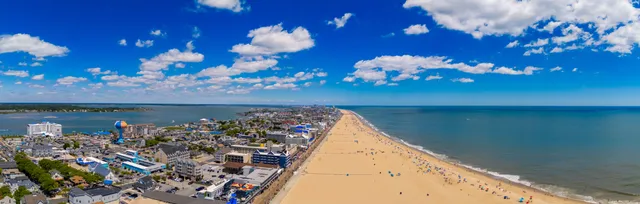
From Ocean City, Maryland, use this Atlantic Spotted Dolphin profile as NOAA Mid-Atlantic directory context—not a promise you will meet the species on every charter.
Atlantic Spotted Dolphin is protected. Do not harvest. Report unusual strandings or entanglements through official channels.
Source facts and imagery are adapted from the NOAA Fisheries species profile for Atlantic Spotted Dolphin.
What charter to book from Ocean City
Atlantic Spotted Dolphin is not a standard Ocean City charter harvest target. Use this profile for NOAA biology and Mid-Atlantic context only.
Not typical from OC
Bay guide — Not a typical Ocean City bay guide target for Atlantic Spotted Dolphin.
Inshore charter — Not a typical Ocean City inshore charter target for Atlantic Spotted Dolphin.
Casting / light tackle — Not a typical Ocean City casting / light tackle target for Atlantic Spotted Dolphin.
Trolling charter — Not a typical Ocean City trolling charter target for Atlantic Spotted Dolphin.
Nearshore wreck / bottom — Not a typical Ocean City nearshore wreck / bottom target for Atlantic Spotted Dolphin.
Offshore charter — Not a typical Ocean City offshore charter target for Atlantic Spotted Dolphin.
Head / party boat — Not a typical Ocean City head / party boat target for Atlantic Spotted Dolphin.
Start with the charter directory trip-type picker so you compare boats inside the right
archetype—not a bay-guide quote against a canyon invoice.