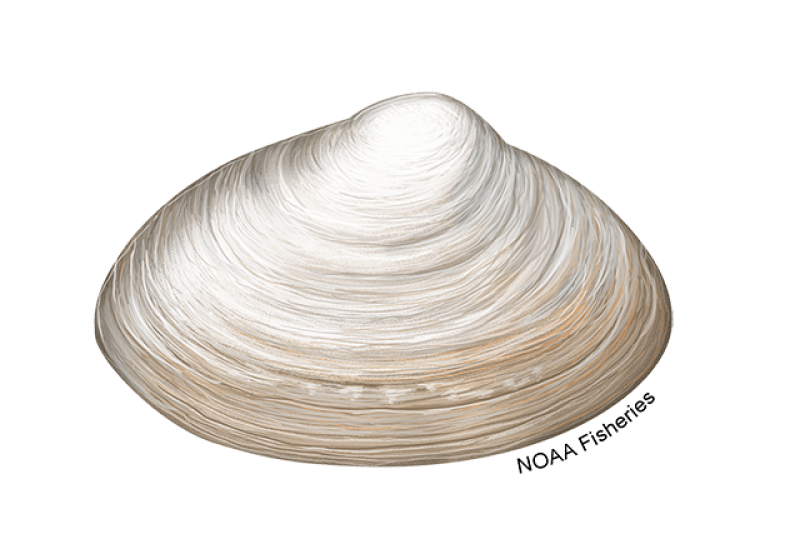
Spisula solidissima , also known as Surfclam, Hen clam, Bar clam, Sea clam. Atlantic surfclams are distributed from the Gulf of St. Lawrence to Cape Hatteras, NC. The U.S. fishery generally concentrates on the populations off the coasts of New Jersey and t
Source: Species facts, status language, and imagery adapted from the NOAA Fisheries species profile (last updated 06/25/2026). Ocean City charter and Maryland
record notes are editorial orientation for OCEANCITY.MD readers. Always confirm current seasons, sizes, and
bag limits before you fish—rules change.
Atlantic surfclams are distributed from the Gulf of St. Lawrence to Cape Hatteras, NC. The U.S. fishery generally concentrates on the populations off the coasts of New Jersey and the Delmarva Peninsula. Dredge and hand harvest are authorized in the commercial fishery, with hydraulic clam dredges being the primary gear type used. The recreational fishery is limited to hand harvest. Surfclams are generally processed for human consumption in soups, chowders, and stews; while a small portion of landings are also sold in the bait market. U.S. wild-caught Atlantic surfclam is a smart seafood choice because it is sustainably managed and responsibly harvested under U.S. regulations. Implementing regulations are found at 50 CFR part 648 subpart E.
Maryland record catch
Confirm whether Maryland DNR publishes an Atlantic state-record category for Atlantic Surfclam on the current sport-fish record board.
Maryland’s Atlantic recreational seasons/sizes/creel summary does not publish a dedicated line for Atlantic Surfclam. Verify COMAR, DNR public notices, and federal rules for your exact waters before you keep fish.
Rule
Maryland / applicable detail
Maryland minimum size
Not listed — no dedicated Atlantic Surfclam line on the MD Atlantic recreational table
Maryland daily creel (bag)
Not listed — no MD species-specific bag for Atlantic Surfclam
Maryland open season
Not listed on the MD Atlantic Ocean / Coastal Bays summary table
Verify
Check DNR eRegulations, COMAR, and NOAA for your date and coordinates before you keep fish.
Surfclams are the largest bivalves found in the western North Atlantic.
They grow up to 8.9 inches, although clams larger than 7.9 inches are rare.
Their shells are thick, triangular, and yellowish-white with rounded edges and concentric ridges.
Shells do not close fully and gape slightly.
Biology Surflclams can live up to 35 years.
On average, surfclams living in open water live longer than those living inshore.
Appearance
Surflclams can live up to 35 years.
On average, surfclams living in open water live longer than those living inshore.
Surfclams grow fast, reaching a harvestable size of about 5 inches in 5 to 7 years.
Growth rates depend on water temperature—southern surfclam populations in warmer water grow more slowly than the more northern populations.
Some are able to reproduce by age 1, but most spawn by the end of their second year.
Surfclams spawn from late spring through early fall.
They shed their eggs and sperm directly into the water column.
Larvae spend about 3 weeks in the water column as plankton before settling to the bottom to live.
Surfclams are planktivorous filter feeders, straining tiny plants out of the water to eat.
Larval surfclams eat algal cells.
Adults primarily feed on diatoms, green algae, and naked flagellates.
Snails, crabs, shrimp, and fish, including haddock and cod, feed on surfclams.
Where They Live Range Atlantic surfclams are found in the western North Atlantic from the southern Gulf of St.
Lawrence to Cape Hatteras, North Carolina.
They’re most abundant on Georges Bank, the south shore of Long Island, New Jersey, and the Delmarva Peninsula.
Habitat Juveniles burrow in medium- to fine-grain sand in waters 30 to 80 feet deep.
Adults prefer medium- to coarse-grain sand and gravel from beach zones to over 160 feet deep.
Surfclams prefer more turbulent waters and bury themselves just below the sediment surface.
Fishery Management NOAA Fisheries , the Mid-Atlantic Fishery Management Council , and state resource management agencies manage the surfclam fishery.
Managed under the Surfclam-Ocean Quahog Fishery Management Plan : Fishermen must have a permit to harvest surfclams.
Individual transferable quota ( catch shares ) program – managers set an annual catch limit for federal waters and allocate it among individual fishermen or vessel owners.
These quotas can be sold or leased.
Minimum size, which can be suspended by managers if they can demonstrate the harvest of small surfclams is below a certain threshold.
Closed areas due to environmental degradation or to toxins that cause paralytic shellfish poisoning (PSP).
Fishermen harvesting surfclams from Georges Bank have additional requirements under the PSP testing protocol.
Mandatory vessel monitoring systems.
Fishermen must maintain and submit logbooks of each fishing trip to document catch.
Surfclams support valuable fisheries in New Jersey and New York state waters (within 3 miles of shore); state authorities are responsible for managing these fisheries.
Harvest In 2024, commercial landings of surfclam totaled 21 million pounds and were valued at approximatly $27 million, according to the NOAA Fisheries commercial fishing landings database .
Surfclams are the most important commercial clam species harvested in the United States.
Commercial fishermen harvest surfclams with hydraulic clam dredges—essentially large, heavy sleds pulled along the sea floor.
High-pressure jets blast water into the sediment, which temporarily liquefies it and allows a steel blade to pass through the first few inches of substrate and scoop the clams onto the dredge, where they are captured in a cage made of steel bars.
Atlantic surfclams burrow into sandy bottoms on the continental shelf, an environment that is thought to recover quickly after a hydraulic clam dredge passes over it.
The bars on commercial clam dredges are spaced several inches apart so they do not collect anything but the targeted surfclams.
The surfclam fishery is managed under an individual transferable quota program that provides fishermen with more flexibility on when to fish, slows the pace of the fishery, and increases its efficiency, significantly reducing bycatch.
Scientific Classification Kingdom Animalia Phylum Mollusca Class Bivalvia Order Venerida Family Mactridae Genus Spisula Species solidissima Last updated by NOAA Fisheries on 06/25/2026
Biology
Atlantic surfclams are found in the western North Atlantic from the southern Gulf of St.
Lawrence to Cape Hatteras, North Carolina.
They’re most abundant on Georges Bank, the south shore of Long Island, New Jersey, and the Delmarva Peninsula.
Habitat Juveniles burrow in medium- to fine-grain sand in waters 30 to 80 feet deep.
Adults prefer medium- to coarse-grain sand and gravel from beach zones to over 160 feet deep.
Surfclams prefer more turbulent waters and bury themselves just below the sediment surface.
Fishery Management NOAA Fisheries , the Mid-Atlantic Fishery Management Council , and state resource management agencies manage the surfclam fishery.
Managed under the Surfclam-Ocean Quahog Fishery Management Plan : Fishermen must have a permit to harvest surfclams.
Individual transferable quota ( catch shares ) program – managers set an annual catch limit for federal waters and allocate it among individual fishermen or vessel owners.
These quotas can be sold or leased.
Minimum size, which can be suspended by managers if they can demonstrate the harvest of small surfclams is below a certain threshold.
Closed areas due to environmental degradation or to toxins that cause paralytic shellfish poisoning (PSP).
Fishermen harvesting surfclams from Georges Bank have additional requirements under the PSP testing protocol.
Mandatory vessel monitoring systems.
Fishermen must maintain and submit logbooks of each fishing trip to document catch.
Surfclams support valuable fisheries in New Jersey and New York state waters (within 3 miles of shore); state authorities are responsible for managing these fisheries.
Harvest In 2024, commercial landings of surfclam totaled 21 million pounds and were valued at approximatly $27 million, according to the NOAA Fisheries commercial fishing landings database .
Surfclams are the most important commercial clam species harvested in the United States.
Commercial fishermen harvest surfclams with hydraulic clam dredges—essentially large, heavy sleds pulled along the sea floor.
High-pressure jets blast water into the sediment, which temporarily liquefies it and allows a steel blade to pass through the first few inches of substrate and scoop the clams onto the dredge, where they are captured in a cage made of steel bars.
Atlantic surfclams burrow into sandy bottoms on the continental shelf, an environment that is thought to recover quickly after a hydraulic clam dredge passes over it.
The bars on commercial clam dredges are spaced several inches apart so they do not collect anything but the targeted surfclams.
The surfclam fishery is managed under an individual transferable quota program that provides fishermen with more flexibility on when to fish, slows the pace of the fishery, and increases its efficiency, significantly reducing bycatch.
Scientific Classification Kingdom Animalia Phylum Mollusca Class Bivalvia Order Venerida Family Mactridae Genus Spisula Species solidissima Last updated by NOAA Fisheries on 06/25/2026
Where they live
Range
Atlantic surfclams are found in the western North Atlantic from the southern Gulf of St.
Lawrence to Cape Hatteras, North Carolina.
Habitat
NOAA Fisheries , the Mid-Atlantic Fishery Management Council , and state resource management agencies manage the surfclam fishery.
Managed under the Surfclam-Ocean Quahog Fishery Management Plan : Fishermen must have a permit to harvest surfclams.
Individual transferable quota ( catch shares ) program – managers set an annual catch limit for federal waters and allocate it among individual fishermen or vessel owners.
These quotas can be sold or leased.
Minimum size, which can be suspended by managers if they can demonstrate the harvest of small surfclams is below a certain threshold.
Closed areas due to environmental degradation or to toxins that cause paralytic shellfish poisoning (PSP).
Fishermen harvesting surfclams from Georges Bank have additional requirements under the PSP testing protocol.
Mandatory vessel monitoring systems.
Fishermen must maintain and submit logbooks of each fishing trip to document catch.
Surfclams support valuable fisheries in New Jersey and New York state waters (within 3 miles of shore); state authorities are responsible for managing these fisheries.
Harvest In 2024, commercial landings of surfclam totaled 21 million pounds and were valued at approximatly $27 million, according to the NOAA Fisheries commercial fishing landings database .
Surfclams are the most important commercial clam species harvested in the United States.
Commercial fishermen harvest surfclams with hydraulic clam dredges—essentially large, heavy sleds pulled along the sea floor.
High-pressure jets blast water into the sediment, which temporarily liquefies it and allows a steel blade to pass through the first few inches of substrate and scoop the clams onto the dredge, where they are captured in a cage made of steel bars.
Atlantic surfclams burrow into sandy bottoms on the continental shelf, an environment that is thought to recover quickly after a hydraulic clam dredge passes over it.
The bars on commercial clam dredges are spaced several inches apart so they do not collect anything but the targeted surfclams.
The surfclam fishery is managed under an individual transferable quota program that provides fishermen with more flexibility on when to fish, slows the pace of the fishery, and increases its efficiency, significantly reducing bycatch.
Scientific Classification Kingdom Animalia Phylum Mollusca Class Bivalvia Order Venerida Family Mactridae Genus Spisula Species solidissima Last updated by NOAA Fisheries on 06/25/2026
Ocean City & Mid-Atlantic context
From Ocean City, Maryland, use this Atlantic Surfclam profile as NOAA Mid-Atlantic directory context—not a promise you will meet the species on every charter.
Always verify current Maryland and federal size, season, and bag rules for your exact date and coordinates before you keep any catch.
Source facts and imagery are adapted from the NOAA Fisheries species profile for Atlantic Surfclam.
What charter to book from Ocean City
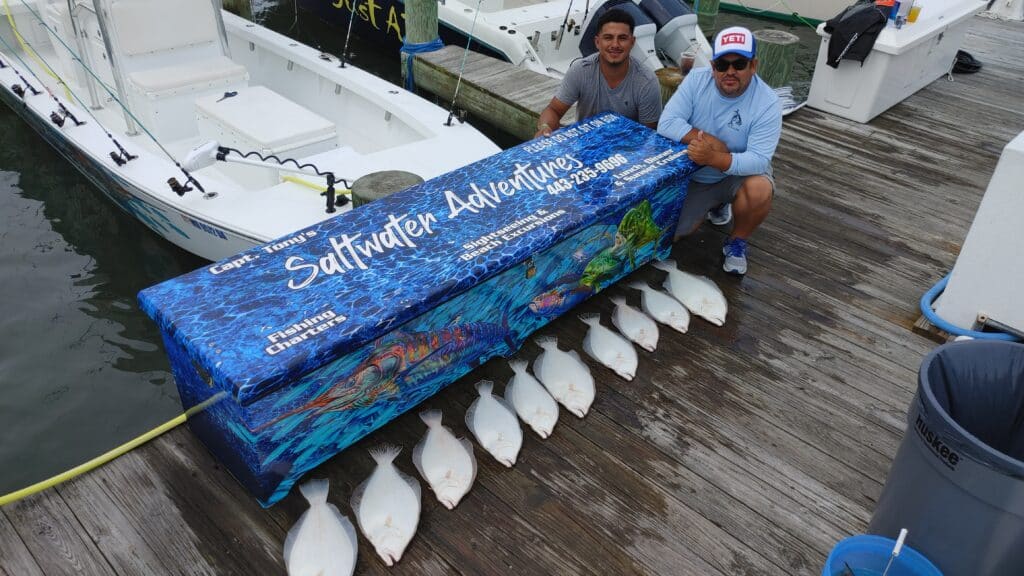
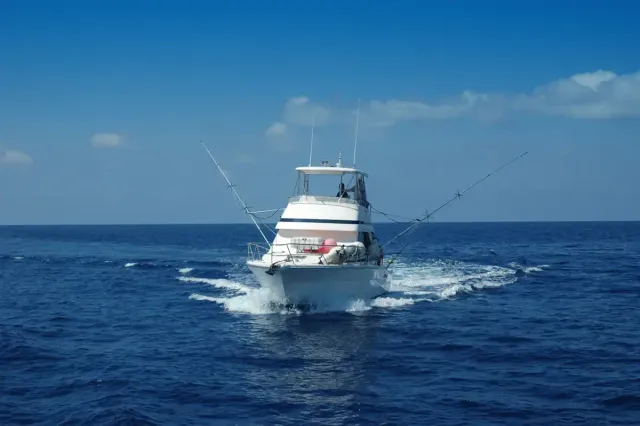
Atlantic Surfclam is more of a bay, inshore, or specialty harvest story than a typical OC six-pack trolling day—match the trip type to the animal.
Possible / related
Bay guide — Possible overlap depending on season, water, and boat program.
Inshore charter — Possible overlap depending on season, water, and boat program.
In 2024, commercial landings of surfclam totaled 21 million pounds and were valued at approximatly $27 million, according to the NOAA Fisheries commercial fishing landings database .
Surfclams are the most important commercial clam species harvested in the United States.
Commercial fishermen harvest surfclams with hydraulic clam dredges—essentially large, heavy sleds pulled along the sea floor.
High-pressure jets blast water into the sediment, which temporarily liquefies it and allows a steel blade to pass through the first few inches of substrate and scoop the clams onto the dredge, where they are captured in a cage made of steel bars.
Atlantic surfclams burrow into sandy bottoms on the continental shelf, an environment that is thought to recover quickly after a hydraulic clam dredge passes over it.
The bars on commercial clam dredges are spaced several inches apart so they do not collect anything but the targeted surfclams.
The surfclam fishery is managed under an individual transferable quota program that provides fishermen with more flexibility on when to fish, slows the pace of the fishery, and increases its efficiency, significantly reducing bycatch.
Scientific Classification Kingdom Animalia Phylum Mollusca Class Bivalvia Order Venerida Family Mactridae Genus Spisula Species solidissima Last updated by NOAA Fisheries on 06/25/2026
Harvest
See the NOAA wild-caught fishery section for landings and gear notes when published for this species.
Landings and management details matter most for the waters where Atlantic Surfclam is actually fished—see the
NOAA species profile
.
Seafood facts
Fact
Detail
Availability
Year-round. Sold processed, rather than live, in fresh, frozen, and canned products such as breaded clam strips, minced clams, stuffed clams, chowders, and broth.
Source
U.S. wild-caught from New England to North Carolina. The United States is the only source of Atlantic surfclams.
Taste
When cooked, the white meat is mild and sweet.
Texture
Chewy.
Color
The raw meat is whitish-orange. Cooked meat ranges from ivory to golden yellow, with some dark areas.
Health
Surfclams provide low-fat, high-quality protein and are an excellent source of selenium and niacin.
After a real OC boat day or market stop for Atlantic Surfclam, Seafood after boat days covers
dock buffer and cook-your-catch pacing.