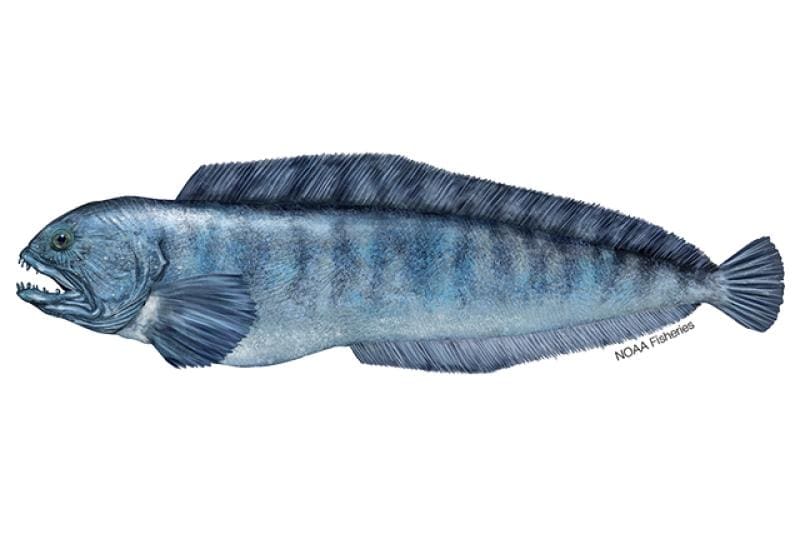
Anarhichas lupus . Wolffish are named for their canine-like front teeth. They are generally found in deep waters of the northwestern Atlantic and are managed with other groundfish as part of the Nort
Source: Species facts, status language, and imagery adapted from the NOAA Fisheries species profile (last updated 05/06/2024). Ocean City charter and Maryland
record notes are editorial orientation for OCEANCITY.MD readers. Always confirm current seasons, sizes, and
bag limits before you fish—rules change.
Wolffish are named for their canine-like front teeth. They are generally found in deep waters of the northwestern Atlantic and are managed with other groundfish as part of the Northeast multispecies groundfish complex .
Maryland record catch
Confirm whether Maryland DNR publishes an Atlantic state-record category for Atlantic Wolffish on the current sport-fish record board.
Maryland’s Atlantic recreational seasons/sizes/creel summary does not publish a dedicated line for Atlantic Wolffish. Verify COMAR, DNR public notices, and federal rules for your exact waters before you keep fish.
Rule
Maryland / applicable detail
Maryland minimum size
Not listed — no dedicated Atlantic Wolffish line on the MD Atlantic recreational table
Maryland daily creel (bag)
Not listed — no MD species-specific bag for Atlantic Wolffish
Maryland open season
Not listed on the MD Atlantic Ocean / Coastal Bays summary table
Verify
Check DNR eRegulations, COMAR, and NOAA for your date and coordinates before you keep fish.
Atlantic wolffish have a tapered body shape with a large rounded head and a slender tail.
Wolffish have multiple rows of teeth, some of which project prominently from their mouth.
Adult wolffish are blueish-gray in color, and the underside of their body is typically lighter than the top side.
Adult wolffish have a series of dark vertical patches running along the length of their body.
Biology Wolffish inhabit complex, rocky habitats.
Wolffish are relatively sedentary and they typically live alone, except during spawning season when male and female wolffish form bonded pairs.
Appearance
Wolffish inhabit complex, rocky habitats.
Wolffish are relatively sedentary and they typically live alone, except during spawning season when male and female wolffish form bonded pairs.
Wolffish typically begin to reproduce by the time they reach ages 5 to 6.
Peak spawning season for Atlantic wolffish is September to October.
Wolffish lay their eggs in masses, which the males guard for approximately 3 to 9 months until they hatch.
Adult wolffish primarily feed on bottom-dwelling invertebrates, such as scallops, hermit crabs, Jonah crabs, and sea urchins.
Where They Live Range Atlantic wolffish are found along the Atlantic Coast of North America from Labrador to Great South Channel and Georges Bank.
Fishery Management NOAA Fisheries manages a single stock of Atlantic wolffish in U.S. waters.
Atlantic wolffish is a zero-possession species, meaning vessels holding a federal groundfish permit may not fish for, possess, or land Atlantic wolffish.
NOAA Fisheries and the New England Fishery Management Council manage the fishery.
Wolffish, along with other groundfish in New England waters, are managed under the Northeast Multispecies Fishery Management Plan , which includes: Permitting requirements for commercial vessels.
Separate management measures for recreational vessels.
Time/area closures to protect spawning fish and habitat.
Minimum fish sizes to prevent harvest of juvenile fish.
Annual catch limits, based on best available science.
An optional sector ( catch share ) program can be used for cod and other groundfish species.
The sector program allows fishermen to form harvesting cooperatives and work together to decide when, where, and how they harvest fish.
Scientific Classification Kingdom Animalia Phylum Chordata Class Actinopterygii Order Scorpaeniformes Family Anarhichadidae Genus Anarhichas Species lupus Last updated by NOAA Fisheries on 05/06/2024
Biology
Atlantic wolffish are found along the Atlantic Coast of North America from Labrador to Great South Channel and Georges Bank.
Fishery Management NOAA Fisheries manages a single stock of Atlantic wolffish in U.S. waters.
Atlantic wolffish is a zero-possession species, meaning vessels holding a federal groundfish permit may not fish for, possess, or land Atlantic wolffish.
NOAA Fisheries and the New England Fishery Management Council manage the fishery.
Wolffish, along with other groundfish in New England waters, are managed under the Northeast Multispecies Fishery Management Plan , which includes: Permitting requirements for commercial vessels.
Separate management measures for recreational vessels.
Time/area closures to protect spawning fish and habitat.
Minimum fish sizes to prevent harvest of juvenile fish.
Annual catch limits, based on best available science.
An optional sector ( catch share ) program can be used for cod and other groundfish species.
The sector program allows fishermen to form harvesting cooperatives and work together to decide when, where, and how they harvest fish.
Scientific Classification Kingdom Animalia Phylum Chordata Class Actinopterygii Order Scorpaeniformes Family Anarhichadidae Genus Anarhichas Species lupus Last updated by NOAA Fisheries on 05/06/2024
Where they live
Range
Atlantic wolffish are found along the Atlantic Coast of North America from Labrador to Great South Channel and Georges Bank.
Fishery Management NOAA Fisheries manages a single stock of Atlantic wolffish in U.S. waters.
Habitat
See the NOAA species profile for habitat detail for this entry.
Ocean City & Mid-Atlantic context
From Ocean City, Maryland, use this Atlantic Wolffish profile as NOAA Mid-Atlantic directory context—not a promise you will meet the species on every charter.
Always verify current Maryland and federal size, season, and bag rules for your exact date and coordinates before you keep any catch.
Source facts and imagery are adapted from the NOAA Fisheries species profile for Atlantic Wolffish.
What charter to book from Ocean City
Atlantic Wolffish may appear on Ocean City trips depending on season and habitat—use the NOAA biology below and book the charter archetype that matches how you will actually fish.
Possible / related
Bay guide — Possible overlap depending on season, water, and boat program.
Inshore charter — Possible overlap depending on season, water, and boat program.
Atlantic wolffish is managed under the Northeast Multispecies (Groundfish) Fishery Management Plan along with 12 other species of groundfish. Collectively, these 13 species are referred to as the Northeast multispecies complex.
Learn more about the Northeast multispecies complex and its management
Harvest
See the NOAA wild-caught fishery section for landings and gear notes when published for this species.
Landings and management details matter most for the waters where Atlantic Wolffish is actually fished—see the
NOAA species profile
.