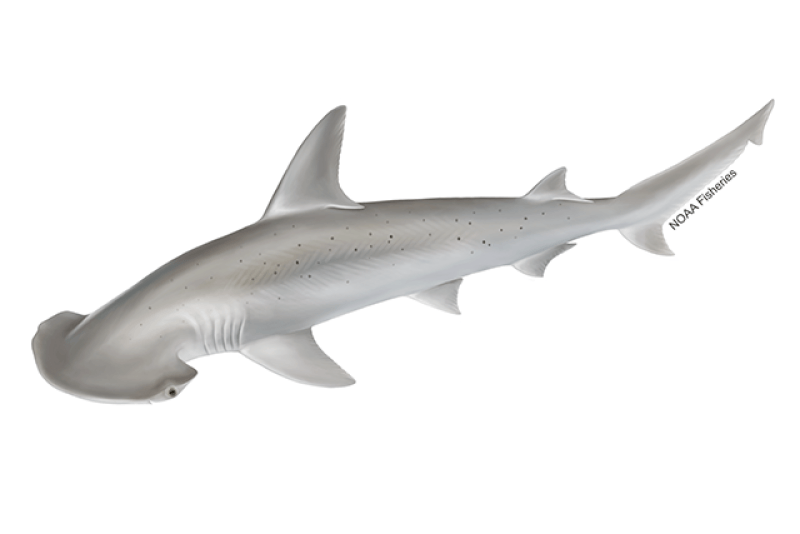
Sphyrna tiburo , also known as Bonnet hammerhead, Bonnet shark, Bonnetnose shark, Shovelhead. Bonnethead sharks are the smallest members of the hammerhead shark family, Sphyrnidae. Recognizable by their distinct shovel-shaped head, bonnethead sharks are found in warm, shall
Source: Species facts, status language, and imagery adapted from the NOAA Fisheries species profile (last updated 09/23/2025). Ocean City charter and Maryland
record notes are editorial orientation for OCEANCITY.MD readers. Always confirm current seasons, sizes, and
bag limits before you fish—rules change.
Lifespan: Estimated 18 years (females) and 16 years (males)
Region: New England/Mid-Atlantic,
Southeast,
West Coast
Category: Shark / ray · Mid-Atlantic
Maryland likelihood: 2★ out of 5
About the species
Bonnethead sharks are the smallest members of the hammerhead shark family, Sphyrnidae. Recognizable by their distinct shovel-shaped head, bonnethead sharks are found in warm, shallow coastal waters.
NOAA Fisheries manages bonnethead sharks as part of the small coastal shark complex, which also includes Atlantic sharpnose , Atlantic blacknose , and finetooth sharks.
Maryland record catch
Confirm whether Maryland DNR publishes an Atlantic state-record category for Bonnethead Shark on the current sport-fish record board.
Maryland’s Atlantic recreational seasons/sizes/creel summary does not publish a dedicated line for Bonnethead Shark. Verify COMAR, DNR public notices, and federal rules for your exact waters before you keep fish.
Rule
Maryland / applicable detail
Maryland minimum size
Not listed — no dedicated Bonnethead Shark line on the MD Atlantic recreational table
Maryland daily creel (bag)
Not listed — no MD species-specific bag for Bonnethead Shark
Maryland open season
Not listed on the MD Atlantic Ocean / Coastal Bays summary table
Verify
Check DNR eRegulations, COMAR, and NOAA for your date and coordinates before you keep fish.
Bonnethead sharks have gray, tan, or greenish upper bodies and paler bellies. Their backs and sides are often scattered with small dark spots. Their eyes are located on the rounded lobes of their shovel-shaped head, increasing their field of vision.
Biology Female bonnethead sharks are typically larger than males. The species can reach an average of 3 to 4 feet, with a maximum length of about 5 feet. The heaviest recorded weight for a bonnethead shark is 24 pounds.
Bonnethead sharks are the only shark species that have a different head shape depending on their sex. Adult females have an evenly rounded head, while adult males have a distinct bulge in the center of their heads. This difference appears when males reach sexual maturity.
Female bonnethead sharks give birth to 4 to 14 live pups in late summer or early fall after a roughly 5-month gestation period. Pups measure around 12 inches at birth.
Bonnethead sharks are omnivores. In addition to fish, crabs, snails, and shrimp, they graze on seagrass.
Where They Live Range In the Atlantic Ocean, bonnethead sharks are primarily found off the coast of North Carolina to southern Brazil, including the Gulf of America and Caribbean Sea. Although it’s rare, they have been seen as far north as Rhode Island.
Appearance
Female bonnethead sharks are typically larger than males. The species can reach an average of 3 to 4 feet, with a maximum length of about 5 feet. The heaviest recorded weight for a bonnethead shark is 24 pounds.
Bonnethead sharks are the only shark species that have a different head shape depending on their sex. Adult females have an evenly rounded head, while adult males have a distinct bulge in the center of their heads. This difference appears when males reach sexual maturity.
Female bonnethead sharks give birth to 4 to 14 live pups in late summer or early fall after a roughly 5-month gestation period. Pups measure around 12 inches at birth.
Bonnethead sharks are omnivores. In addition to fish, crabs, snails, and shrimp, they graze on seagrass.
Where They Live Range In the Atlantic Ocean, bonnethead sharks are primarily found off the coast of North Carolina to southern Brazil, including the Gulf of America and Caribbean Sea. Although it’s rare, they have been seen as far north as Rhode Island.
In the Pacific Ocean, the species’ range spans from southern California to Ecuador. They are rarely seen north of San Diego.
Habitat Bonnethead sharks live in shallow coastal waters over sandy or muddy bottoms, coral reefs, and grass flats. They are common in bays and estuaries.
Fishery Management NOAA Fisheries manages sharks in federal waters under the Consolidated Atlantic Highly Migratory Species (HMS) Fishery Management Plan . Commercial, recreational, and for-hire fishermen must comply with permit requirements, trip limits, gear restrictions, finning prohibitions, closed areas, and reporting requirements to land bonnethead sharks.
Bonnethead sharks can only be sold to federally permitted shark dealers. Shark dealers are required to attend Atlantic shark identification workshops to help them better identify shark species.
Harvest In 2022, commercial landings of bonnethead sharks totaled just over 2,800 pounds.
*Executive Order 14172, “Restoring Names That Honor American Greatness” (Jan. 20, 2025), directs that the Gulf of Mexico be renamed the Gulf of America. On August 7, 2025, NOAA Fisheries and the National Ocean Service amended regulations in the Code of Federal Regulations to reflect the renaming. The name change did not result in any changes to, and had no effect on the applicability or enforceability of, any existing regulations. This website continues to use “Gulf of Mexico” when quoting statutes or previously published materials.
Biology
In the Atlantic Ocean, bonnethead sharks are primarily found off the coast of North Carolina to southern Brazil, including the Gulf of America and Caribbean Sea. Although it’s rare, they have been seen as far north as Rhode Island.
In the Pacific Ocean, the species’ range spans from southern California to Ecuador. They are rarely seen north of San Diego.
Habitat Bonnethead sharks live in shallow coastal waters over sandy or muddy bottoms, coral reefs, and grass flats. They are common in bays and estuaries.
Fishery Management NOAA Fisheries manages sharks in federal waters under the Consolidated Atlantic Highly Migratory Species (HMS) Fishery Management Plan . Commercial, recreational, and for-hire fishermen must comply with permit requirements, trip limits, gear restrictions, finning prohibitions, closed areas, and reporting requirements to land bonnethead sharks.
Bonnethead sharks can only be sold to federally permitted shark dealers. Shark dealers are required to attend Atlantic shark identification workshops to help them better identify shark species.
Harvest In 2022, commercial landings of bonnethead sharks totaled just over 2,800 pounds.
*Executive Order 14172, “Restoring Names That Honor American Greatness” (Jan. 20, 2025), directs that the Gulf of Mexico be renamed the Gulf of America. On August 7, 2025, NOAA Fisheries and the National Ocean Service amended regulations in the Code of Federal Regulations to reflect the renaming. The name change did not result in any changes to, and had no effect on the applicability or enforceability of, any existing regulations. This website continues to use “Gulf of Mexico” when quoting statutes or previously published materials.
Where they live
Range
In the Atlantic Ocean, bonnethead sharks are primarily found off the coast of North Carolina to southern Brazil, including the Gulf of America and Caribbean Sea. Although it’s rare, they have been seen as far north as Rhode Island.
In the Pacific Ocean, the species’ range spans from southern California to Ecuador. They are rarely seen north of San Diego.
Habitat
NOAA Fisheries manages sharks in federal waters under the Consolidated Atlantic Highly Migratory Species (HMS) Fishery Management Plan . Commercial, recreational, and for-hire fishermen must comply with permit requirements, trip limits, gear restrictions, finning prohibitions, closed areas, and reporting requirements to land bonnethead sharks.
Bonnethead sharks can only be sold to federally permitted shark dealers. Shark dealers are required to attend Atlantic shark identification workshops to help them better identify shark species.
Harvest In 2022, commercial landings of bonnethead sharks totaled just over 2,800 pounds.
*Executive Order 14172, “Restoring Names That Honor American Greatness” (Jan. 20, 2025), directs that the Gulf of Mexico be renamed the Gulf of America. On August 7, 2025, NOAA Fisheries and the National Ocean Service amended regulations in the Code of Federal Regulations to reflect the renaming. The name change did not result in any changes to, and had no effect on the applicability or enforceability of, any existing regulations. This website continues to use “Gulf of Mexico” when quoting statutes or previously published materials.
Ocean City & Mid-Atlantic context
From Ocean City, Maryland, use this Bonnethead Shark profile as NOAA Mid-Atlantic directory context—not a promise you will meet the species on every charter.
Always verify current Maryland and federal size, season, and bag rules for your exact date and coordinates before you keep any catch.
Source facts and imagery are adapted from the NOAA Fisheries species profile for Bonnethead Shark.
What charter to book from Ocean City
Bonnethead Shark may show on Ocean City shark, wreck, or offshore days depending on season and permits—confirm HMS/state rules before you book or keep fish.
Possible / related
Inshore charter — Possible overlap depending on season, water, and boat program.
In 2022, commercial landings of bonnethead sharks totaled just over 2,800 pounds.
*Executive Order 14172, “Restoring Names That Honor American Greatness” (Jan. 20, 2025), directs that the Gulf of Mexico be renamed the Gulf of America. On August 7, 2025, NOAA Fisheries and the National Ocean Service amended regulations in the Code of Federal Regulations to reflect the renaming. The name change did not result in any changes to, and had no effect on the applicability or enforceability of, any existing regulations. This website continues to use “Gulf of Mexico” when quoting statutes or previously published materials.
Harvest
See the NOAA wild-caught fishery section for landings and gear notes when published for this species.
Landings and management details matter most for the waters where Bonnethead Shark is actually fished—see the
NOAA species profile
.
Seafood facts
Fact
Detail
Sustainability
U.S. wild-caught bonnethead shark is a smart seafood choice because it is sustainably managed and responsibly harvested under U.S. regulations.
Availability
Year-round.
Source
U.S. wild-caught from North Carolina to Florida, the Gulf of America (formerly Gulf of Mexico), and Caribbean Sea.
Taste
Sweet, meaty taste.
Texture
Thick, large flakes and moist flesh.
Color
Raw meat is white to tan with a pink blood line
Health
Shark is a low-fat source of protein and is high in selenium and vitamins B6 and B12.
After a real OC boat day or market stop for Bonnethead Shark, Seafood after boat days covers
dock buffer and cook-your-catch pacing.