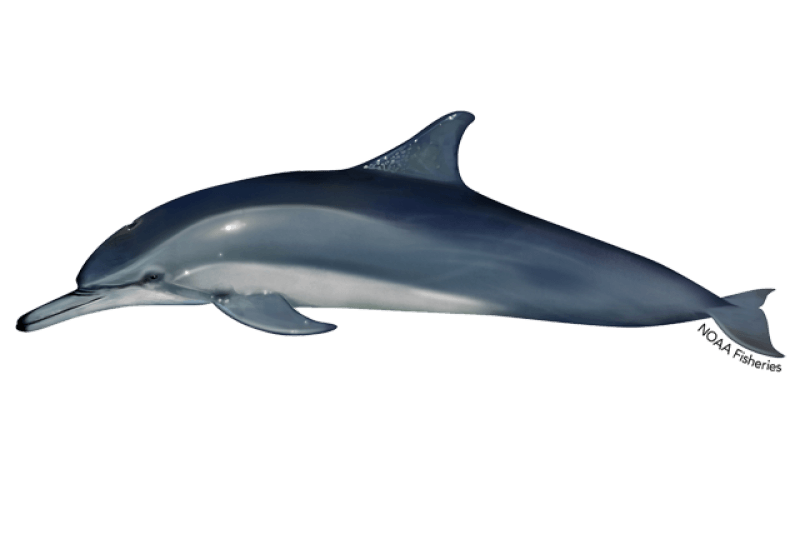
Stenella clymene . Clymene dolphins are found in the deep, tropical waters of the Atlantic Ocean. They are the smallest dolphin in the genus Stenella , which also includes spinner dolphins , Atlantic
Source: Species facts, status language, and imagery adapted from the NOAA Fisheries species profile (last updated 08/20/2025). Ocean City charter and Maryland
record notes are editorial orientation for OCEANCITY.MD readers. Always confirm current seasons, sizes, and
bag limits before you fish—rules change.
Clymene dolphins are found in the deep, tropical waters of the Atlantic Ocean. They are the smallest dolphin in the genus Stenella , which also includes spinner dolphins , Atlantic spotted dolphins , pantropical spotted dolphins , and striped dolphins .
Clymene dolphins are also known as "short-snouted spinner dolphins" because they often spin while jumping out of the water.
Clymene dolphins, like all marine mammals, are protected under the Marine Mammal Protection Act . NOAA Fisheries and its partners are working to conserve Clymene dolphins and further our understanding of this species through research and conservation activities.
Maryland record catch
Confirm whether Maryland DNR publishes an Atlantic state-record category for Clymene Dolphin on the current sport-fish record board.
Clymene dolphins are about six to 6.5 feet long and weigh about 165 to 200 pounds. They have a streamlined body with a tall, curved dorsal fin located midway down their back. Their beaks are moderately short. Like other cetaceans, their head has a distinctive "melon," a rounded forehead that collects sounds from the environment.
Clymene dolphins have a three-part color pattern with a dark gray back, light gray sides, and a white or pale gray underside. They have distinct black lips that can look like a mustache, as well as a dark line that extends across the top of their beak. They also have 39 to 52 pairs of small, cone-shaped teeth in each jaw.
Behavior and Diet Clymene dolphins are usually found in groups of 60 to 80 individuals but sometimes travel in groups of up to 200. These groups are sometimes organized by age and sex.
Clymene dolphins are often described as “acrobatic” swimmers because they often leap out of the water, spin in the air, and “surf” in the waves created by vessels. They sometimes interact with other cetacean species, such as common dolphins off West Africa and spinner dolphins in the Caribbean Sea.
Clymene dolphins dive to catch small fish and cephalopods (e.g., squid and octopi). They sometimes feed at night to catch prey that migrate towards the water’s surface after dark.
Where They Live Clymene dolphins are found in deep tropical, subtropical, and temperate waters throughout the Atlantic Ocean. Their range includes the waters of the northwestern Atlantic Ocean (New Jersey), Gulf of America, Caribbean Sea, southern Brazil, and West Africa (Mauritania to Angola).
Appearance
Clymene dolphins are usually found in groups of 60 to 80 individuals but sometimes travel in groups of up to 200. These groups are sometimes organized by age and sex.
Clymene dolphins are often described as “acrobatic” swimmers because they often leap out of the water, spin in the air, and “surf” in the waves created by vessels. They sometimes interact with other cetacean species, such as common dolphins off West Africa and spinner dolphins in the Caribbean Sea.
Clymene dolphins dive to catch small fish and cephalopods (e.g., squid and octopi). They sometimes feed at night to catch prey that migrate towards the water’s surface after dark.
Where They Live Clymene dolphins are found in deep tropical, subtropical, and temperate waters throughout the Atlantic Ocean. Their range includes the waters of the northwestern Atlantic Ocean (New Jersey), Gulf of America, Caribbean Sea, southern Brazil, and West Africa (Mauritania to Angola).
Clymene dolphins prefer deep waters off the continental shelf (the edge of a continent below the ocean’s surface). They are usually found in oceanic waters 820 to 16,400 feet deep.
Lifespan & Reproduction The estimated lifespan of Clymene dolphins is unknown, and little is known about their reproductive habits. These dolphins reach sexual maturity once they are 6 feet long. Females give birth to a single calf that weighs about 22 pounds.
Threats Entanglement One of the main threats to Clymene dolphins becoming entangled or captured in commercial fishing gear. Specifically, they have been caught in gillnet operations in Venezuela and tuna purse seine nets off the coast of West Africa. Entanglement during these interactions can injure or kill dolphins.
Ocean Noise Underwater noise pollution interrupts the normal behavior of Clymene dolphins that rely on sound to communicate and echolocate. If loud enough, noise can cause permanent or temporary hearing loss. Noise interference from vessels, as well as industrial and military activities, disturbs Clymene dolphins’ feeding, communication, and orientation.
Hunting Whalers in the Caribbean Sea (Lesser Antilles) sometimes target and hunt Clymene dolphins using harpoons for meat and oil.
*Executive Order 14172, “Restoring Names That Honor American Greatness” (Jan. 20, 2025), directs that the Gulf of Mexico be renamed the Gulf of America. On August 7, 2025, NOAA Fisheries and the National Ocean Service amended regulations in the Code of Federal Regulations to reflect the renaming. The name change did not result in any changes to, and had no effect on the applicability or enforceability of, any existing regulations. This website continues to use “Gulf of Mexico” when quoting statutes or previously published materials.
Scientific Classification Kingdom Animalia Phylum Chordata Class Mammalia Order Cetacea Family Delphinidae Genus Stenella Species clymene Last updated by NOAA Fisheries on 08/20/2025
Biology
Clymene dolphins are found in deep tropical, subtropical, and temperate waters throughout the Atlantic Ocean. Their range includes the waters of the northwestern Atlantic Ocean (New Jersey), Gulf of America, Caribbean Sea, southern Brazil, and West Africa (Mauritania to Angola).
Clymene dolphins prefer deep waters off the continental shelf (the edge of a continent below the ocean’s surface). They are usually found in oceanic waters 820 to 16,400 feet deep.
Lifespan & Reproduction The estimated lifespan of Clymene dolphins is unknown, and little is known about their reproductive habits. These dolphins reach sexual maturity once they are 6 feet long. Females give birth to a single calf that weighs about 22 pounds.
Threats Entanglement One of the main threats to Clymene dolphins becoming entangled or captured in commercial fishing gear. Specifically, they have been caught in gillnet operations in Venezuela and tuna purse seine nets off the coast of West Africa. Entanglement during these interactions can injure or kill dolphins.
Ocean Noise Underwater noise pollution interrupts the normal behavior of Clymene dolphins that rely on sound to communicate and echolocate. If loud enough, noise can cause permanent or temporary hearing loss. Noise interference from vessels, as well as industrial and military activities, disturbs Clymene dolphins’ feeding, communication, and orientation.
Hunting Whalers in the Caribbean Sea (Lesser Antilles) sometimes target and hunt Clymene dolphins using harpoons for meat and oil.
*Executive Order 14172, “Restoring Names That Honor American Greatness” (Jan. 20, 2025), directs that the Gulf of Mexico be renamed the Gulf of America. On August 7, 2025, NOAA Fisheries and the National Ocean Service amended regulations in the Code of Federal Regulations to reflect the renaming. The name change did not result in any changes to, and had no effect on the applicability or enforceability of, any existing regulations. This website continues to use “Gulf of Mexico” when quoting statutes or previously published materials.
Scientific Classification Kingdom Animalia Phylum Chordata Class Mammalia Order Cetacea Family Delphinidae Genus Stenella Species clymene Last updated by NOAA Fisheries on 08/20/2025
Where they live
Range
Clymene dolphins are found in deep tropical, subtropical, and temperate waters throughout the Atlantic Ocean. Their range includes the waters of the northwestern Atlantic Ocean (New Jersey), Gulf of America, Caribbean Sea, southern Brazil, and West Africa (Mauritania to Angola).
Clymene dolphins prefer deep waters off the continental shelf (the edge of a continent below the ocean’s surface). They are usually found in oceanic waters 820 to 16,400 feet deep.
Habitat
See the NOAA species profile for habitat detail for this entry.
Ocean City & Mid-Atlantic context
From Ocean City, Maryland, use this Clymene Dolphin profile as NOAA Mid-Atlantic directory context—not a promise you will meet the species on every charter.
Clymene Dolphin is protected. Do not harvest. Report unusual strandings or entanglements through official channels.
Source facts and imagery are adapted from the NOAA Fisheries species profile for Clymene Dolphin.
What charter to book from Ocean City
Clymene Dolphin is not a standard Ocean City charter harvest target. Use this profile for NOAA biology and Mid-Atlantic context only.
Not typical from OC
Bay guide — Not a typical Ocean City bay guide target for Clymene Dolphin.
Inshore charter — Not a typical Ocean City inshore charter target for Clymene Dolphin.
Casting / light tackle — Not a typical Ocean City casting / light tackle target for Clymene Dolphin.
Trolling charter — Not a typical Ocean City trolling charter target for Clymene Dolphin.
Nearshore wreck / bottom — Not a typical Ocean City nearshore wreck / bottom target for Clymene Dolphin.
Offshore charter — Not a typical Ocean City offshore charter target for Clymene Dolphin.
Head / party boat — Not a typical Ocean City head / party boat target for Clymene Dolphin.
Start with the charter directory trip-type picker so you compare boats inside the right
archetype—not a bay-guide quote against a canyon invoice.
Overseeing Marine Mammal Health and Stranding Response We work with volunteer networks in all coastal states to respond to marine mammal strandings including all dolphins and porpoises. When stranded animals are found alive, NOAA Fisheries and our partners assess the animal’s health and determine the best course of action. When stranded animals are found dead, our scientists work to understand and investigate the cause of death. Although the cause often remains unknown, scientists can sometimes attribute strandings to disease, harmful algal blooms, vessel strikes, fishing gear entanglements, pollution exposure, and underwater noise. Some strandings can serve as indicators of ocean health, giving insight into larger environmental issues that may also have implications for human health and welfare.
Learn more about the Marine Mammal Health and Stranding Response Program
Marine Mammal Unusual Mortality Events Clymene dolphins have been part of a declared unusual mortality event in the past . Under the Marine Mammal Protection Act , an unusual mortality event is defined as "a stranding that is unexpected; involves a significant die-off of any marine mammal population; and demands immediate response." To understand the health of marine mammal populations, scientists study unusual mortality events.
Addressing Ocean Noise Underwater noise threatens dolphin populations, interrupting their normal behavior and driving them away from areas important to their survival. Increasing evidence suggests that exposure to intense underwater sound in some settings may cause some dolphins to strand and ultimately die. NOAA Fisheries is investigating all aspects of acoustic communication and hearing in marine animals, as well as the effects of sound on dolphin behavior and hearing. In 2018, we revised marine mammal acoustic technical guidance for assessing the effects of human-caused sound on marine mammal hearing.
Dolphin-Safe/Tuna Tracking and Verification Program Dolphins, like other marine mammals, may become bycatch in fisheries. Some species of tuna are known to aggregate beneath schools of certain dolphin stocks. In some parts of the world, this close association led to the fishing practice of encircling a dolphin school to capture the tuna concentrated below. The Dolphin Protection Consumer Information Act established a national tuna tracking program to ensure that tuna imported into the United States meets certain requirements to ensure the safety of dolphins during tuna fishing operations.
Learn more about the Dolphin-Safe/Tuna Tracking and Verification Program
Regulatory History All marine mammals, including Clymene dolphins, are protected in the United States under the MMPA.
Harvest
See the NOAA wild-caught fishery section for landings and gear notes when published for this species.
Landings and management details matter most for the waters where Clymene Dolphin is actually fished—see the
NOAA species profile
.