Tursiops truncatus . Common bottlenose dolphins (referred to hereafter simply as bottlenose dolphins) are found throughout the world in both offshore and coastal waters, including harbors, bays, gulfs,
Source: Species facts, status language, and imagery adapted from the NOAA Fisheries species profile (last updated 03/06/2025). Ocean City charter and Maryland
record notes are editorial orientation for OCEANCITY.MD readers. Always confirm current seasons, sizes, and
bag limits before you fish—rules change.
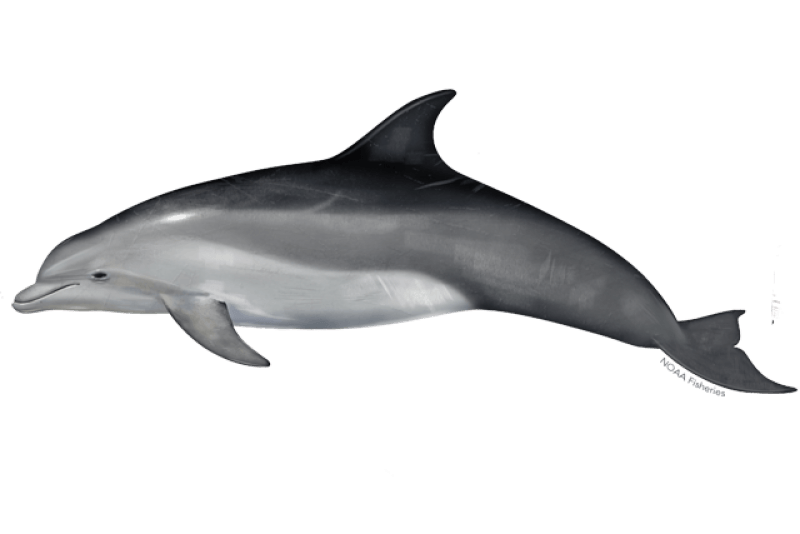
Illustration/photo: NOAA Fisheries — Common Bottlenose Dolphin (Tursiops truncatus).
Quick facts
Length: 6 to 13 feet
Lifespan: 40 to 60 years
Region: New England/Mid-Atlantic,
Pacific Islands,
Southeast,
West Coast
Category: Protected species · Mid-Atlantic
Maryland likelihood: 5★ out of 5
About the species
Common bottlenose dolphins (referred to hereafter simply as bottlenose dolphins) are found throughout the world in both offshore and coastal waters, including harbors, bays, gulfs, and estuaries of temperate and tropical waters (estuaries are the areas where rivers meet the sea). They are one of the most well-studied marine mammals in the wild. In addition, they are easy to view in the wild because they live close to shore and are distributed throughout coastal and estuarine waters. But this puts bottlenose dolphins at increased risk of human-related injuries and death. They are a highly intelligent species and use sound both for communication and to hunt for food.
Bottlenose dolphins in the United States are not endangered or threatened under the Endangered Species Act (ESA), but they are protected under the Marine Mammal Protection Act (MMPA). They are vulnerable to many stressors and threats including bycatch in commercial and recreational fisheries, disease, biotoxins, pollution, habitat alteration including increased freshwater exposure, vessel strikes, illegal feeding and harassment, energy exploration and oil spills, and other types of human disturbance, such as underwater noise.
NOAA Fisheries helps conserve bottlenose dolphins through collaborative management, integrated science, partnerships, and outreach. Our scientists use a variety of innovative techniques to study, protect, and rescue bottlenose dolphins in distress (e.g., disentanglement response and strandings). We facilitate collaborative approaches to better understand and reduce harmful effects of human activities on bottlenose dolphins and their habitat based on sound science, conservation, public input, and public outreach.
Maryland record catch
Confirm whether Maryland DNR publishes an Atlantic state-record category for Common Bottlenose Dolphin on the current sport-fish record board.
Common Bottlenose Dolphin is a protected marine species in U.S. waters. Do not harvest. This guide is biology and Ocean City context only—not a fishing target.
Bottlenose dolphins get their name from their short, thick snout (or rostrum). They are generally gray in color. They can range from light gray to almost black on top near their dorsal fin and light gray to almost white on their belly. Bottlenose dolphins living in nearshore coastal waters are often smaller and lighter in color than those living offshore.
Behavior and Diet Bottlenose dolphins may travel alone or in groups, and the groups often break apart and reform. Their travel is characterized by persistent movement in a consistent direction. Resting is often characterized by tight group formations, slow movement, and intervals of methodical breathing.
Social behavior includes breeding, playing, aggression, and gentle body contact, such as rubbing. Calves maintain what is called “baby position” while swimming. In this position, the calf has easy access to nursing and may gain benefits by reducing drag from swimming in its mom’s slip stream. When in baby position, the mom surfaces first, and the calf surfaces slightly after and just behind and to the side of its mother.
Bottlenose dolphins can thrive in many environments and feed on a variety of prey, such as fish, squid, and crustaceans (e.g., crabs and shrimp). They use different techniques to pursue and capture prey, searching for food individually or cooperatively. For example, they work together to herd fish into groups and then take turns charging through the school of fish to feed. Bottlenose dolphins may also trap schools of fish against sand bars and seawalls for an easy meal. They use passive listening and/or high frequency echolocation to locate prey .
Instead of using their teeth to chew, bottlenose dolphins grip fish with their teeth, then swallow the fish whole—head first—so the spines of the fish don't catch in their throats.
Where They Live Bottlenose dolphins are found in temperate and tropical waters around the world. They inhabit a wide variety of habitats, including harbors, bays, gulfs, and estuaries, as well as nearshore coastal waters, deeper waters over the continental shelf, and even far offshore in the open ocean. In the United States, bottlenose dolphins are found along the West Coast off California, Oregon, and Washington; in the Hawaiian islands; along the East Coast from Massachusetts to Florida; throughout the Gulf of America, and in the Caribbean.
Appearance
Bottlenose dolphins may travel alone or in groups, and the groups often break apart and reform. Their travel is characterized by persistent movement in a consistent direction. Resting is often characterized by tight group formations, slow movement, and intervals of methodical breathing.
Social behavior includes breeding, playing, aggression, and gentle body contact, such as rubbing. Calves maintain what is called “baby position” while swimming. In this position, the calf has easy access to nursing and may gain benefits by reducing drag from swimming in its mom’s slip stream. When in baby position, the mom surfaces first, and the calf surfaces slightly after and just behind and to the side of its mother.
Bottlenose dolphins can thrive in many environments and feed on a variety of prey, such as fish, squid, and crustaceans (e.g., crabs and shrimp). They use different techniques to pursue and capture prey, searching for food individually or cooperatively. For example, they work together to herd fish into groups and then take turns charging through the school of fish to feed. Bottlenose dolphins may also trap schools of fish against sand bars and seawalls for an easy meal. They use passive listening and/or high frequency echolocation to locate prey .
Instead of using their teeth to chew, bottlenose dolphins grip fish with their teeth, then swallow the fish whole—head first—so the spines of the fish don't catch in their throats.
Where They Live Bottlenose dolphins are found in temperate and tropical waters around the world. They inhabit a wide variety of habitats, including harbors, bays, gulfs, and estuaries, as well as nearshore coastal waters, deeper waters over the continental shelf, and even far offshore in the open ocean. In the United States, bottlenose dolphins are found along the West Coast off California, Oregon, and Washington; in the Hawaiian islands; along the East Coast from Massachusetts to Florida; throughout the Gulf of America, and in the Caribbean.
World map providing approximate representation of the common bottlenose dolphin's range. Lifespan & Reproduction Bottlenose dolphins can live at least 40 years, with some females outliving males at 60 years or more. They generally begin to reproduce when they are between 5 and 15 years old, with the exact age varying by population. Female bottlenose dolphins can reach sexual maturity before males. Females are pregnant for about 12 months and give birth, on average, every 3 to 6 years. Once calves are born, they nurse for approximately 20 months and generally stay with their mothers for 3 to 6 years. Females as old as 45 have given birth.
Threats Bottlenose dolphins are exposed to a variety of human-caused and natural threats and stressors . Some of the most pressing threats are discussed below.
Fisheries Interactions One of the main threats to bottlenose dolphins is getting caught in fishing gear, known as bycatch. Bottlenose dolphins can become incidentally entangled, hooked, or otherwise captured in commercial fishing gear such as gillnets, seines, trawls, traps/pots, and longlines.
In addition to interactions with commercial fisheries, bottlenose dolphins may become entangled in or ingest rod-and-reel gear used by recreational anglers or for-hire fishing vessels, such as charter boats and headboats, which can lead to death or serious injury. This problem is increasing, especially in the southeastern United States and is largely the result of bottlenose dolphins taking bait and catch directly from fishing gear, eating discarded fish, or being fed fish (illegally) by humans, causing them to associate anglers with food. In addition, fishermen sometimes become frustrated when bottlenose dolphins take their catch and can retaliate with violence towards the dolphins.
Habitat Destruction and Degradation Bottlenose dolphins living near shore are also susceptible to habitat destruction and degradation by contaminants and oil spills. For example, in areas with high levels of polychlorinated biphenyls (PCBs) bottlenose dolphin’s immune systems can be negatively affected. Bottlenose dolphins in areas affected by the 2010 Deepwater Horizon oil spill were found to have an impaired stress response, lung disease, and reproductive failure, among other health conditions (PDF, 685 pages). In addition to chemical contamination, physical habitat alteration due to shoreline development and infrastructure projects, increased freshwater exposure and freshwater diversion projects, and increased boat traffic are also of concern.
Biotoxins Several bottlenose dolphin unusual mortality events (UMEs) have occurred in recent years, linked to harmful algal blooms (HABs), such as red tide. Several HABs (or several HAB-related die-offs) have been confirmed along the coast of Florida and others were suspected elsewhere in the Gulf of America. Bottlenose dolphins can be exposed to HAB toxins through the air or by eating contaminated prey. Biotoxin exposure can lead to both acute and more chronic health issues for bottlenose dolphins.
Illegal Harassment and Feeding Activities Bottlenose dolphins are easy to view in the wild, but this also puts them at increased risk of human-related injuries and death. Feeding and attempting to feed bottlenose dolphins is not only illegal under the implementing regulations of the MMPA, but is harmful because it changes their behavior and reduces their wariness of people and vessels. They learn to associate humans with food and change their natural hunting practices by begging for handouts and taking bait/catch directly off fishing gear. Bottlenose dolphins, including calves, also learn these unnatural and risky feeding strategies from each other. Bottlenose dolphins are then more vulnerable to vessel strikes and to fishing gear entanglements and ingestion. They also may fall victim to extreme retaliatory acts, such as shooting, by frustrated boaters and fishermen.
Bottlenose dolphins may also be disturbed or harassed by the presence of humans and watercraft. Harassment is illegal under the MMPA and occurs when “any act of pursuit, torment, or annoyance has the potential to injure the animal or disrupt its behaviors." The implementing regulations of the MMPA further prohibit “the negligent or intentional operation of an aircraft or vessel, or the doing of any other negligent act which results in disturbing or molesting a marine mammal.” Any human-caused change to a bottlenose dolphin’s behavior may constitute disturbance or harassment. Long-term negative effects may include compromised health, reduced reproductive success, and displacement from or avoidance of important habitats.
Scientific Classification Kingdom Animalia Phylum Chordata Class Mammalia Order Cetartiodactyla Family Delphinidae Genus Tursiops Species truncatus Last updated by NOAA Fisheries on 03/06/2025
Biology
Bottlenose dolphins are found in temperate and tropical waters around the world. They inhabit a wide variety of habitats, including harbors, bays, gulfs, and estuaries, as well as nearshore coastal waters, deeper waters over the continental shelf, and even far offshore in the open ocean. In the United States, bottlenose dolphins are found along the West Coast off California, Oregon, and Washington; in the Hawaiian islands; along the East Coast from Massachusetts to Florida; throughout the Gulf of America, and in the Caribbean.
World map providing approximate representation of the common bottlenose dolphin's range. Lifespan & Reproduction Bottlenose dolphins can live at least 40 years, with some females outliving males at 60 years or more. They generally begin to reproduce when they are between 5 and 15 years old, with the exact age varying by population. Female bottlenose dolphins can reach sexual maturity before males. Females are pregnant for about 12 months and give birth, on average, every 3 to 6 years. Once calves are born, they nurse for approximately 20 months and generally stay with their mothers for 3 to 6 years. Females as old as 45 have given birth.
Threats Bottlenose dolphins are exposed to a variety of human-caused and natural threats and stressors . Some of the most pressing threats are discussed below.
Fisheries Interactions One of the main threats to bottlenose dolphins is getting caught in fishing gear, known as bycatch. Bottlenose dolphins can become incidentally entangled, hooked, or otherwise captured in commercial fishing gear such as gillnets, seines, trawls, traps/pots, and longlines.
In addition to interactions with commercial fisheries, bottlenose dolphins may become entangled in or ingest rod-and-reel gear used by recreational anglers or for-hire fishing vessels, such as charter boats and headboats, which can lead to death or serious injury. This problem is increasing, especially in the southeastern United States and is largely the result of bottlenose dolphins taking bait and catch directly from fishing gear, eating discarded fish, or being fed fish (illegally) by humans, causing them to associate anglers with food. In addition, fishermen sometimes become frustrated when bottlenose dolphins take their catch and can retaliate with violence towards the dolphins.
Habitat Destruction and Degradation Bottlenose dolphins living near shore are also susceptible to habitat destruction and degradation by contaminants and oil spills. For example, in areas with high levels of polychlorinated biphenyls (PCBs) bottlenose dolphin’s immune systems can be negatively affected. Bottlenose dolphins in areas affected by the 2010 Deepwater Horizon oil spill were found to have an impaired stress response, lung disease, and reproductive failure, among other health conditions (PDF, 685 pages). In addition to chemical contamination, physical habitat alteration due to shoreline development and infrastructure projects, increased freshwater exposure and freshwater diversion projects, and increased boat traffic are also of concern.
Biotoxins Several bottlenose dolphin unusual mortality events (UMEs) have occurred in recent years, linked to harmful algal blooms (HABs), such as red tide. Several HABs (or several HAB-related die-offs) have been confirmed along the coast of Florida and others were suspected elsewhere in the Gulf of America. Bottlenose dolphins can be exposed to HAB toxins through the air or by eating contaminated prey. Biotoxin exposure can lead to both acute and more chronic health issues for bottlenose dolphins.
Illegal Harassment and Feeding Activities Bottlenose dolphins are easy to view in the wild, but this also puts them at increased risk of human-related injuries and death. Feeding and attempting to feed bottlenose dolphins is not only illegal under the implementing regulations of the MMPA, but is harmful because it changes their behavior and reduces their wariness of people and vessels. They learn to associate humans with food and change their natural hunting practices by begging for handouts and taking bait/catch directly off fishing gear. Bottlenose dolphins, including calves, also learn these unnatural and risky feeding strategies from each other. Bottlenose dolphins are then more vulnerable to vessel strikes and to fishing gear entanglements and ingestion. They also may fall victim to extreme retaliatory acts, such as shooting, by frustrated boaters and fishermen.
Bottlenose dolphins may also be disturbed or harassed by the presence of humans and watercraft. Harassment is illegal under the MMPA and occurs when “any act of pursuit, torment, or annoyance has the potential to injure the animal or disrupt its behaviors." The implementing regulations of the MMPA further prohibit “the negligent or intentional operation of an aircraft or vessel, or the doing of any other negligent act which results in disturbing or molesting a marine mammal.” Any human-caused change to a bottlenose dolphin’s behavior may constitute disturbance or harassment. Long-term negative effects may include compromised health, reduced reproductive success, and displacement from or avoidance of important habitats.
Scientific Classification Kingdom Animalia Phylum Chordata Class Mammalia Order Cetartiodactyla Family Delphinidae Genus Tursiops Species truncatus Last updated by NOAA Fisheries on 03/06/2025
Where they live
Range
Bottlenose dolphins are found in temperate and tropical waters around the world. They inhabit a wide variety of habitats, including harbors, bays, gulfs, and estuaries, as well as nearshore coastal waters, deeper waters over the continental shelf, and even far offshore in the open ocean. In the United States, bottlenose dolphins are found along the West Coast off California, Oregon, and Washington; in the Hawaiian islands; along the East Coast from Massachusetts to Florida; throughout the Gulf of America, and in the Caribbean.
World map providing approximate representation of the common bottlenose dolphin's range. Lifespan & Reproduction Bottlenose dolphins can live at least 40 years, with some females outliving males at 60 years or more. They generally begin to reproduce when they are between 5 and 15 years old, with the exact age varying by population. Female bottlenose dolphins can reach sexual maturity before males. Females are pregnant for about 12 months and give birth, on average, every 3 to 6 years. Once calves are born, they nurse for approximately 20 months and generally stay with their mothers for 3 to 6 years. Females as old as 45 have given birth.
Habitat
See the NOAA species profile for habitat detail for this entry.
Ocean City & Mid-Atlantic context
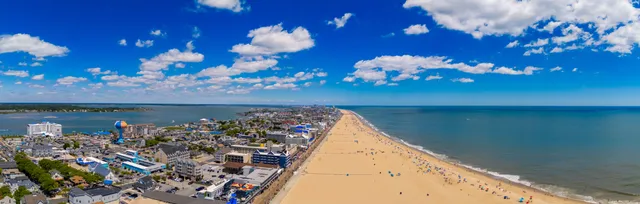
From Ocean City, Maryland, use this Common Bottlenose Dolphin profile as NOAA Mid-Atlantic directory context—not a promise you will meet the species on every charter.
Common Bottlenose Dolphin is protected. Do not harvest. Report unusual strandings or entanglements through official channels.
Source facts and imagery are adapted from the NOAA Fisheries species profile for Common Bottlenose Dolphin.
What charter to book from Ocean City
Common Bottlenose Dolphin is not a standard Ocean City charter harvest target. Use this profile for NOAA biology and Mid-Atlantic context only.
Not typical from OC
Bay guide — Not a typical Ocean City bay guide target for Common Bottlenose Dolphin.
Inshore charter — Not a typical Ocean City inshore charter target for Common Bottlenose Dolphin.
Casting / light tackle — Not a typical Ocean City casting / light tackle target for Common Bottlenose Dolphin.
Trolling charter — Not a typical Ocean City trolling charter target for Common Bottlenose Dolphin.
Nearshore wreck / bottom — Not a typical Ocean City nearshore wreck / bottom target for Common Bottlenose Dolphin.
Offshore charter — Not a typical Ocean City offshore charter target for Common Bottlenose Dolphin.
Head / party boat — Not a typical Ocean City head / party boat target for Common Bottlenose Dolphin.
Start with the charter directory trip-type picker so you compare boats inside the right
archetype—not a bay-guide quote against a canyon invoice.