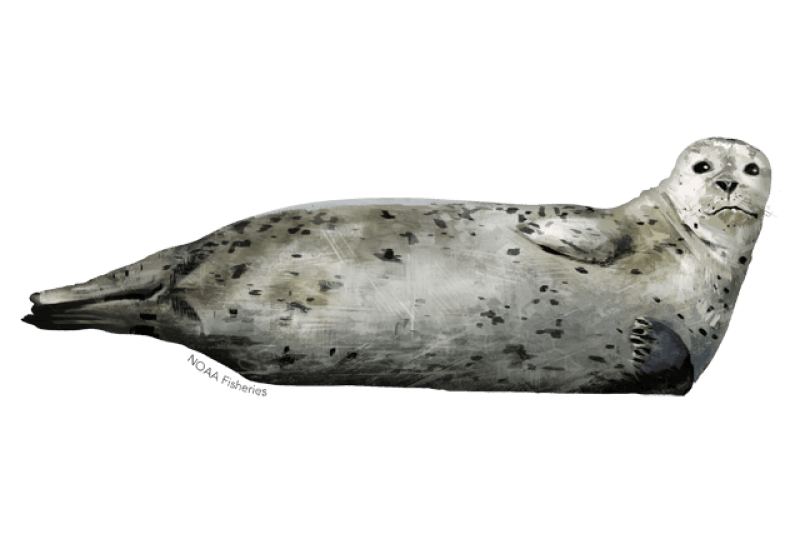
Phoca vitulina . Harbor seals are one of the most common marine mammals along the U.S. West and East Coasts. They are commonly seen resting on rocks and beaches along the coast and on floating ice
Source: Species facts, status language, and imagery adapted from the NOAA Fisheries species profile (last updated 03/25/2026). Ocean City charter and Maryland
record notes are editorial orientation for OCEANCITY.MD readers. Always confirm current seasons, sizes, and
bag limits before you fish—rules change.
Illustration/photo: NOAA Fisheries — Harbor Seal (Phoca vitulina).
Quick facts
Length: About 5 to 6 feet
Lifespan: About 25 to 30 years
Region: Alaska,
New England/Mid-Atlantic,
Southeast,
West Coast
Category: Protected species · Mid-Atlantic
Maryland likelihood: 4★ out of 5
About the species
Harbor seals are one of the most common marine mammals along the U.S. West and East Coasts. They are commonly seen resting on rocks and beaches along the coast and on floating ice in glacial fjords with their head and rear flippers elevated in a “banana-like” position. They feed primarily on fish in marine and estuarine waters, but also in rivers and freshwater lakes. Harbor seals are important indicators of a clean and healthy coastal marine ecosystem. They are a nutritional and cultural resource for Alaska Native communities, and are one of many natural attractions that draw visitors and commerce to US coastal states.
State-financed bounty hunters once hunted harbor seals in Alaska, Washington, Oregon, Massachusetts, and Maine because they were considered competitors of the fishing industry. This hunting program ended in 1960. Since ending of those programs, along with passage of the Marine Mammal Protection Act in 1972, many harbor seal populations in the US have seen positive growth.
Harbor seals, like all marine mammals, are protected under the Marine Mammal Protection Act , with other species also protected under the Endangered Species Act.
Maryland record catch
Confirm whether Maryland DNR publishes an Atlantic state-record category for Harbor Seal on the current sport-fish record board.
Harbor seals are part of the true seal family. All true seals have short forelimbs, or flippers. They also lack external ear flaps and instead have a small hole (opening to the ear canal) on either side of their head.
Harbor seals weigh up to 285 pounds and measure up to 6 feet in length. Males are slightly larger than females, and seals in Alaska and the Pacific Ocean are generally larger than those found in the Atlantic Ocean.
Harbor seals have short, dog-like snouts. The color of each seal’s fur varies but there are two basic patterns: light tan, silver, or blue-gray with dark speckling or spots, and a dark background with light rings. Harbor seals molt (shed hair) in the mid to late summer for 1-2 months, spending more time out of the water.
Behavior and Diet Harbor seals haul out (rest) on rocks, reefs, beaches, and drifting glacial ice when they are not traveling and/or foraging at sea. They haul out to regulate their body temperature, molt, interact with other seals, give birth, and nurse their pups. These seals also haul out in groups to avoid predators and spend less time being watchful for predators than those that haul out alone.
Harbor seal pelvic bones are fused, preventing them from moving their hind flippers under their pelvis to walk on land like sea lions. Instead, they move by undulating in a caterpillar-like motion. If you observe this behavior, it does not mean they are injured.
Harbor seal pups can swim at birth. They can also dive for up to 2 minutes when they are only 2 to 3 days old and by the end of their first month of life embark on journeys of over 100 miles from their natal area. Mother harbor seals sometimes raise their pups in nurseries—groups of mothers and their young—that help protect the seals from predators.
Appearance
Harbor seals haul out (rest) on rocks, reefs, beaches, and drifting glacial ice when they are not traveling and/or foraging at sea. They haul out to regulate their body temperature, molt, interact with other seals, give birth, and nurse their pups. These seals also haul out in groups to avoid predators and spend less time being watchful for predators than those that haul out alone.
Harbor seal pelvic bones are fused, preventing them from moving their hind flippers under their pelvis to walk on land like sea lions. Instead, they move by undulating in a caterpillar-like motion. If you observe this behavior, it does not mean they are injured.
Harbor seal pups can swim at birth. They can also dive for up to 2 minutes when they are only 2 to 3 days old and by the end of their first month of life embark on journeys of over 100 miles from their natal area. Mother harbor seals sometimes raise their pups in nurseries—groups of mothers and their young—that help protect the seals from predators.
The harbor seal’s diet consists mainly of fish, shellfish, and crustaceans. Harbor seals complete both shallow and deep dives while hunting, depending on the availability of prey. They can sleep underwater and come up for air once every 30 minutes.
Where They Live Harbor seals live in temperate coastal habitats along the northern coasts of North America, Europe, and Asia, occurring as far north as 78° N. They occur in the U.S. East and West coasts. On the eastern North America Coast, harbor seals are found from the Canadian Arctic to the Mid-Atlantic. Harbor seals are found all along the West Coast of North America, from Baja California, Mexico to the Bering Sea. They have long been considered non-migratory and typically stay within 15 to 31 miles of their natal area, but tracking data have shown they sometimes travel 62 to 486 miles from their tagging location, often to exploit seasonally available food or give birth to pups.
World map providing approximate representation of the harbor seal range Lifespan & Reproduction Harbor seals reach sexual maturity between 3 and 7 years old. While females usually give birth during the spring and summer, the pupping season varies by location. Along the West Coast, pups are born earlier in the south than in the north. The only exception is harbor seals in the inland waters of Washington, which are born 2 months later than seals along the outer coast of Washington.
Harbor seals mate in the water. Females are pregnant for about 10 months, though a viable embryo exists for about 2 months prior to implantation and growth. Pups weigh about 24 pounds at birth and are ready to swim within minutes. They nurse for 4 to 6 weeks on milk that is 50 percent fat. Like adults, seal pups haul out to rest and regulate their body temperature. Adult females forage during lactation.
Threats Entanglement Harbor seals can become entangled in fishing gear, either swimming off with the gear attached or becoming anchored. They can become entangled in many different fishing gear types, including gillnets, trawls, purse seines, or weirs. Once entangled, seals may drown if they cannot reach the surface to breathe, or they may drag attached gear for long distances as they swim, ultimately resulting in fatigue, compromised feeding ability, or serious injury, all of which may lead to reduced reproductive success and even death. Other types of marine debris, such as packing bands, may be encountered on shore, leading to entanglement around the head and neck, which may cause serious injury and death from wounds, additional energy expenditure, and drowning.
Illegal Feeding and Harassment Illegal feeding of harbor seals can lead to many problems including habituation, aggression, negative impacts to fisheries, entanglement, injury, and death. Harassment, including repeated exposure to vessel traffic and other disturbance, can degrade important nursery, molting, and haul out areas for harbor seals. Increased vessel traffic can also cause altered behavior, increased energetic expenditures, and increased exposure to stress. For example, in Alaska, vessel traffic can displace seals from glacial ice, putting pups at risk from increased time spent in cold water and separation from their mothers.
Learn more about the Alaska harbor seal approach guidelines in glacial fjords (PDF, 2 pages)
Habitat Degradation Harbor seals are susceptible to habitat loss and degradation. Physical barriers, which may include shoreline and offshore structures for development (e.g., for oil and gas, dredging, pile driving), can limit access to important migration, breeding, feeding, molting, or pupping areas. Oil and gas development, commercial and recreational development (including resort development), and increased vessel traffic may displace seals or their prey that would normally use those areas. Seals that rest, rear pups and molt on glacial ice in Alaska’s fjords are vulnerable to unprecedented loss of glacier mass and diminishment of their essential floating ice habitat.
Chemical and Microplastic Contaminations Contaminants enter ocean waters from many sources, including oil and gas development, wastewater discharges, agricultural and urban runoff, and other industrial processes. Once in the environment, these substances move up the food chain and accumulate in top predators such as harbor seals. Many of these chemicals and microplastics do not degrade, degrade very slowly, or degrade into more harmful compounds. Harbor seals accumulate contaminants, which threaten their immune and reproductive systems, in their blubber, blood, and organs (for example, liver or brain). These chemicals and microplastics can be passed from mothers to pups during pregnancy and in milk. In addition to direct effects on seal health, these contaminants may have implications for humans that rely on seals for subsistence.
Vessel Collisions Inadvertent vessel collisions can injure or kill harbor seals. Harbor seals are vulnerable to vessel collisions throughout their range, but the risk is much higher in some coastal areas with heavy vessel traffic.
Scientific Classification Kingdom Animalia Phylum Chordata Class Mammalia Order Carnivora Family Phocidae Genus Phoca Species vitulina Last updated by NOAA Fisheries on 03/25/2026
Biology
Harbor seals live in temperate coastal habitats along the northern coasts of North America, Europe, and Asia, occurring as far north as 78° N. They occur in the U.S. East and West coasts. On the eastern North America Coast, harbor seals are found from the Canadian Arctic to the Mid-Atlantic. Harbor seals are found all along the West Coast of North America, from Baja California, Mexico to the Bering Sea. They have long been considered non-migratory and typically stay within 15 to 31 miles of their natal area, but tracking data have shown they sometimes travel 62 to 486 miles from their tagging location, often to exploit seasonally available food or give birth to pups.
World map providing approximate representation of the harbor seal range Lifespan & Reproduction Harbor seals reach sexual maturity between 3 and 7 years old. While females usually give birth during the spring and summer, the pupping season varies by location. Along the West Coast, pups are born earlier in the south than in the north. The only exception is harbor seals in the inland waters of Washington, which are born 2 months later than seals along the outer coast of Washington.
Harbor seals mate in the water. Females are pregnant for about 10 months, though a viable embryo exists for about 2 months prior to implantation and growth. Pups weigh about 24 pounds at birth and are ready to swim within minutes. They nurse for 4 to 6 weeks on milk that is 50 percent fat. Like adults, seal pups haul out to rest and regulate their body temperature. Adult females forage during lactation.
Threats Entanglement Harbor seals can become entangled in fishing gear, either swimming off with the gear attached or becoming anchored. They can become entangled in many different fishing gear types, including gillnets, trawls, purse seines, or weirs. Once entangled, seals may drown if they cannot reach the surface to breathe, or they may drag attached gear for long distances as they swim, ultimately resulting in fatigue, compromised feeding ability, or serious injury, all of which may lead to reduced reproductive success and even death. Other types of marine debris, such as packing bands, may be encountered on shore, leading to entanglement around the head and neck, which may cause serious injury and death from wounds, additional energy expenditure, and drowning.
Illegal Feeding and Harassment Illegal feeding of harbor seals can lead to many problems including habituation, aggression, negative impacts to fisheries, entanglement, injury, and death. Harassment, including repeated exposure to vessel traffic and other disturbance, can degrade important nursery, molting, and haul out areas for harbor seals. Increased vessel traffic can also cause altered behavior, increased energetic expenditures, and increased exposure to stress. For example, in Alaska, vessel traffic can displace seals from glacial ice, putting pups at risk from increased time spent in cold water and separation from their mothers.
Learn more about the Alaska harbor seal approach guidelines in glacial fjords (PDF, 2 pages)
Habitat Degradation Harbor seals are susceptible to habitat loss and degradation. Physical barriers, which may include shoreline and offshore structures for development (e.g., for oil and gas, dredging, pile driving), can limit access to important migration, breeding, feeding, molting, or pupping areas. Oil and gas development, commercial and recreational development (including resort development), and increased vessel traffic may displace seals or their prey that would normally use those areas. Seals that rest, rear pups and molt on glacial ice in Alaska’s fjords are vulnerable to unprecedented loss of glacier mass and diminishment of their essential floating ice habitat.
Chemical and Microplastic Contaminations Contaminants enter ocean waters from many sources, including oil and gas development, wastewater discharges, agricultural and urban runoff, and other industrial processes. Once in the environment, these substances move up the food chain and accumulate in top predators such as harbor seals. Many of these chemicals and microplastics do not degrade, degrade very slowly, or degrade into more harmful compounds. Harbor seals accumulate contaminants, which threaten their immune and reproductive systems, in their blubber, blood, and organs (for example, liver or brain). These chemicals and microplastics can be passed from mothers to pups during pregnancy and in milk. In addition to direct effects on seal health, these contaminants may have implications for humans that rely on seals for subsistence.
Vessel Collisions Inadvertent vessel collisions can injure or kill harbor seals. Harbor seals are vulnerable to vessel collisions throughout their range, but the risk is much higher in some coastal areas with heavy vessel traffic.
Scientific Classification Kingdom Animalia Phylum Chordata Class Mammalia Order Carnivora Family Phocidae Genus Phoca Species vitulina Last updated by NOAA Fisheries on 03/25/2026
Where they live
Range
Harbor seals live in temperate coastal habitats along the northern coasts of North America, Europe, and Asia, occurring as far north as 78° N. They occur in the U.S. East and West coasts. On the eastern North America Coast, harbor seals are found from the Canadian Arctic to the Mid-Atlantic. Harbor seals are found all along the West Coast of North America, from Baja California, Mexico to the Bering Sea. They have long been considered non-migratory and typically stay within 15 to 31 miles of their natal area, but tracking data have shown they sometimes travel 62 to 486 miles from their tagging location, often to exploit seasonally available food or give birth to pups.
World map providing approximate representation of the harbor seal range Lifespan & Reproduction Harbor seals reach sexual maturity between 3 and 7 years old. While females usually give birth during the spring and summer, the pupping season varies by location. Along the West Coast, pups are born earlier in the south than in the north. The only exception is harbor seals in the inland waters of Washington, which are born 2 months later than seals along the outer coast of Washington.
Habitat
See the NOAA species profile for habitat detail for this entry.
Ocean City & Mid-Atlantic context
From Ocean City, Maryland, use this Harbor Seal profile as NOAA Mid-Atlantic directory context—not a promise you will meet the species on every charter.
Harbor Seal is protected. Do not harvest. Report unusual strandings or entanglements through official channels.
Source facts and imagery are adapted from the NOAA Fisheries species profile for Harbor Seal.
What charter to book from Ocean City
Harbor Seal is not a standard Ocean City charter harvest target. Use this profile for NOAA biology and Mid-Atlantic context only.
Not typical from OC
Bay guide — Not a typical Ocean City bay guide target for Harbor Seal.
Inshore charter — Not a typical Ocean City inshore charter target for Harbor Seal.
Casting / light tackle — Not a typical Ocean City casting / light tackle target for Harbor Seal.
Trolling charter — Not a typical Ocean City trolling charter target for Harbor Seal.
Nearshore wreck / bottom — Not a typical Ocean City nearshore wreck / bottom target for Harbor Seal.
Offshore charter — Not a typical Ocean City offshore charter target for Harbor Seal.
Head / party boat — Not a typical Ocean City head / party boat target for Harbor Seal.
Start with the charter directory trip-type picker so you compare boats inside the right
archetype—not a bay-guide quote against a canyon invoice.
NOAA Fisheries is committed to the protection of harbor seals. Targeted management actions taken to secure protections for these seals include:
Reducing Contaminants Harbor seals are vulnerable to chemical contaminants because they are near the top of the food chain. NOAA's Damage Assessment, Remediation, and Restoration Program , which cleans up existing contamination, has several active projects in the Pacific Northwest and California.
Educating the Public Some harbor seals haul out in public areas. Together with the West Coast Marine Mammal Stranding Network, we have developed programs to educate the public about how to “Share the Shore” with harbor seals, as well as prohibitions against capturing, harming, or harassing them.
Lanugo Harbor Seal Pups Frequently Asked Questions (PDF, 2 pages)
Share the Shore: Harbor Seals on the West Coast
Share the Shore with Seals in New England/Mid-Atlantic
Implementing Oil Spill Response Plans in the Event of a Spill Harbor seals are at risk of harm in the event of an oil spill. To reduce the risk of a spill, Washington’s Department of Ecology created the Spill Prevention, Preparedness, and Response Program . To minimize the effect of a potential spill on harbor seals more broadly, NOAA developed the Marine Mammal Oil Spill Response Guidelines .
Overseeing Marine Mammal Health and Stranding Response We work with volunteer networks in all coastal states to respond to marine mammal strandings including all pinnipeds. When stranded animals are found alive, NOAA Fisheries and our partners assess the animal’s health and determine the best course of action. When stranded animals are found dead, our scientists work to understand and investigate the cause of death. Although the cause often remains unknown, scientists can sometimes attribute strandings to disease, harmful algal blooms, vessel strikes, fishing gear entanglements, pollution exposure, and underwater noise. Some strandings can serve as indicators of ocean health, giving insight into larger environmental issues that may also have implications for human health and welfare.
Harvest
See the NOAA wild-caught fishery section for landings and gear notes when published for this species.
Landings and management details matter most for the waters where Harbor Seal is actually fished—see the
NOAA species profile
.