Spinner Dolphin
Stenella longirostris . Spinner dolphins are probably the most frequently encountered cetacean in nearshore waters of the Pacific Islands Region. Spinner dolphins received their common name because they a
Not in our directory yet? Browse the committed Charter Boat Directory listings grid (marketplace crosswalk).
Source: Species facts, status language, and imagery adapted from the NOAA Fisheries species profile (last updated 05/12/2025). Ocean City charter and Maryland record notes are editorial orientation for OCEANCITY.MD readers. Always confirm current seasons, sizes, and bag limits before you fish—rules change.
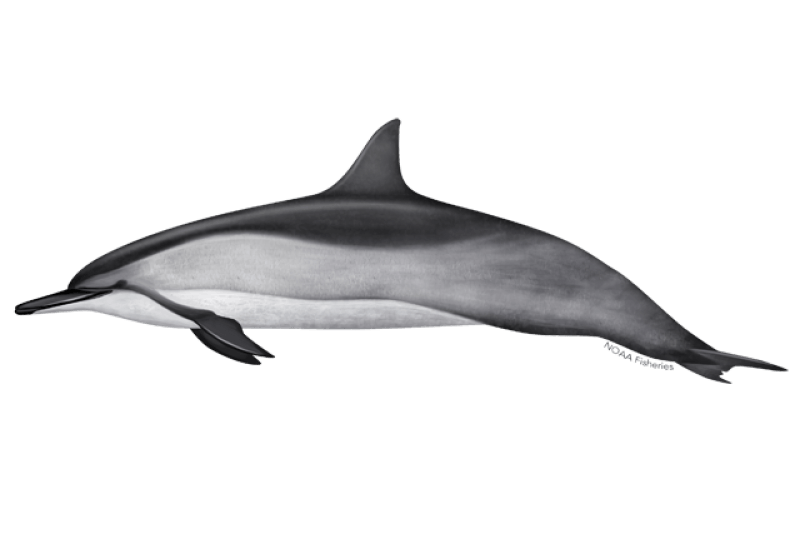
Quick facts
- Length: 4 to 7 feet (males slightly larger than females)
- Lifespan: 20 years
- Region: New England/Mid-Atlantic, Pacific Islands, Southeast, West Coast
- Category: Protected species · Mid-Atlantic
- Maryland likelihood: 1★ out of 5
About the species
Spinner dolphins are probably the most frequently encountered cetacean in nearshore waters of the Pacific Islands Region. Spinner dolphins received their common name because they are often seen leaping and spinning out of the water. The species' name, longirostris , is Latin for “long beak,” referring to their slender shaped beak or rostrum.
Regarded as one of the most acrobatic of dolphins, spinner dolphins are well known for their habit of leaping from the water and spinning up to seven times in the air before falling back into the water. Experts believe that spinner dolphins use these behaviors primarily for acoustic signaling or communication, but the activity can also be a way to remove ectoparasites, such as remoras.
Maryland record catch
Confirm whether Maryland DNR publishes an Atlantic state-record category for Spinner Dolphin on the current sport-fish record board.
Verify on Maryland DNR — Sport Fish State Records . Record boards change when DNR accepts a new fish.
Maryland size & bag limits
Spinner Dolphin is a protected marine species in U.S. waters. Do not harvest. This guide is biology and Ocean City context only—not a fishing target.
| Rule | Maryland / applicable detail |
|---|---|
| Maryland harvest | Not a recreational harvest species — protected |
| Size / bag | Do not take — federal/state protections apply |
| Season | N/A |
Editorial only — verify before you keep a fish. Confirm current seasons, sizes, and creel on NOAA Fisheries — Protected resources . Rules change; this page is orientation, not the legal digest. Also see verify regulations.
Population & fishing rate
See the NOAA species profile for current stock status language for this entry.
Appearance
- Spinner dolphins feed at night on species including small fish, shrimp, and squid that are found about 650 to 1,000 feet below the surface of the water. Spinner dolphin prey species follow a vertical and horizontal migration pattern, staying in deep waters in the ocean during the day, and then moving up in the water column (vertical migration) and inshore (horizontal migration) at night. Spinner dolphins take advantage of the nightly migration that brings their prey species to shallower depths and closer to shore by feeding throughout the night.
- When resting, spinner dolphins move back and forth slowly as a single unit, with the animals in tight formation but spaced just out of contact with one another. They may engage in resting behaviors for about four to five hours daily. This behavior may vary seasonally, coinciding with the shifts in day length. During rest, spinner dolphins rely on vision rather than echolocation for scanning their environment. Group movements during rest are typically in open, sandy-bottom areas where predators are more visible.
- At the end of their rest period, spinner dolphins usually abruptly increase their activity level, including their swim speeds, aerial behaviors, vocalizations, and make shorter dives than when resting. In 1994, researchers described spinner dolphins swimming in a “zig-zag” pattern following their rest period. They swam toward the open waters and then doubled back into shallower waters. This back-and-forth swimming repeats a zig-zag formation over most of the area, possibly functioning as a social cue for the entire group to coordinate their movement into the deeper seas. Likewise, the dolphins’ acoustic behaviors rise and fall synchronously with the zig-zag swimming patterns. When these patterns subside, the spinner dolphins swiftly race to the offshore waters of their foraging grounds, where they are sometimes joined by bottlenose or spotted dolphins. At this point, spinner dolphins’ dive times are extended and the dolphins begin their foraging movements.
- Where They Live Habitat In most places, spinner dolphins are found in areas of deep waters where they likely track prey. Although the pelagic stock of Hawaiian spinner dolphins are found in the deeper waters offshore of the islands, the rest of the Hawaiʻi population has a more coastal distribution. During daytime hours, the island-associated stocks of Hawaiian spinner dolphins seek sanctuary in nearshore waters, where they return to certain areas to socialize, rest, and nurture their young. These areas are typically in clear, calm, and relatively shallow waters. They usually have a sandy bottom that presumably provides an environment in which the dolphins are able to visually monitor for predators, as they cease echolocation while they rest. Spinner dolphins use a variety of bays and nearshore coastal waters throughout their range, but they seem to prefer certain bays.
- Distribution Spinner dolphins are found throughout the world in tropical and warm-temperate waters. Four subspecies of spinner dolphins have been described worldwide:
- Stenella longirostris longirostris (also known as Gray’s spinner dolphin)—which includes the Hawaiian spinner dolphin —in the tropical Atlantic, Indian, and western and central Pacific Oceans. S. l. orientalis in the eastern tropical Pacific Ocean S. l. centroamericana near Central America S. l. rosiventris , the dwarf spinner dolphin, in southeast Asia to northern Australia The Gray’s spinner dolphin is the typical form of spinner dolphin found in most areas of the world.
- Lifespan & Reproduction Like all marine mammals, spinner dolphins are slow reproducers. They live for about 20 years, with some individuals living for at least 25 years. Spinner dolphins may mate year-round, with multiple males mating with one female. Gestation is similar to other dolphin species and lasts approximately 11 months. Spinner dolphins calve year-round, generally about once every 3 years, and lactate often for 1 to 2 years. They reach sexual maturity at around 7 years of age.
- Threats Human Interactions and Viewing Pressure Viewing wild marine mammals in Hawaiʻi has been a popular recreational activity for both tourists and residents over the past several decades. We estimate that there are upwards of 70 tour operators that provide dolphin-directed tours focused on Hawaiian spinner dolphins. More than 100 commercial boat tour and kayak tour operations may opportunistically view these animals.
- Historically, tours operated out of various harbors along most of the coasts of the main Hawaiian Islands, bringing guests to well-known locations for spinner dolphin viewing. Researchers have observed up to 13 tour boats at a time in some locations, with vessels jockeying for position on a single spinner dolphin group and more than 60 swimmers in the water attempting to closely interact with the dolphins at once. In addition, a number of residents and visitors ventured on their own, independent of commercial operators, to view and interact with spinner dolphins. Some operators and various media outlets encouraged the expectation for close interactions with wild dolphins, and routinely promoted close vessel or in-water encounters with the dolphins.
- Because of these problematic interactions, NOAA Fisheries developed regulations that now prohibit swimming with, approaching, and remaining within 50 yards of spinner dolphins within 2 nautical miles from shore of the main Hawaiian Islands and in designated waters bounded by the islands of Lāna‘i, Maui, and Kahoʻolawe.
- Commercial operators and individuals interested in viewing or closely interacting with Hawaiian spinner dolphins increasingly target the dolphins' essential daytime habitats. Encounters with dolphins in these areas are very common due to the predictability of spinner dolphin behavior. Viewing spinner dolphins in their natural habitat can be an educational and enriching experience if conducted safely and responsibly from a distance. However, closely approaching, swimming with, pursuing, interacting, or attempting to interact with the dolphins could disrupt their daytime behaviors. Some interactions with people in essential daytime habitats may disturb individual dolphins or resting groups, even rising to the level of “take” under the Marine Mammal Protection Act , which is illegal.
- Response to disturbance varies among individuals, but ultimately diverts time and energy from fitness-enhancing activities (such as resting and recuperating after an energetically-costly night of foraging for prey). These responses may, over time, result in negative effects to the fitness of individuals or resident populations. For example, lack of consistent, undisturbed resting periods can reduce the amount of energy available for a spinner dolphin to engage effectively in foraging activities at night. Over time, this can result in overall poor body condition, which reduces the dolphin’s ability to fight off disease, protect itself from predators, successfully reproduce, or rear young.
- Peer-reviewed scientific literature has documented disturbance responses by individual spinner dolphins, as well as changes to spinner dolphin group behavior patterns over time. Individual dolphin responses include:
- Increased displays such as leaping, spinning, or tail slapping when closely approached by vessels and swimmers. Avoidance behaviors, including increased swimming speed and moving away from swimmers and vessels, or leaving the bay completely in response to human pursuit. Aggressive behaviors directed at people, including charging or threat displays. Researchers have also documented changes to spinner dolphins’ behavior patterns in essential daytime habitats, including changes to patterns associated with aerial behaviors, residence times, and distribution. Human-caused disturbances to daily behaviors may be incidents of 'take,' as defined (and prohibited) under the Marine Mammal Protection Act. The chronic nature of these problems in Hawaiʻi and the observed changes to behavioral patterns over time are a cause for concern for this dolphin population.
- Marine Debris Marine debris is a growing concern within the marine environment, as it poses multiple threats to the marine ecosystem. For instance, spinner dolphins may ingest (either directly or through prey items) or become entangled in marine debris. These interactions may cause:
- Drowning Debilitation Limited predator avoidance Internal or external wounds Skin lesions or sores Blockage of the digestive tract, resulting in starvation that often leads to death Reductions in quality of life and/or reproductive capacity Impairment of feeding capacity Introduction and/or concentration of damaging or toxic compounds to the animal The severity of the effects of debris interactions on all dolphin populations remains unclear because many deaths likely occur undetected at sea.
- We do not have sufficient information to determine the severity of the threat of direct ingestion of large debris on spinner dolphin populations. Some data indicates that spinner dolphin prey species are consuming very small plastics. In 2010, researchers analyzed mesopelagic fish in the North Pacific Central Gyre and found that 35 percent of the fish—many of which were lantern fish (spinner dolphins’ main prey)—had ingested plastic. Larger fish generally had more pieces of plastic in their guts than smaller fish. We are particularly concerned about the ability for plastic debris to absorb organic pollutants that may be toxic to the marine organisms that ingest them. These contaminants can bioaccumulate as they move up the food chain to top predators such as spinner dolphins. Scientists have also found high levels of butyltin and organochlorine (chemical compounds found in some plastics) in migrating lantern fish species in the Western North Pacific, which may indicate a cause for concern for predators, such as spinner dolphins.
- Human-Made Noise Humans introduce sound intentionally and unintentionally into the marine environment. This could be from commercial and recreational ocean activities, navigation, oil and gas exploration and acquisition, research, and military activities. Spinner dolphins use sound to communicate, navigate, locate prey, and locate predators, which can be impacted by introduced anthropogenic noise. How severely noise exposure affects dolphins and whales depends on factors including:
- Noise source Decibel level Distance between the source and the animal Characteristics of the animal (for example, hearing sensitivity, behavioral context, age, sex, and previous experience with sound source) Time of day or season (which affects how sound travels through the water) In marine mammal populations, noise can seriously disrupt communication, navigational ability, and social patterns.
- Disease Spinner dolphins, like all marine mammals, can be susceptible to widespread disease. Outbreaks in spinner dolphins are not commonly reported, but scientists have previously detected serious diseases, such as toxoplasmosis and cetacean morbillivirus. Although the number of spinner dolphin deaths attributed to these diseases is fairly low (many are thought to be unreported), thousands of other marine mammal species have died from these diseases worldwide.
- Scientific Classification Kingdom Animalia Phylum Chordata Class Mammalia Order Cetacea Family Delphinidae Genus Stenella Species longirostris Last updated by NOAA Fisheries on 05/12/2025
Biology
- Habitat In most places, spinner dolphins are found in areas of deep waters where they likely track prey. Although the pelagic stock of Hawaiian spinner dolphins are found in the deeper waters offshore of the islands, the rest of the Hawaiʻi population has a more coastal distribution. During daytime hours, the island-associated stocks of Hawaiian spinner dolphins seek sanctuary in nearshore waters, where they return to certain areas to socialize, rest, and nurture their young. These areas are typically in clear, calm, and relatively shallow waters. They usually have a sandy bottom that presumably provides an environment in which the dolphins are able to visually monitor for predators, as they cease echolocation while they rest. Spinner dolphins use a variety of bays and nearshore coastal waters throughout their range, but they seem to prefer certain bays.
- Distribution Spinner dolphins are found throughout the world in tropical and warm-temperate waters. Four subspecies of spinner dolphins have been described worldwide:
- Stenella longirostris longirostris (also known as Gray’s spinner dolphin)—which includes the Hawaiian spinner dolphin —in the tropical Atlantic, Indian, and western and central Pacific Oceans. S. l. orientalis in the eastern tropical Pacific Ocean S. l. centroamericana near Central America S. l. rosiventris , the dwarf spinner dolphin, in southeast Asia to northern Australia The Gray’s spinner dolphin is the typical form of spinner dolphin found in most areas of the world.
- Lifespan & Reproduction Like all marine mammals, spinner dolphins are slow reproducers. They live for about 20 years, with some individuals living for at least 25 years. Spinner dolphins may mate year-round, with multiple males mating with one female. Gestation is similar to other dolphin species and lasts approximately 11 months. Spinner dolphins calve year-round, generally about once every 3 years, and lactate often for 1 to 2 years. They reach sexual maturity at around 7 years of age.
- Threats Human Interactions and Viewing Pressure Viewing wild marine mammals in Hawaiʻi has been a popular recreational activity for both tourists and residents over the past several decades. We estimate that there are upwards of 70 tour operators that provide dolphin-directed tours focused on Hawaiian spinner dolphins. More than 100 commercial boat tour and kayak tour operations may opportunistically view these animals.
- Historically, tours operated out of various harbors along most of the coasts of the main Hawaiian Islands, bringing guests to well-known locations for spinner dolphin viewing. Researchers have observed up to 13 tour boats at a time in some locations, with vessels jockeying for position on a single spinner dolphin group and more than 60 swimmers in the water attempting to closely interact with the dolphins at once. In addition, a number of residents and visitors ventured on their own, independent of commercial operators, to view and interact with spinner dolphins. Some operators and various media outlets encouraged the expectation for close interactions with wild dolphins, and routinely promoted close vessel or in-water encounters with the dolphins.
- Because of these problematic interactions, NOAA Fisheries developed regulations that now prohibit swimming with, approaching, and remaining within 50 yards of spinner dolphins within 2 nautical miles from shore of the main Hawaiian Islands and in designated waters bounded by the islands of Lāna‘i, Maui, and Kahoʻolawe.
- Commercial operators and individuals interested in viewing or closely interacting with Hawaiian spinner dolphins increasingly target the dolphins' essential daytime habitats. Encounters with dolphins in these areas are very common due to the predictability of spinner dolphin behavior. Viewing spinner dolphins in their natural habitat can be an educational and enriching experience if conducted safely and responsibly from a distance. However, closely approaching, swimming with, pursuing, interacting, or attempting to interact with the dolphins could disrupt their daytime behaviors. Some interactions with people in essential daytime habitats may disturb individual dolphins or resting groups, even rising to the level of “take” under the Marine Mammal Protection Act , which is illegal.
- Response to disturbance varies among individuals, but ultimately diverts time and energy from fitness-enhancing activities (such as resting and recuperating after an energetically-costly night of foraging for prey). These responses may, over time, result in negative effects to the fitness of individuals or resident populations. For example, lack of consistent, undisturbed resting periods can reduce the amount of energy available for a spinner dolphin to engage effectively in foraging activities at night. Over time, this can result in overall poor body condition, which reduces the dolphin’s ability to fight off disease, protect itself from predators, successfully reproduce, or rear young.
- Peer-reviewed scientific literature has documented disturbance responses by individual spinner dolphins, as well as changes to spinner dolphin group behavior patterns over time. Individual dolphin responses include:
- Increased displays such as leaping, spinning, or tail slapping when closely approached by vessels and swimmers. Avoidance behaviors, including increased swimming speed and moving away from swimmers and vessels, or leaving the bay completely in response to human pursuit. Aggressive behaviors directed at people, including charging or threat displays. Researchers have also documented changes to spinner dolphins’ behavior patterns in essential daytime habitats, including changes to patterns associated with aerial behaviors, residence times, and distribution. Human-caused disturbances to daily behaviors may be incidents of 'take,' as defined (and prohibited) under the Marine Mammal Protection Act. The chronic nature of these problems in Hawaiʻi and the observed changes to behavioral patterns over time are a cause for concern for this dolphin population.
- Marine Debris Marine debris is a growing concern within the marine environment, as it poses multiple threats to the marine ecosystem. For instance, spinner dolphins may ingest (either directly or through prey items) or become entangled in marine debris. These interactions may cause:
- Drowning Debilitation Limited predator avoidance Internal or external wounds Skin lesions or sores Blockage of the digestive tract, resulting in starvation that often leads to death Reductions in quality of life and/or reproductive capacity Impairment of feeding capacity Introduction and/or concentration of damaging or toxic compounds to the animal The severity of the effects of debris interactions on all dolphin populations remains unclear because many deaths likely occur undetected at sea.
- We do not have sufficient information to determine the severity of the threat of direct ingestion of large debris on spinner dolphin populations. Some data indicates that spinner dolphin prey species are consuming very small plastics. In 2010, researchers analyzed mesopelagic fish in the North Pacific Central Gyre and found that 35 percent of the fish—many of which were lantern fish (spinner dolphins’ main prey)—had ingested plastic. Larger fish generally had more pieces of plastic in their guts than smaller fish. We are particularly concerned about the ability for plastic debris to absorb organic pollutants that may be toxic to the marine organisms that ingest them. These contaminants can bioaccumulate as they move up the food chain to top predators such as spinner dolphins. Scientists have also found high levels of butyltin and organochlorine (chemical compounds found in some plastics) in migrating lantern fish species in the Western North Pacific, which may indicate a cause for concern for predators, such as spinner dolphins.
- Human-Made Noise Humans introduce sound intentionally and unintentionally into the marine environment. This could be from commercial and recreational ocean activities, navigation, oil and gas exploration and acquisition, research, and military activities. Spinner dolphins use sound to communicate, navigate, locate prey, and locate predators, which can be impacted by introduced anthropogenic noise. How severely noise exposure affects dolphins and whales depends on factors including:
- Noise source Decibel level Distance between the source and the animal Characteristics of the animal (for example, hearing sensitivity, behavioral context, age, sex, and previous experience with sound source) Time of day or season (which affects how sound travels through the water) In marine mammal populations, noise can seriously disrupt communication, navigational ability, and social patterns.
- Disease Spinner dolphins, like all marine mammals, can be susceptible to widespread disease. Outbreaks in spinner dolphins are not commonly reported, but scientists have previously detected serious diseases, such as toxoplasmosis and cetacean morbillivirus. Although the number of spinner dolphin deaths attributed to these diseases is fairly low (many are thought to be unreported), thousands of other marine mammal species have died from these diseases worldwide.
- Scientific Classification Kingdom Animalia Phylum Chordata Class Mammalia Order Cetacea Family Delphinidae Genus Stenella Species longirostris Last updated by NOAA Fisheries on 05/12/2025
Where they live
Range
- Habitat In most places, spinner dolphins are found in areas of deep waters where they likely track prey. Although the pelagic stock of Hawaiian spinner dolphins are found in the deeper waters offshore of the islands, the rest of the Hawaiʻi population has a more coastal distribution. During daytime hours, the island-associated stocks of Hawaiian spinner dolphins seek sanctuary in nearshore waters, where they return to certain areas to socialize, rest, and nurture their young. These areas are typically in clear, calm, and relatively shallow waters. They usually have a sandy bottom that presumably provides an environment in which the dolphins are able to visually monitor for predators, as they cease echolocation while they rest. Spinner dolphins use a variety of bays and nearshore coastal waters throughout their range, but they seem to prefer certain bays.
- Distribution Spinner dolphins are found throughout the world in tropical and warm-temperate waters. Four subspecies of spinner dolphins have been described worldwide:
Habitat
- See the NOAA species profile for habitat detail for this entry.
Ocean City & Mid-Atlantic context
From Ocean City, Maryland, use this Spinner Dolphin profile as NOAA Mid-Atlantic directory context—not a promise you will meet the species on every charter.
Spinner Dolphin is protected. Do not harvest. Report unusual strandings or entanglements through official channels.
Source facts and imagery are adapted from the NOAA Fisheries species profile for Spinner Dolphin.
What charter to book from Ocean City
Spinner Dolphin is not a standard Ocean City charter harvest target. Use this profile for NOAA biology and Mid-Atlantic context only.
Not typical from OC
- Bay guide — Not a typical Ocean City bay guide target for Spinner Dolphin.
- Inshore charter — Not a typical Ocean City inshore charter target for Spinner Dolphin.
- Casting / light tackle — Not a typical Ocean City casting / light tackle target for Spinner Dolphin.
- Trolling charter — Not a typical Ocean City trolling charter target for Spinner Dolphin.
- Nearshore wreck / bottom — Not a typical Ocean City nearshore wreck / bottom target for Spinner Dolphin.
- Offshore charter — Not a typical Ocean City offshore charter target for Spinner Dolphin.
- Head / party boat — Not a typical Ocean City head / party boat target for Spinner Dolphin.
Start with the charter directory trip-type picker so you compare boats inside the right archetype—not a bay-guide quote against a canyon invoice.
Related reading
- Plan a fishing day in Ocean City — Pick the trip archetype before you chase a species story.
- Charter directory stubs & trip-type picker — Compare boats inside the right archetype.
- Verify Maryland fishing regulations — DNR + NOAA steps before you keep any fish from an OC trip.
- Nearshore wreck fishing hub — Structure days from West Ocean City.
- Offshore sport fishing hub — Canyon and bluewater context from Ocean City.
Fishery management
- Promoting Responsible Wildlife Viewing It is prohibited to swim-with and approach or remain within 50 yards of a Hawaiian spinner dolphin (for persons, vessels, and objects), including approach by interception (i.e., “leapfrogging”) within 2 nautical miles from shore of the main Hawaiian Islands and in designated waters bounded by the islands of Lāna‘i, Maui, and Kahoʻolawe.
- Learn more about the Hawaiian spinner dolphin swim-with and approach regulation
- Six reasons why you should not swim with wild spinner dolphins Marine Life Viewing Guidelines Viewing Marine Wildlife in Hawaiʻi NOAA Fisheries has developed wildlife viewing guidelines for spinner dolphins and other protected species to help the public understand how to responsibly and legally view these animals. To be compliant with the law, it is best to follow the guidelines.
- Learn more about viewing marine wildlife in Hawaiʻi Learn more about marine life viewing guidelines Overseeing Marine Mammal Health and Stranding Response We work with volunteer networks in all coastal states to respond to marine mammal strandings including all dolphins and porpoises. When stranded animals are found alive, NOAA Fisheries and our partners assess the animal’s health and determine the best course of action. When stranded animals are found dead, our scientists work to understand and investigate the cause of death. Although the cause often remains unknown, scientists can sometimes attribute strandings to disease, harmful algal blooms, vessel strikes, fishing gear entanglements, pollution exposure, and underwater noise. Some strandings can serve as indicators of ocean health, giving insight into larger environmental issues that may also have implications for human health and welfare.
- Learn more about the Marine Mammal Health and Stranding Response Program Marine Mammal Unusual Mortality Events Spinner dolphins have been part of a declared unusual mortality event in the past . Under the Marine Mammal Protection Act , an unusual mortality event is defined as "a stranding that is unexpected; involves a significant die-off of any marine mammal population; and demands immediate response." To understand the health of marine mammal populations, scientists study unusual mortality events.
- Get an overview of marine mammal UMEs Dolphin-Safe/Tuna Tracking and Verification Program Dolphins, like other marine mammals, may become bycatch in fisheries. Some species of tuna are known to aggregate beneath schools of certain dolphin stocks. In some parts of the world, this close association led to the fishing practice of encircling a dolphin school to capture the tuna concentrated below, to the detriment of the dolphins, which would get trapped in the net. The Dolphin Protection Consumer Information Act established a national tuna tracking program to ensure that tuna imported into the United States meets certain requirements to ensure the safety of dolphins during tuna fishing operations.
- Learn more about the Dolphin-Safe/Tuna Tracking and Verification Program
- Regulatory History In 2005, NOAA Fisheries convened a Spinner Dolphin Working Group to enhance protections for Hawaiian spinner dolphins from human disturbance. This group consisted of individuals from the Marine Mammal Commission and state and federal agencies that participate in spinner dolphin research and conservation. We used deliberations from this working group to inform an Advance Notice of Proposed Rulemaking that was published in the Federal Register in December 2005 . A Notice of Intent (NOI) to Prepare an Environmental Impact Statement followed, in which we identified five preliminary alternatives for consideration and comment:
Harvest
- See the NOAA wild-caught fishery section for landings and gear notes when published for this species.
Landings and management details matter most for the waters where Spinner Dolphin is actually fished—see the NOAA species profile .
Scientific classification
| Rank | Name |
|---|---|
| Kingdom | Animalia |
| Phylum | Chordata |
| Class | Mammalia |
| Order | Cetacea |
| Family | Delphinidae |
| Genus | Stenella |
| Species | longirostris |
Plan the rest of the trip
Ocean City fishing videos
All Fishing videos FishingBig Stripers, Red Drum & Bluefish — Nonstop Action4.8
 FishingChasin Tail Charters — Offshore Fishing4.7 6.1K views
 FishingParty Boat Fishing on the Angler — Ocean City4.7 17K views
 FishingCobia Fishing Ocean City Charter4.7
FishingOFFSHORE FISHING BIGEYE TUNA AT POORMANS CANYON
4.6FishingQuickDraw Tuna and Marlin July 3 2015
4.6 FishingFlounder Frenzy — Ocean City Blue Crab & Flounder4.6 6.4K views
 FishingParty Boat Fishing For SEA BASS & FLOUNDER aka FLUKE - Angler - Ocean City, MD4.6
FishingLarry Jock — Ocean City Fishing
5.0FishingMoore Bills Tuna Round-Up
5.0FishingWhite Marlin Open 2019 — Moore Bills
5.0FishingWhite Marlin Open — Aug 6
5.0FishingWeekend White Marlin Open Clips
5.0FishingWhite Marlin Open Clips Part 1
5.0