Sugar Kelp
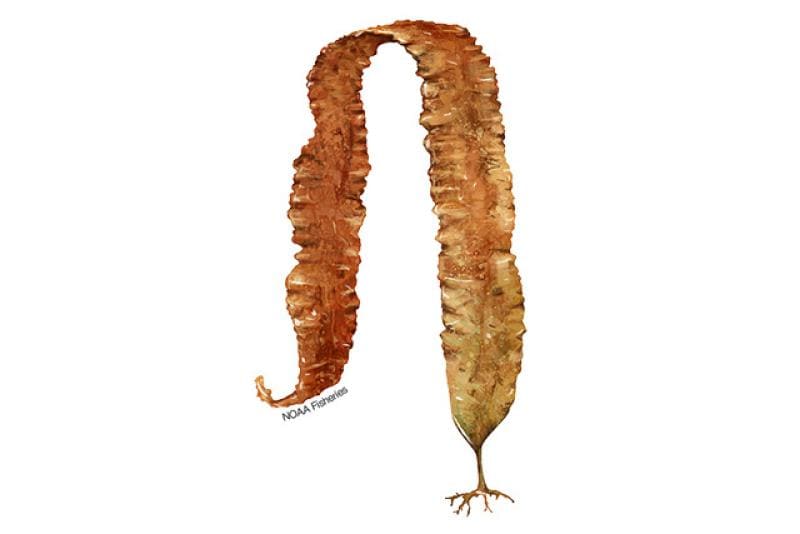
Saccharina latissima , also known as Sea belt, Devil's apron. Sugar kelp is a yellowish brown marine algae widely cultivated and eaten in Asia and growing in popularity in the United States as a nutritious food high in fiber, vitamins, and mi
Not in our directory yet? Browse the committed Charter Boat Directory listings grid (marketplace crosswalk).
Quick facts
About the species
Sugar kelp is a yellowish brown marine algae widely cultivated and eaten in Asia and growing in popularity in the United States as a nutritious food high in fiber, vitamins, and minerals. Sugar kelp has long been known as a sweetener and as having thickening and gelling qualities that can be added to food and cosmetics. Sugar kelp is being grown and harvested by more commercial farms for a variety of uses, from food to potential biofuels.
Maryland record catch
Confirm whether Maryland DNR publishes an Atlantic state-record category for Sugar Kelp on the current sport-fish record board.
Maryland size & bag limits
Maryland’s Atlantic recreational seasons/sizes/creel summary does not publish a dedicated line for Sugar Kelp. Verify COMAR, DNR public notices, and federal rules for your exact waters before you keep fish.
| Rule | Maryland / applicable detail |
|---|---|
| Maryland minimum size | Not listed — no dedicated Sugar Kelp line on the MD Atlantic recreational table |
| Maryland daily creel (bag) | Not listed — no MD species-specific bag for Sugar Kelp |
| Maryland open season | Not listed on the MD Atlantic Ocean / Coastal Bays summary table |
| Verify | Check DNR eRegulations, COMAR, and NOAA for your date and coordinates before you keep fish. |
Population & fishing rate
See the NOAA species profile for current stock status language for this entry.
Appearance
Biology
Where they live
Range
Habitat
Ocean City & Mid-Atlantic context
From Ocean City, Maryland, use this Sugar Kelp profile as NOAA Mid-Atlantic directory context—not a promise you will meet the species on every charter.
Always verify current Maryland and federal size, season, and bag rules for your exact date and coordinates before you keep any catch.
Source facts and imagery are adapted from the NOAA Fisheries species profile for Sugar Kelp.
What charter to book from Ocean City
Sugar Kelp is more of a bay, inshore, or specialty harvest story than a typical OC six-pack trolling day—match the trip type to the animal.
Possible / related
Not typical from OC
Related reading
Fishery management
Harvest
Seafood facts
| Fact | Detail |
|---|---|
| Sustainability | U.S. farmed sugar kelp is a smart seafood choice because it is grown and harvested under U.S. state and federal regulations. |
| Availability | Fresh product when harvested is available February to May, while dried kelp is available year round. |
| Source | Commercially farmed in cold water regions along the East and West Coast of the United States and Alaska. |
| Taste | Sugar kelp has a savory and slightly sweet flavor. When dried, a white, sweet-tasting powder forms on the blade. |
| Texture | Crunchy texture |
| Health | High in fiber, anti-oxidants, vitamins, and minerals. |
Scientific classification
| Rank | Name |
|---|---|
| Kingdom | Protista |
| Phylum | Ochrophyta |
| Class | Phaeophyceae |
| Order | Laminariales |
| Family | Laminariaceae |
| Genus | Saccharina |
| Species | latissima |















