Piping Plover
Charadrius melodus · Also known as: beach plover
A small, sand-colored shorebird that nests on Assateague’s storm-washed beaches. It’s also why seasonal beach closures exist.
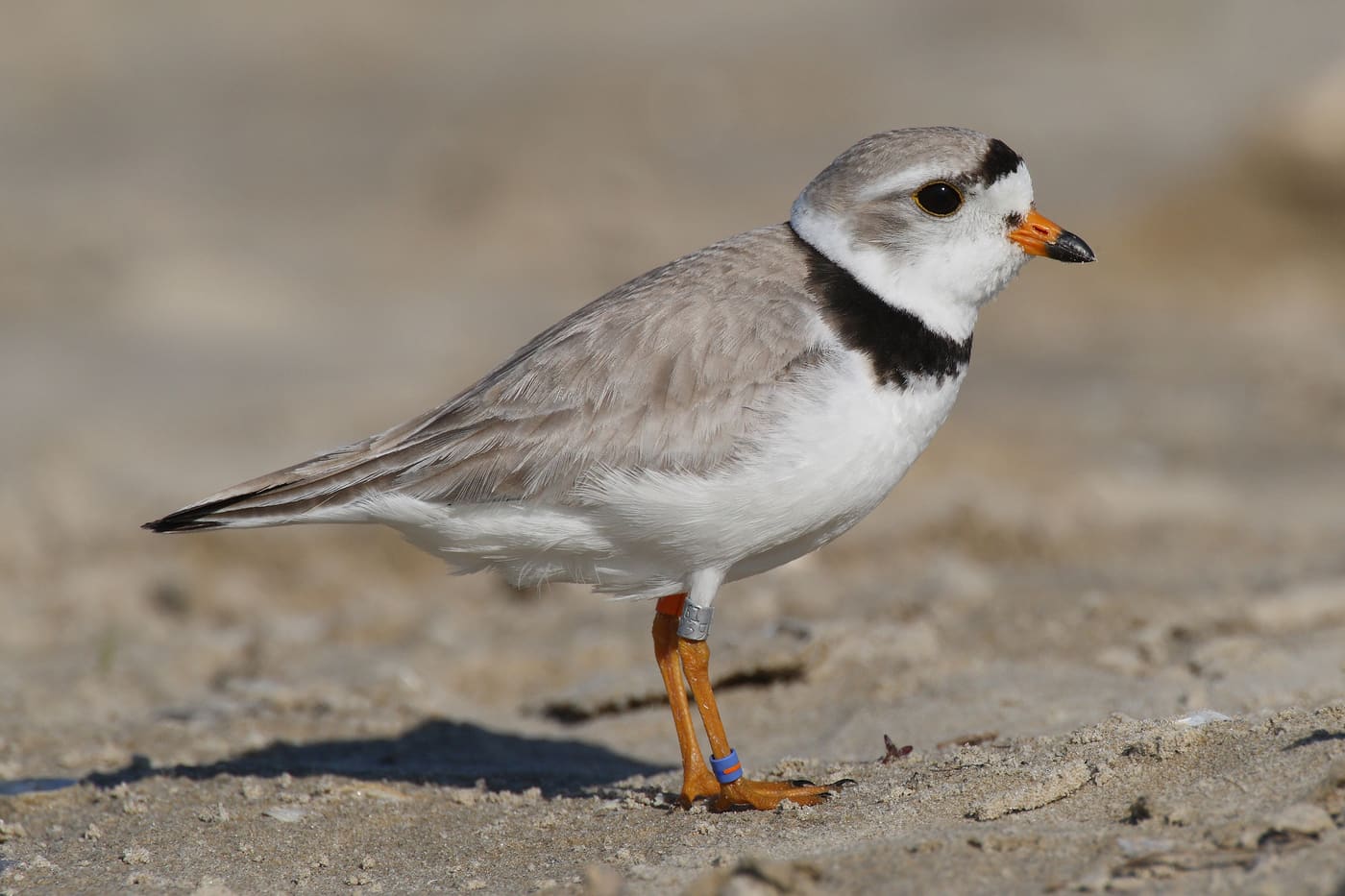
Quick facts
| Group | Shorebird |
|---|---|
| Likelihood nearby | ★★★☆☆ |
| Habitats | Ocean beach, Dunes, Assateague State Park, Assateague National Seashore |
| Seasons (this coast) | spring, summer, breeding |
How to recognize them
- Pale sand-colored upperparts help it vanish against dry beach and shell hash.
- In breeding plumage look for a thin black neck band, orange legs, and an orange bill tipped in black.
- Much smaller and paler than a Willet; runs in short bursts, then pauses.
Biology notes
- Nests in shallow scrapes on open beach and washover flats above the high-tide line.
- Feeds on tiny invertebrates in the wet sand and wrack line.
- Chicks leave the nest soon after hatching and forage with adults along the shoreline.
Where to see them around Ocean City
- Assateague Island National Seashore (Maryland district) ocean beaches and washover flats—especially where nesting closures are posted.
- Assateague Island State Park beach zones outside fenced nesting areas.
- Less common on Ocean City’s developed beach, but migrants can stop on quieter sand near the inlet.
When to look
- Arrive in early spring for courtship and nesting; most depart by late August for southeastern U.S. and Bahamian wintering grounds.
- Peak viewing is late spring through mid-summer if you scan posted nesting beaches from a respectful distance.
Viewing tips & etiquette
- Obey all fencing, string, and “bird nesting area” signs—walking through a territory can cause adults to flush and leave eggs or chicks exposed.
- Use binoculars or a long lens; do not approach scrapes or chase birds for photos.
- Keep dogs leashed and off nesting beaches; pets are a major disturbance source.
Conservation
- Federally threatened. Assateague’s open beaches are important Mid-Atlantic nesting habitat.
- Seasonal closures and predator management are part of recovery work on the seashore.