Sanderling
Calidris alba · Also known as: wave runner, beach peep
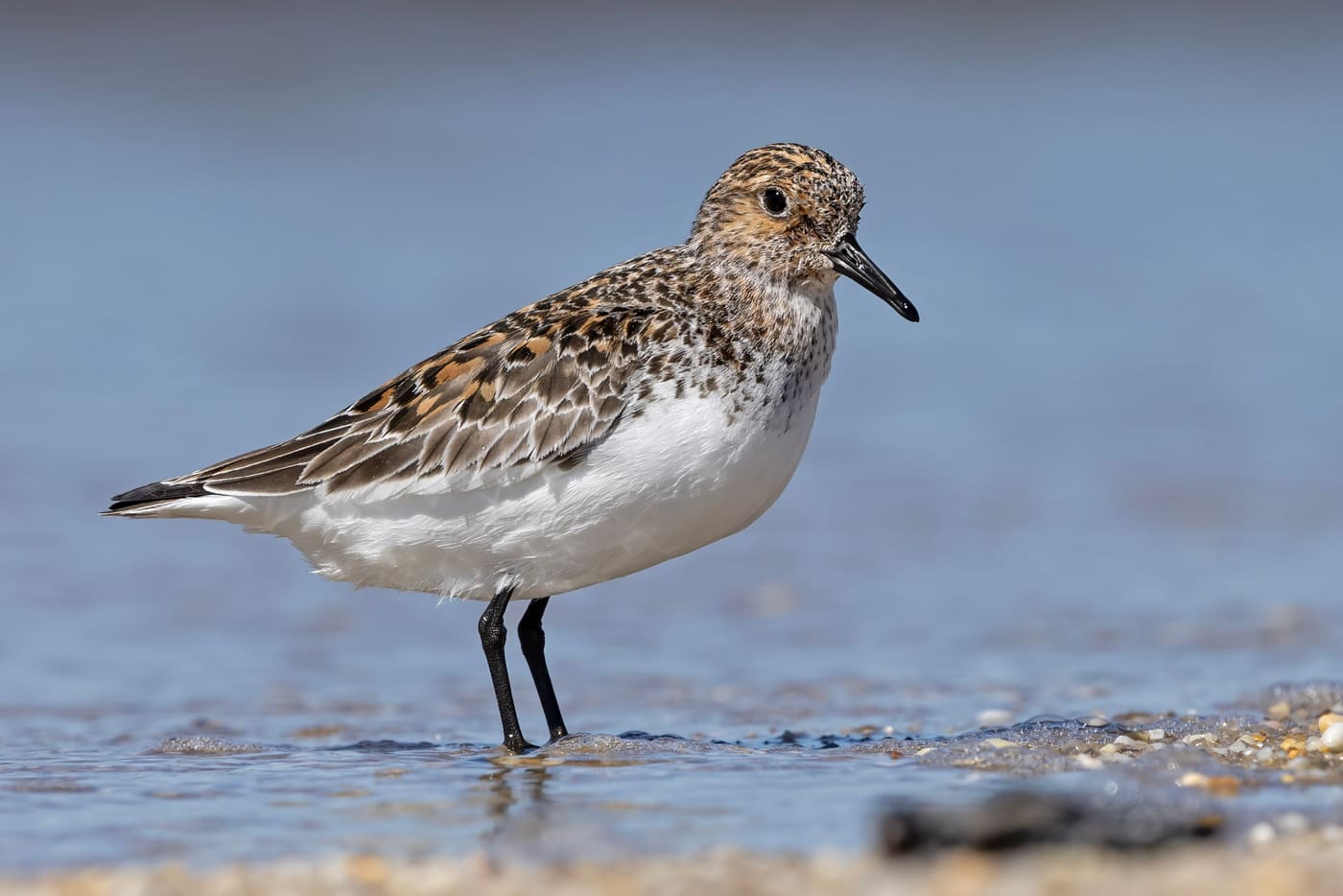
The classic “wave chaser” on Ocean City and Assateague beaches, racing the foam line for tiny prey.
Quick facts
| Group | Shorebird |
|---|---|
| Likelihood nearby | ★★★★★ |
| Habitats | Ocean beach, Inlet, Assateague State Park, Assateague National Seashore |
| Seasons (this coast) | migration, winter, spring, fall |
How to recognize them
- In nonbreeding plumage: pale gray above, white below, with a dark shoulder patch at rest.
- Breeding birds show rusty tones on the head and breast in late spring.
- Stout black bill and black legs; often in small flocks working the swash zone.
Biology notes
- Probes wet sand for mole crabs, amphipods, and other invertebrates uncovered by each wave.
- Nests in High Arctic tundra; Mid-Atlantic beaches are stopover and winter habitat.
Where to see them around Ocean City
- Ocean City beach from the boardwalk to the inlet—watch the wet sand just above the breaking waves.
- Assateague Island State Park and National Seashore ocean beach, especially on quieter stretches away from crowds.
- Ocean City Inlet jetties and flanking sandbars at lower tides.
When to look
- Common from fall through spring; thinner numbers in peak summer when many are on Arctic nesting grounds.
- Migration pulses in April–May and August–October can bring dense flocks.
Viewing tips & etiquette
- Stand still and let flocks work past you—chasing them burns energy they need for migration.
- Early morning and late day are quieter on the OC beach and often better for photography.