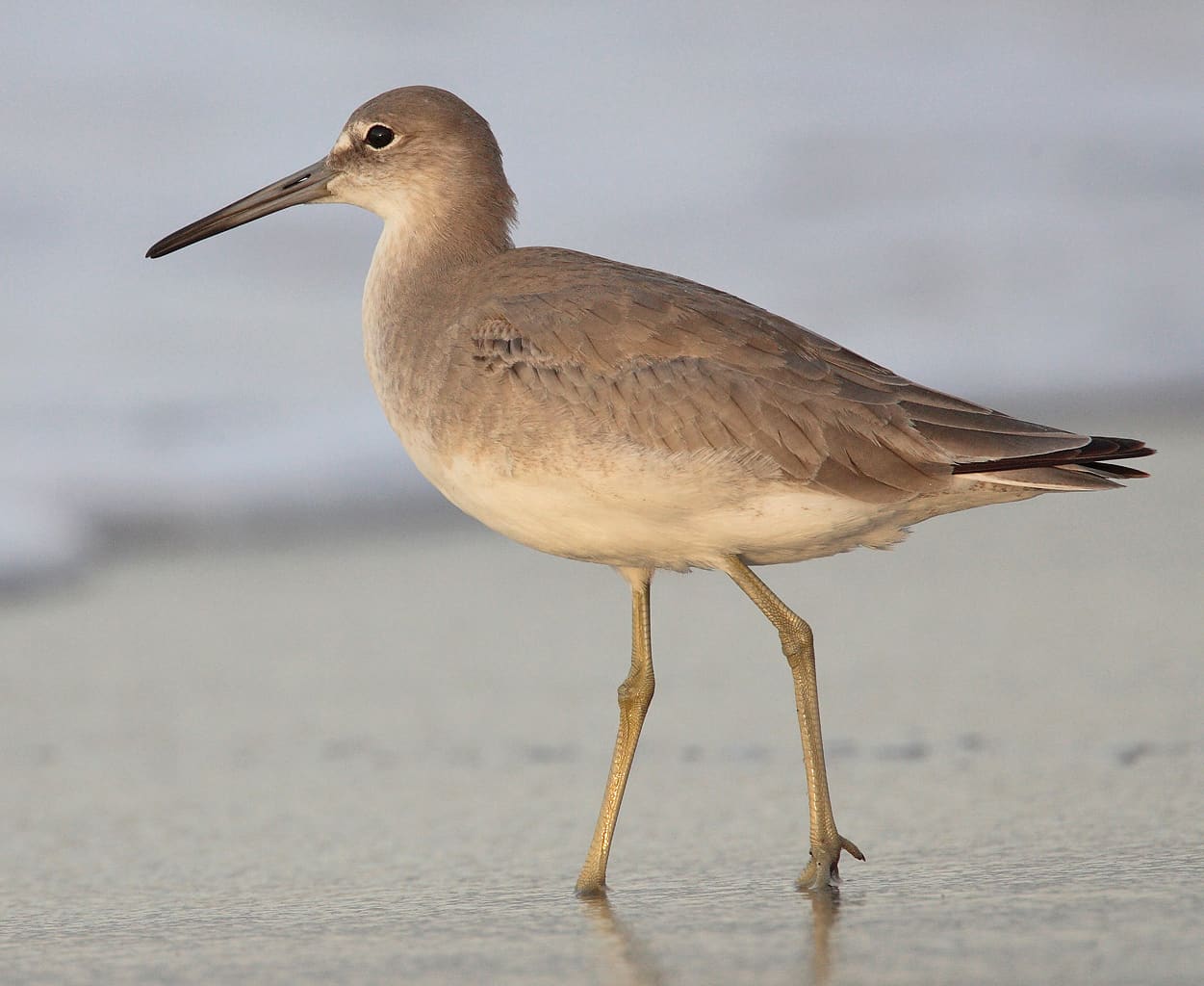
Willet
Tringa semipalmata
A large, gray shorebird of beaches and marsh edges. Loud “pill-will-willet” calls give it away before you see the bold wing stripe.
Quick facts
| Group | Shorebird |
|---|---|
| Likelihood nearby | ★★★★★ |
| Habitats | Ocean beach, Salt marsh, Coastal bays, Assateague State Park, Assateague National Seashore |
| Seasons (this coast) | spring, summer, breeding, fall |
How to recognize them
- Gray-brown overall at rest; in flight a striking black-and-white wing pattern flashes.
- Long, straight bill and long bluish-gray legs.
- Larger and taller than peeps and Sanderlings.
Biology notes
- Breeds in coastal salt marshes and adjacent beaches; Eastern Willets nest along the Atlantic coast.
- Probes mud and sand for crabs, worms, and other invertebrates.
Where to see them around Ocean City
- Assateague salt-marsh edges and bayside flats (National Seashore and State Park).
- Ocean City Inlet and quieter beach stretches, especially near the south end toward the inlet.
- Coastal bay shorelines reachable by kayak or overlooks west of Assateague.
When to look
- Common late spring through summer as local breeders; migrants pass in spring and fall.
- Winter numbers drop—most Eastern Willets leave for southern coasts.
Viewing tips & etiquette
- Listen first: territorial birds are vocal over marsh nesting areas.
- In flight, the wing stripe is the quickest ID mark.