Atlantic Horseshoe Crab
Limulus polyphemus · Also known as: horseshoe crab
Ancient beach icon of Delaware Bay and Mid-Atlantic shores. Not a true crab, but essential to shorebirds and coastal ecology.
Quick facts
| Group | Horseshoe crab |
|---|---|
| Likelihood nearby | ★★★★☆ |
| Habitats | Ocean beach, Coastal bays, Salt marsh, Assateague State Park, Assateague National Seashore |
| Seasons (this coast) | spring, summer, migration |
How to recognize them
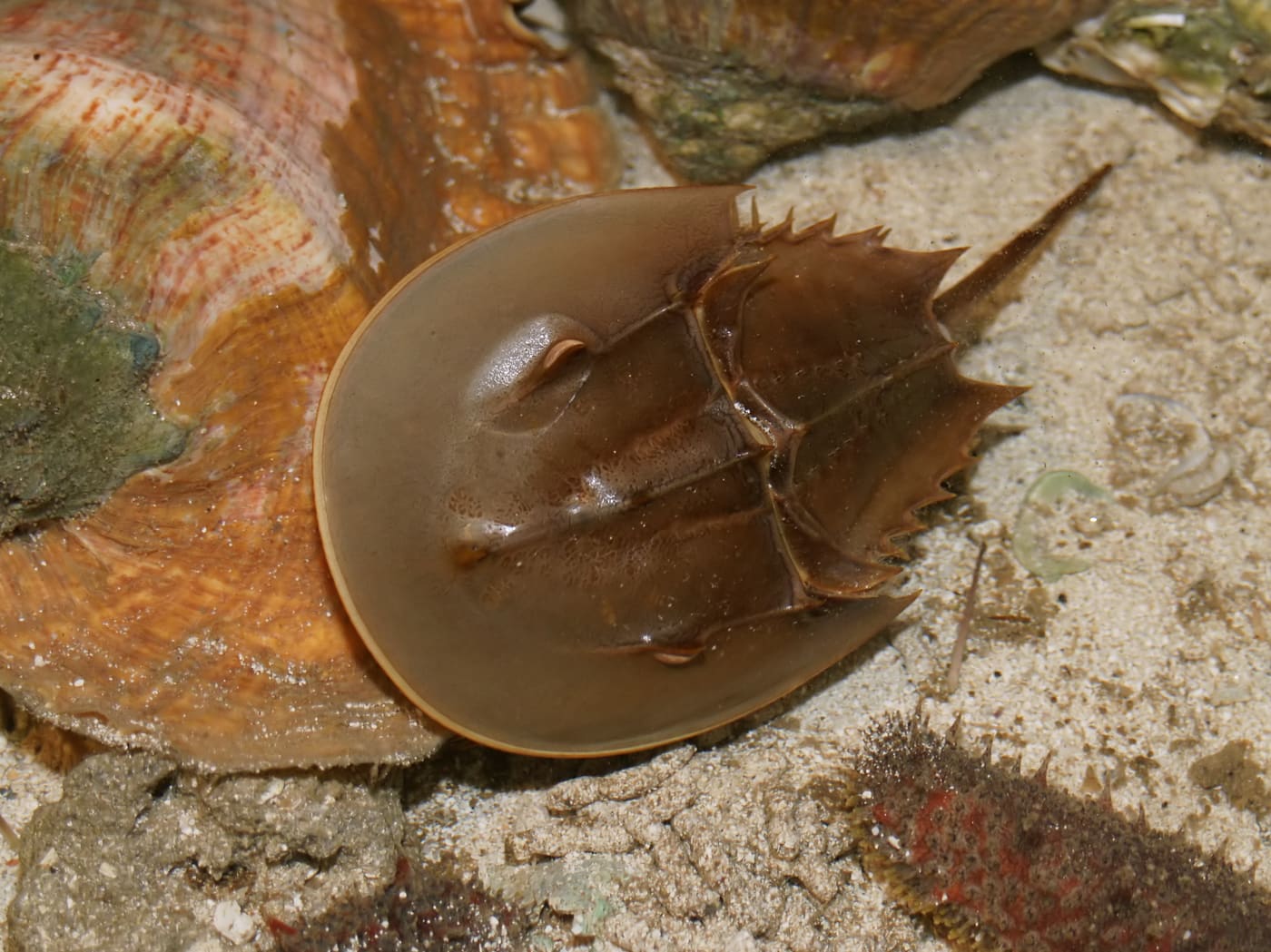
- Horseshoe-shaped brown carapace, long spike-like tail (telson), book gills underneath.
- Males are smaller; pairs often found with males attached during spawning.
Biology notes
- Chelicerates related to spiders and scorpions—not crustaceans—kept here because visitors find them with crabs on the beach.
- Spawn on sandy beaches in late spring; eggs fuel migrating shorebirds (including red knots).
- Blue blood is used in medical safety testing (LAL/recombinant alternatives emerging).
Where to see them around Ocean City
- Ocean City and Assateague beaches around high tides in May–June spawning peaks.
- Bay beaches and flats on the Assateague / Fenwick shorelines.
- Shed shells (“molts”) wash up all season and look like dead crabs—usually empty.
When to look
- Spawning spectacle late spring; individuals and molts through summer–fall.
Viewing tips & etiquette
- If you flip one that is stranded upside-down, set it right-side up by the shell edges—never yank the tail.
- Give spawning groups space; avoid trampling egg clusters in the wet sand.
Conservation
- Harvest and habitat pressures are managed regionally; shorebird conservation is tightly linked to horseshoe crab eggs.