Atlantic Menhaden
Brevoortia tyrannus · Also known as: Fatback, Bunker, Pogie, Mossback
Found in coastal and estuarine waters from Nova Scotia to northern Florida, Atlantic menhaden play many important roles. They are filter feeders, primarily consuming phytoplankton
This is a Nature Guide page (viewing and ID). Catch limits, tackle, and charter fit live on the separate Fishing species profile—we keep those products apart on purpose.
Quick facts
| Group | Fish · Mid-Atlantic |
|---|---|
| Viewing lane | Bay / nearshore |
| Likelihood nearby | ★★★★★ |
| Length | Up to approx. 15 inches |
| Lifespan | Up to 10 to 12 years |
| Region | New England/Mid-Atlantic, Southeast |
How to recognize them
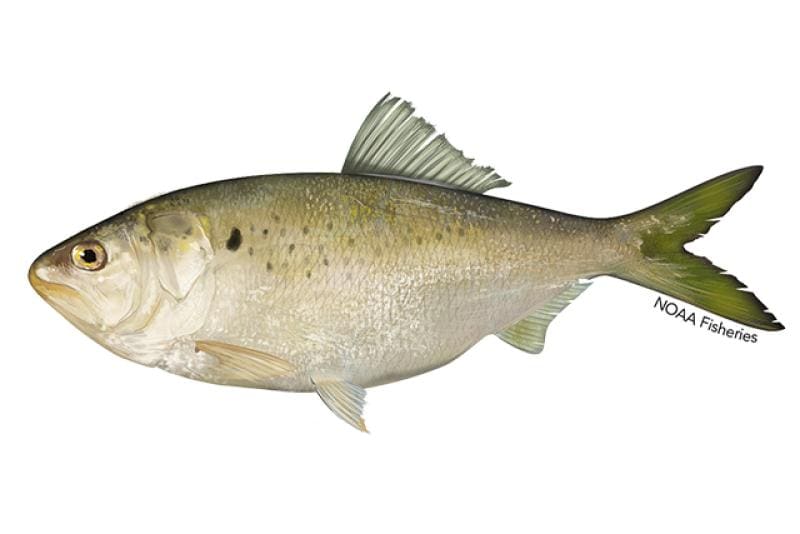
- Menhaden can live to be 10 to 12 years old and reach 15 inches in length.
- Fully grown, they weigh about a pound.
- Menhaden eat both phytoplankton and zooplankton.
- When they are well-fed, they are referred to as fatbacks or bunkers.
- Mature menhaden spawn in coastal waters off the East Coast of the United States.
- The peak of their spawning season is thought to be from December to February.
- Menhaden larvae drift into estuarine environments and metamorphosize into juveniles.
- The juveniles tend to stay in the estuarine environments—like the Chesapeake Bay and Delaware Bay—for approximately a year before leaving the estuary to join adult schools.
- While many menhaden are migratory, others do not migrate and stay resident in their area.
- Where They Live Menhaden live in coastal and estuarine waters from Nova Scotia to northern Florida.
- In the Chesapeake Bay, menhaden are common in all salinities.
- They swim in large schools close to the water's surface during the spring, summer, and fall.
- Fishery Management The Atlantic menhaden fishery is managed by the Atlantic States Marine Fisheries Commission's (ASMFC) Atlantic Menhaden Management Board.
- Atlantic menhaden stock assessments and management are currently focused on implementing ecological reference points.
- These are fishing targets based on the availability of menhaden as prey for other important fishery species, including striped bass, weakfish, bluefish, and spiny dogfish, while also accounting for other prey species, such as Atlantic herring.
- Scientific Classification Kingdom Animalia Phylum Chordata Class Actinopterygii Order Clupeiformes Family Clupeidae Genus Brevoortia Species tyrannus Last updated by NOAA Fisheries on 05/22/2025
Biology notes
- The Atlantic menhaden fishery is managed by the Atlantic States Marine Fisheries Commission's (ASMFC) Atlantic Menhaden Management Board.
- Atlantic menhaden stock assessments and management are currently focused on implementing ecological reference points.
- These are fishing targets based on the availability of menhaden as prey for other important fishery species, including striped bass, weakfish, bluefish, and spiny dogfish, while also accounting for other prey species, such as Atlantic herring.
- Scientific Classification Kingdom Animalia Phylum Chordata Class Actinopterygii Order Clupeiformes Family Clupeidae Genus Brevoortia Species tyrannus Last updated by NOAA Fisheries on 05/22/2025
Habitat & range
- See the NOAA species profile for habitat detail for this entry.
- The Atlantic menhaden fishery is managed by the Atlantic States Marine Fisheries Commission's (ASMFC) Atlantic Menhaden Management Board.
- Atlantic menhaden stock assessments and management are currently focused on implementing ecological reference points.
Population status
- Menhaden are silvery in color with a distinct black shoulder spot behind their gill opening.
- Biology Menhaden can live to be 10 to 12 years old and reach 15 inches in length.
- Fully grown, they weigh about a pound.
- Menhaden eat both phytoplankton and zooplankton.
- When they are well-fed, they are referred to as fatbacks or bunkers.
- Mature menhaden spawn in coastal waters off the East Coast of the United States.
Where to see them around Ocean City
- Scan Assateague and Ocean City beaches, the Inlet jetties, and quiet bay overlooks for surface flashes, bait boils, and clear-water shape.
- Boardwalk and pier rails help with binoculars when the surf is busy—stay clear of anglers’ casting lanes and nesting closures.
- Kayak or skiff edges of salt marsh and spoil islands can reveal schools in shallow water; give wildlife wide berth and never chase.
When to look
- Warm months (late spring through early fall) bring the most shore-visible activity in the coastal bays and surf.
- Shoulder seasons can still be excellent after calm nights and clear water—cold snaps quiet the shallows.
- Tide changes near the Inlet often concentrate bait; check the tide table before you plan a viewing walk.
Viewing tips & etiquette
- Use binoculars or a long lens; do not enter the water to corner fish, rays, or sharks for photos.
- Respect beach nesting closures, stay off dunes, and keep dogs leashed where required.
- If you find a stranded or injured animal, contact official wildlife responders—do not attempt rescue yourself.
- For harvest rules, size limits, or charter planning, use the Fishing profile for Atlantic Menhaden —not this Nature Guide page.
Sources
- NOAA Fisheries species profile (biology reference; angling product stays on our Fishing hub)
- OCEANCITY.MD Fishing species profile