Atlantic Wahoo
Acanthocybium solandri · Also known as: Kingfish, Peto, Guarapucu, Ono, Thazard batard
U.S. wild-caught Atlantic wahoo is a smart seafood choice because it is sustainably managed and responsibly harvested under U.S. regulations.
This is a Nature Guide page (viewing and ID). Catch limits, tackle, and charter fit live on the separate Fishing species profile—we keep those products apart on purpose.
Quick facts
| Group | Fish · Pelagic · Mid-Atlantic |
|---|---|
| Viewing lane | Offshore / bluewater |
| Likelihood nearby | ★★★★★ |
| Region | New England/Mid-Atlantic, Southeast |
How to recognize them
- Atlantic wahoo grow fast, up to 8 feet and 158 pounds, though they are commonly between 3.3 and 5.4 feet long. They have a short life span, up to 5 or 6 years. They are able to reproduce at about 1 year old. For males, this is when they reach 2.8 feet in length, and for females, when they reach 3.3 feet. Atlantic wahoo spawn multiple times throughout the spawning season. They are very productive, releasing a half-million to 45 million eggs per year to compensate for eggs that might not survive to adulthood. They mainly feed on squid and fish, including frigate mackerel, butterfish, porcupine fish, and round herring. They generally compete with tuna, but can feed on larger prey by using their extremely sharp teeth to render prey into bite-size pieces. A number of predators that share their habitat feed on young wahoo. Where They Live Range Wahoo are found in tropical and subtropical waters around the world. They are found in tropical waters year-round but are also found in higher latitudes during the summer. Habitat Wahoo live near the surface and are frequently found alone or in small, loosely connected groups rather than compact schools. They may also be found near banks, pinnacles, and natural debris drifting in the ocean. Scientists do not know much about wahoo migrations, but one study revealed that a tagged and recaptured fish had traveled 1,700 miles in 6 ½ months. Fishery Management NOAA Fisheries , the Caribbean Council , and the South Atlantic Fishery Management Council (in cooperation with the Mid-Atlantic and New England Fishery Management Councils) manage the Atlantic wahoo fishery. Managed under the Dolphin and Wahoo Fishery of the Atlantic Fishery Management Plan : Commercial vessel, charter vessel/headboat, and dealer permits are required. Annual catch limits divided between the commercial and recreational fisheries, with the recreational fishery receiving a significant majority of the allocation. Commercial fishing trip, recreational bag, possession, and minimum size limits. Accountability measures are in place to ensure the overfishing limit is not exceeded, or to account for any overages. Management measures apply in the South Atlantic Council jurisdiction, but no management measures in the Gulf of America (formerly Gulf of Mexico). Compatible regulations in state waters, particularly Florida. In the U.S. Caribbean, managed under the Puerto Rico Fishery Management Plan , the St. Croix Fishery Management Plan , and the St. Thomas and St. John Fishery Management Plan : Commercial and recreational annual catch limits in Puerto Rico and commercial annual catch limits in St. Croix and St. Thomas/S. John Harvest Commercial fishery: In 2024, commercial landings of Atlantic wahoo totaled 51,000 pounds and were valued at $234,000, according to the NOAA Fisheries commercial fishing landings database . The majority of commercial landings came from Florida and North Carolina. Most (more than 95 percent) of the U.S. harvest of wahoo comes from the Pacific, mainly Hawaii. Gear types, habitat impacts, and bycatch: The authorized gear types in the fisheries for wahoo in the Atlantic include the automatic reel, bandit gear, handline, pelagic longline, rod and reel, and spearfishing gear (including powerheads). Hook-and-line gear has minimal impact on bottom habitat because it doesn’t contact the ocean floor. Longlines can incidentally catch sea turtles, marine mammals, and other species. Longline fishermen must use specific hooks and bait and must follow safe handling and release guidelines to prevent this bycatch. Fishing is prohibited in certain areas to protect species such as billfish. Recreational fishery: Atlantic wahoo is a popular fish for recreational fishermen. In 2024, recreational landings of Atlantic wahoo totaled 1.6 million pounds, according to the NOAA Fisheries recreational fishing landings database . Daily bag limits. Prohibition on the sale of recreational catch without appropriate permits.
- *Executive Order 14172, “Restoring Names That Honor American Greatness” (Jan. 20, 2025), directs that the Gulf of Mexico be renamed the Gulf of America. On August 7, 2025, NOAA Fisheries and the National Ocean Service amended regulations in the Code of Federal Regulations to reflect the renaming. The name change did not result in any changes to, and had no effect on the applicability or enforceability of, any existing regulations. This website continues to use “Gulf of Mexico” when quoting statutes or previously published materials.
- Scientific Classification Kingdom Animalia Phylum Chordata Class Actinopterygii Order Scombriformes Family Scombridae Genus Acanthocybium Species solandri Last updated by NOAA Fisheries on 07/06/2026
Biology notes
- Wahoo are found in tropical and subtropical waters around the world. They are found in tropical waters year-round but are also found in higher latitudes during the summer. Habitat Wahoo live near the surface and are frequently found alone or in small, loosely connected groups rather than compact schools. They may also be found near banks, pinnacles, and natural debris drifting in the ocean. Scientists do not know much about wahoo migrations, but one study revealed that a tagged and recaptured fish had traveled 1,700 miles in 6 ½ months. Fishery Management NOAA Fisheries , the Caribbean Council , and the South Atlantic Fishery Management Council (in cooperation with the Mid-Atlantic and New England Fishery Management Councils) manage the Atlantic wahoo fishery. Managed under the Dolphin and Wahoo Fishery of the Atlantic Fishery Management Plan : Commercial vessel, charter vessel/headboat, and dealer permits are required. Annual catch limits divided between the commercial and recreational fisheries, with the recreational fishery receiving a significant majority of the allocation. Commercial fishing trip, recreational bag, possession, and minimum size limits. Accountability measures are in place to ensure the overfishing limit is not exceeded, or to account for any overages. Management measures apply in the South Atlantic Council jurisdiction, but no management measures in the Gulf of America (formerly Gulf of Mexico). Compatible regulations in state waters, particularly Florida. In the U.S. Caribbean, managed under the Puerto Rico Fishery Management Plan , the St. Croix Fishery Management Plan , and the St. Thomas and St. John Fishery Management Plan : Commercial and recreational annual catch limits in Puerto Rico and commercial annual catch limits in St. Croix and St. Thomas/S. John Harvest Commercial fishery: In 2024, commercial landings of Atlantic wahoo totaled 51,000 pounds and were valued at $234,000, according to the NOAA Fisheries commercial fishing landings database . The majority of commercial landings came from Florida and North Carolina. Most (more than 95 percent) of the U.S. harvest of wahoo comes from the Pacific, mainly Hawaii. Gear types, habitat impacts, and bycatch: The authorized gear types in the fisheries for wahoo in the Atlantic include the automatic reel, bandit gear, handline, pelagic longline, rod and reel, and spearfishing gear (including powerheads). Hook-and-line gear has minimal impact on bottom habitat because it doesn’t contact the ocean floor. Longlines can incidentally catch sea turtles, marine mammals, and other species. Longline fishermen must use specific hooks and bait and must follow safe handling and release guidelines to prevent this bycatch. Fishing is prohibited in certain areas to protect species such as billfish. Recreational fishery: Atlantic wahoo is a popular fish for recreational fishermen. In 2024, recreational landings of Atlantic wahoo totaled 1.6 million pounds, according to the NOAA Fisheries recreational fishing landings database . Daily bag limits. Prohibition on the sale of recreational catch without appropriate permits.
- *Executive Order 14172, “Restoring Names That Honor American Greatness” (Jan. 20, 2025), directs that the Gulf of Mexico be renamed the Gulf of America. On August 7, 2025, NOAA Fisheries and the National Ocean Service amended regulations in the Code of Federal Regulations to reflect the renaming. The name change did not result in any changes to, and had no effect on the applicability or enforceability of, any existing regulations. This website continues to use “Gulf of Mexico” when quoting statutes or previously published materials.
- Scientific Classification Kingdom Animalia Phylum Chordata Class Actinopterygii Order Scombriformes Family Scombridae Genus Acanthocybium Species solandri Last updated by NOAA Fisheries on 07/06/2026
Habitat & range
- NOAA Fisheries , the Caribbean Council , and the South Atlantic Fishery Management Council (in cooperation with the Mid-Atlantic and New England Fishery Management Councils) manage the Atlantic wahoo fishery. Managed under the Dolphin and Wahoo Fishery of the Atlantic Fishery Management Plan : Commercial vessel, charter vessel/headboat, and dealer permits are required. Annual catch limits divided between the commercial and recreational fisheries, with the recreational fishery receiving a significant majority of the allocation. Commercial fishing trip, recreational bag, possession, and minimum size limits. Accountability measures are in place to ensure the overfishing limit is not exceeded, or to account for any overages. Management measures apply in the South Atlantic Council jurisdiction, but no management measures in the Gulf of America (formerly Gulf of Mexico). Compatible regulations in state waters, particularly Florida. In the U.S. Caribbean, managed under the Puerto Rico Fishery Management Plan , the St. Croix Fishery Management Plan , and the St. Thomas and St. John Fishery Management Plan : Commercial and recreational annual catch limits in Puerto Rico and commercial annual catch limits in St. Croix and St. Thomas/S. John Harvest Commercial fishery: In 2024, commercial landings of Atlantic wahoo totaled 51,000 pounds and were valued at $234,000, according to the NOAA Fisheries commercial fishing landings database . The majority of commercial landings came from Florida and North Carolina. Most (more than 95 percent) of the U.S. harvest of wahoo comes from the Pacific, mainly Hawaii. Gear types, habitat impacts, and bycatch: The authorized gear types in the fisheries for wahoo in the Atlantic include the automatic reel, bandit gear, handline, pelagic longline, rod and reel, and spearfishing gear (including powerheads). Hook-and-line gear has minimal impact on bottom habitat because it doesn’t contact the ocean floor. Longlines can incidentally catch sea turtles, marine mammals, and other species. Longline fishermen must use specific hooks and bait and must follow safe handling and release guidelines to prevent this bycatch. Fishing is prohibited in certain areas to protect species such as billfish. Recreational fishery: Atlantic wahoo is a popular fish for recreational fishermen. In 2024, recreational landings of Atlantic wahoo totaled 1.6 million pounds, according to the NOAA Fisheries recreational fishing landings database . Daily bag limits. Prohibition on the sale of recreational catch without appropriate permits.
- *Executive Order 14172, “Restoring Names That Honor American Greatness” (Jan. 20, 2025), directs that the Gulf of Mexico be renamed the Gulf of America. On August 7, 2025, NOAA Fisheries and the National Ocean Service amended regulations in the Code of Federal Regulations to reflect the renaming. The name change did not result in any changes to, and had no effect on the applicability or enforceability of, any existing regulations. This website continues to use “Gulf of Mexico” when quoting statutes or previously published materials.
- Scientific Classification Kingdom Animalia Phylum Chordata Class Actinopterygii Order Scombriformes Family Scombridae Genus Acanthocybium Species solandri Last updated by NOAA Fisheries on 07/06/2026
- Wahoo are found in tropical and subtropical waters around the world. They are found in tropical waters year-round but are also found in higher latitudes during the summer. Habitat Wahoo live near the surface and are frequently found alone or in small, loosely connected groups rather than compact schools. They may also be found near banks, pinnacles, and natural debris drifting in the ocean. Scientists do not know much about wahoo migrations, but one study revealed that a tagged and recaptured fish had traveled 1,700 miles in 6 ½ months. Fishery Management NOAA Fisheries , the Caribbean Council , and the South Atlantic Fishery Management Council (in cooperation with the Mid-Atlantic and New England Fishery Management Councils) manage the Atlantic wahoo fishery. Managed under the Dolphin and Wahoo Fishery of the Atlantic Fishery Management Plan : Commercial vessel, charter vessel/headboat, and dealer permits are required. Annual catch limits divided between the commercial and recreational fisheries, with the recreational fishery receiving a significant majority of the allocation. Commercial fishing trip, recreational bag, possession, and minimum size limits. Accountability measures are in place to ensure the overfishing limit is not exceeded, or to account for any overages. Management measures apply in the South Atlantic Council jurisdiction, but no management measures in the Gulf of America (formerly Gulf of Mexico). Compatible regulations in state waters, particularly Florida. In the U.S. Caribbean, managed under the Puerto Rico Fishery Management Plan , the St. Croix Fishery Management Plan , and the St. Thomas and St. John Fishery Management Plan : Commercial and recreational annual catch limits in Puerto Rico and commercial annual catch limits in St. Croix and St. Thomas/S. John Harvest Commercial fishery: In 2024, commercial landings of Atlantic wahoo totaled 51,000 pounds and were valued at $234,000, according to the NOAA Fisheries commercial fishing landings database . The majority of commercial landings came from Florida and North Carolina. Most (more than 95 percent) of the U.S. harvest of wahoo comes from the Pacific, mainly Hawaii. Gear types, habitat impacts, and bycatch: The authorized gear types in the fisheries for wahoo in the Atlantic include the automatic reel, bandit gear, handline, pelagic longline, rod and reel, and spearfishing gear (including powerheads). Hook-and-line gear has minimal impact on bottom habitat because it doesn’t contact the ocean floor. Longlines can incidentally catch sea turtles, marine mammals, and other species. Longline fishermen must use specific hooks and bait and must follow safe handling and release guidelines to prevent this bycatch. Fishing is prohibited in certain areas to protect species such as billfish. Recreational fishery: Atlantic wahoo is a popular fish for recreational fishermen. In 2024, recreational landings of Atlantic wahoo totaled 1.6 million pounds, according to the NOAA Fisheries recreational fishing landings database . Daily bag limits. Prohibition on the sale of recreational catch without appropriate permits.
- *Executive Order 14172, “Restoring Names That Honor American Greatness” (Jan. 20, 2025), directs that the Gulf of Mexico be renamed the Gulf of America. On August 7, 2025, NOAA Fisheries and the National Ocean Service amended regulations in the Code of Federal Regulations to reflect the renaming. The name change did not result in any changes to, and had no effect on the applicability or enforceability of, any existing regulations. This website continues to use “Gulf of Mexico” when quoting statutes or previously published materials.
Population status
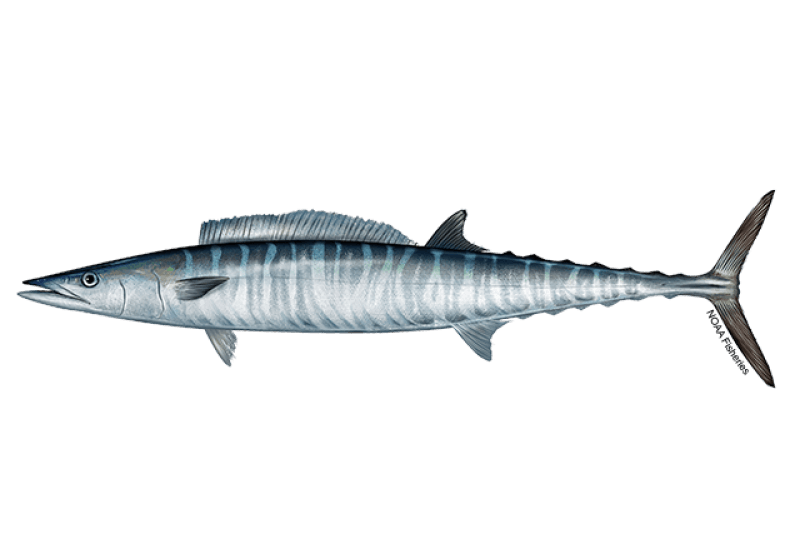
- Atlantic wahoo are steel blue above and pale blue below. They are covered with small scales and have a series of 25 to 30 irregular blackish-blue vertical bars on their sides that fade rapidly after death. They have large mouths with strong, triangular, compressed, and finely serrated teeth. Their snouts are about as long as the rest of their heads. Biology Atlantic wahoo grow fast, up to 8 feet and 158 pounds, though they are commonly between 3.3 and 5.4 feet long. They have a short life span, up to 5 or 6 years. They are able to reproduce at about 1 year old. For males, this is when they reach 2.8 feet in length, and for females, when they reach 3.3 feet. Atlantic wahoo spawn multiple times throughout the spawning season. They are very productive, releasing a half-million to 45 million eggs per year to compensate for eggs that might not survive to adulthood. They mainly feed on squid and fish, including frigate mackerel, butterfish, porcupine fish, and round herring. They generally compete with tuna, but can feed on larger prey by using their extremely sharp teeth to render prey into bite-size pieces. A number of predators that share their habitat feed on young wahoo. Where They Live Range Wahoo are found in tropical and subtropical waters around the world. They are found in tropical waters year-round but are also found in higher latitudes during the summer. Habitat Wahoo live near the surface and are frequently found alone or in small, loosely connected groups rather than compact schools. They may also be found near banks, pinnacles, and natural debris drifting in the ocean. Scientists do not know much about wahoo migrations, but one study revealed that a tagged and recaptured fish had traveled 1,700 miles in 6 ½ months. Fishery Management NOAA Fisheries , the Caribbean Council , and the South Atlantic Fishery Management Council (in cooperation with the Mid-Atlantic and New England Fishery Management Councils) manage the Atlantic wahoo fishery. Managed under the Dolphin and Wahoo Fishery of the Atlantic Fishery Management Plan : Commercial vessel, charter vessel/headboat, and dealer permits are required. Annual catch limits divided between the commercial and recreational fisheries, with the recreational fishery receiving a significant majority of the allocation. Commercial fishing trip, recreational bag, possession, and minimum size limits. Accountability measures are in place to ensure the overfishing limit is not exceeded, or to account for any overages. Management measures apply in the South Atlantic Council jurisdiction, but no management measures in the Gulf of America (formerly Gulf of Mexico). Compatible regulations in state waters, particularly Florida. In the U.S. Caribbean, managed under the Puerto Rico Fishery Management Plan , the St. Croix Fishery Management Plan , and the St. Thomas and St. John Fishery Management Plan : Commercial and recreational annual catch limits in Puerto Rico and commercial annual catch limits in St. Croix and St. Thomas/S. John Harvest Commercial fishery: In 2024, commercial landings of Atlantic wahoo totaled 51,000 pounds and were valued at $234,000, according to the NOAA Fisheries commercial fishing landings database . The majority of commercial landings came from Florida and North Carolina. Most (more than 95 percent) of the U.S. harvest of wahoo comes from the Pacific, mainly Hawaii. Gear types, habitat impacts, and bycatch: The authorized gear types in the fisheries for wahoo in the Atlantic include the automatic reel, bandit gear, handline, pelagic longline, rod and reel, and spearfishing gear (including powerheads). Hook-and-line gear has minimal impact on bottom habitat because it doesn’t contact the ocean floor. Longlines can incidentally catch sea turtles, marine mammals, and other species. Longline fishermen must use specific hooks and bait and must follow safe handling and release guidelines to prevent this bycatch. Fishing is prohibited in certain areas to protect species such as billfish. Recreational fishery: Atlantic wahoo is a popular fish for recreational fishermen. In 2024, recreational landings of Atlantic wahoo totaled 1.6 million pounds, according to the NOAA Fisheries recreational fishing landings database . Daily bag limits. Prohibition on the sale of recreational catch without appropriate permits.
- *Executive Order 14172, “Restoring Names That Honor American Greatness” (Jan. 20, 2025), directs that the Gulf of Mexico be renamed the Gulf of America. On August 7, 2025, NOAA Fisheries and the National Ocean Service amended regulations in the Code of Federal Regulations to reflect the renaming. The name change did not result in any changes to, and had no effect on the applicability or enforceability of, any existing regulations. This website continues to use “Gulf of Mexico” when quoting statutes or previously published materials.
- Scientific Classification Kingdom Animalia Phylum Chordata Class Actinopterygii Order Scombriformes Family Scombridae Genus Acanthocybium Species solandri Last updated by NOAA Fisheries on 07/06/2026
Where to see them around Ocean City
- Most reliable views are from head boats and private sportfish day trips when bluewater is close—watch for birds, bait, and surface activity from the rail.
- Shore viewers rarely see canyon pelagics; use the Inlet and Assateague for coastal species instead, then treat offshore sightings as trip bonuses.
- Keep a respectful distance if a vessel approaches whales, sharks, or rays—follow NOAA approach guidelines and captain instructions.
- Atlantic Wahoo is a bluewater animal for most visitors—treat shore sightings as rare bonuses, not the main plan.
When to look
- Peak bluewater viewing usually tracks summer and early fall when warm water and bait move onto the shelf.
- Weather windows matter more than calendar weeks—canceled canyon days mean fewer offshore sightings for visitors.
- Winter and early spring sightings are possible but less predictable from a typical vacation schedule.
Viewing tips & etiquette
- Use binoculars or a long lens; do not enter the water to corner fish, rays, or sharks for photos.
- Respect beach nesting closures, stay off dunes, and keep dogs leashed where required.
- If you find a stranded or injured animal, contact official wildlife responders—do not attempt rescue yourself.
- For harvest rules, size limits, or charter planning, use the Fishing profile for Atlantic Wahoo —not this Nature Guide page.
Sources
- NOAA Fisheries species profile (biology reference; angling product stays on our Fishing hub)
- OCEANCITY.MD Fishing species profile