Bluefish
Pomatomus saltatrix · Also known as: Tailor, Snapper, Baby blues, Choppers, Elfs
The Atlantic bluefish fishery in the U.S. operates from Maine to Florida. Bluefish are highly migratory along the U.S. Atlantic coast and seasonally move. The bluefish fishery pred
This is a Nature Guide page (viewing and ID). Catch limits, tackle, and charter fit live on the separate Fishing species profile—we keep those products apart on purpose.
Quick facts
| Group | Fish · Mid-Atlantic |
|---|---|
| Viewing lane | Bay & offshore |
| Likelihood nearby | ★★★★★ |
| Region | New England/Mid-Atlantic, Southeast |
How to recognize them
- They grow fast, up to 31 pounds and 39 inches.
- They are able to reproduce at age 2, when they’re 15 to 20 inches in length.
- Depending on their size, females can have between 400,000 and 2 million eggs.
- Bluefish spawn multiple times in spring and summer.
- They exhibit feeding behavior called the “bluefish blitz,” where large schools of big fish attack bait fish near the surface, churning the water like a washing machine.
- They feed voraciously on their prey, eating almost anything they can catch and swallow.
- Bluefish have razor-sharp teeth and shearing jaws that allow them to ingest large parts, increasing the maximum size of the prey they can eat.
- They eat squid and fish, particularly menhaden and smaller fish such as silversides.
- Sharks, tunas, and billfishes are typically the only fish predators large and fast enough to prey on adult bluefish.
- Bluefish make up a major part of the diet of shortfin mako sharks and are also very important in the diets of swordfish .
- Oceanic birds prey on juvenile bluefish.
- Where They Live Range Along the East Coast from Maine to eastern Florida.
- Habitat Bluefish live in temperate and tropical coastal oceans around the world, except in the eastern Pacific.
- They gather by size in schools that can cover tens of square miles of ocean, equivalent to 10,000 football fields.
- Bluefish migrate seasonally, moving north in spring and summer as water temperatures rise and then south in autumn and winter to waters in the South Atlantic Bight.
- Females release their eggs in the open ocean.
- Larvae develop into juveniles near the surface in continental shelf waters and eventually move to estuarine and nearshore shelf habitats.
- Juveniles prefer sandy ocean bottoms but will also inhabit mud, silt, or clay ocean bottoms or vegetated areas.
- Adults live in both inshore and offshore areas and favor warmer water.
- Fishery Management NOAA Fisheries , the Mid-Atlantic Fishery Management Council , and the Atlantic States Marine Fisheries Commission manage the bluefish fishery.
- Managed under the Bluefish Fishery Management Plan : Commercial fishermen must have a permit to catch and sell bluefish.
- Managers set an annual catch limit.
- The majority of catch is allocated to the recreational fisheries.
- The commercial catch limit is divided into state-specific allocations.
- Unused recreational catch can be re-allocated to commercial fisheries.
- A rebuilding plan to rebuild the stock to the target population level is in place with a target date of 2029.
- Harvest In 2024, commercial landings of bluefish totaled 2.3 million pounds and were valued at $2.3 million, according to the NOAA Fisheries commercial fishing landings database .
- In 2023, recreational anglers landed over 13 million pounds of bluefish, according to the NOAA Fisheries recreational fishing landings database .
- Florida, North Carolina, and New Jersey account for the largest percentage of the recreational bluefish harvest.
- Peak recreational harvest occurs from May through October with over 70 percent of the catch in July and August.
- Gear types, habitat impacts, and bycatch: Recreational fishermen use hook-and-line gear that has minimal impacts on habitat.
- Commercial fishermen use a variety of gears including trawls, gillnets, haul seines, and pound nets, and the impacts vary by gear type.
- Gillnets can occasionally entangle marine mammals.
- However, the bluefish fishery uses nets with small mesh and sinking gillnets to reduce bycatch.
- A rebuilding plan to rebuild the stock to the target population level is in place with a target date of 2029.
- Scientific Classification Kingdom Animalia Phylum Chordata Class Actinopterygii Order Perciformes Family Pomatomidae Genus Pomatomus Species saltatrix Last updated by NOAA Fisheries on 06/25/2026
Biology notes
- Along the East Coast from Maine to eastern Florida.
- Habitat Bluefish live in temperate and tropical coastal oceans around the world, except in the eastern Pacific.
- They gather by size in schools that can cover tens of square miles of ocean, equivalent to 10,000 football fields.
- Bluefish migrate seasonally, moving north in spring and summer as water temperatures rise and then south in autumn and winter to waters in the South Atlantic Bight.
- Females release their eggs in the open ocean.
- Larvae develop into juveniles near the surface in continental shelf waters and eventually move to estuarine and nearshore shelf habitats.
- Juveniles prefer sandy ocean bottoms but will also inhabit mud, silt, or clay ocean bottoms or vegetated areas.
- Adults live in both inshore and offshore areas and favor warmer water.
- Fishery Management NOAA Fisheries , the Mid-Atlantic Fishery Management Council , and the Atlantic States Marine Fisheries Commission manage the bluefish fishery.
- Managed under the Bluefish Fishery Management Plan : Commercial fishermen must have a permit to catch and sell bluefish.
- Managers set an annual catch limit.
- The majority of catch is allocated to the recreational fisheries.
- The commercial catch limit is divided into state-specific allocations.
- Unused recreational catch can be re-allocated to commercial fisheries.
- A rebuilding plan to rebuild the stock to the target population level is in place with a target date of 2029.
- Harvest In 2024, commercial landings of bluefish totaled 2.3 million pounds and were valued at $2.3 million, according to the NOAA Fisheries commercial fishing landings database .
- In 2023, recreational anglers landed over 13 million pounds of bluefish, according to the NOAA Fisheries recreational fishing landings database .
- Florida, North Carolina, and New Jersey account for the largest percentage of the recreational bluefish harvest.
- Peak recreational harvest occurs from May through October with over 70 percent of the catch in July and August.
- Gear types, habitat impacts, and bycatch: Recreational fishermen use hook-and-line gear that has minimal impacts on habitat.
- Commercial fishermen use a variety of gears including trawls, gillnets, haul seines, and pound nets, and the impacts vary by gear type.
- Gillnets can occasionally entangle marine mammals.
- However, the bluefish fishery uses nets with small mesh and sinking gillnets to reduce bycatch.
- A rebuilding plan to rebuild the stock to the target population level is in place with a target date of 2029.
- Scientific Classification Kingdom Animalia Phylum Chordata Class Actinopterygii Order Perciformes Family Pomatomidae Genus Pomatomus Species saltatrix Last updated by NOAA Fisheries on 06/25/2026
Habitat & range
- NOAA Fisheries , the Mid-Atlantic Fishery Management Council , and the Atlantic States Marine Fisheries Commission manage the bluefish fishery.
- Managed under the Bluefish Fishery Management Plan : Commercial fishermen must have a permit to catch and sell bluefish.
- Managers set an annual catch limit.
- The majority of catch is allocated to the recreational fisheries.
- The commercial catch limit is divided into state-specific allocations.
- Unused recreational catch can be re-allocated to commercial fisheries.
Population status
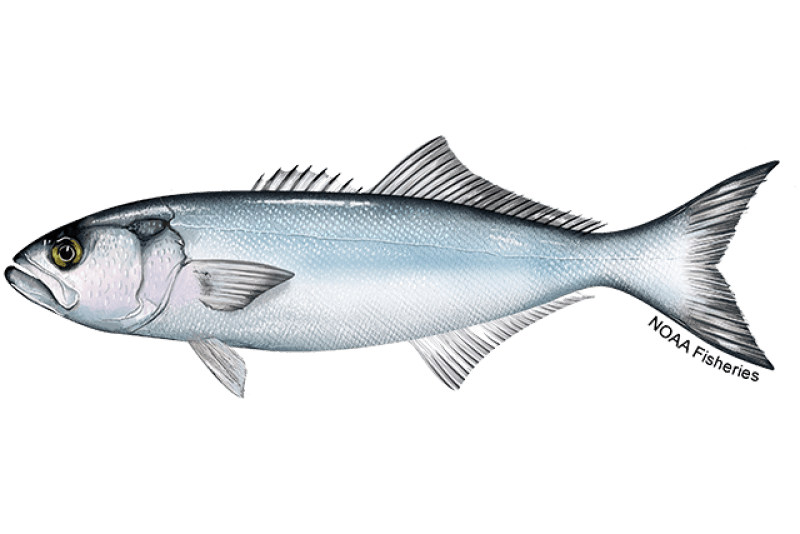
- Bluefish are blue-green on the back and silvery on the sides and belly.
- They have a prominent jaw, with sharp, compressed teeth.
- Biology Bluefish live up to 12 years.
- They grow fast, up to 31 pounds and 39 inches.
- They are able to reproduce at age 2, when they’re 15 to 20 inches in length.
- Depending on their size, females can have between 400,000 and 2 million eggs.
Where to see them around Ocean City
- Nearshore days: Inlet, guarded beaches, and bay overlooks. Farther days: watch for the same species from charter rails when water clarity and bait line up.
- Dawn and dusk often show more surface activity; midday heat can push fish deeper even when they are still in the area.
- Pair a beach walk with a short Inlet stop—two vantage points beat one crowded pier rail.
When to look
- Expect the richest shore viewing in summer; spring and fall migrations can still light up the Inlet and beaches.
- After storms, wait for water to clear—murky days hide even common species from the beach.
- Likelihood stars on this page reflect how often Maryland visitors can reasonably hope to encounter the species nearby—not fishing success rates.
Viewing tips & etiquette
- Use binoculars or a long lens; do not enter the water to corner fish, rays, or sharks for photos.
- Respect beach nesting closures, stay off dunes, and keep dogs leashed where required.
- If you find a stranded or injured animal, contact official wildlife responders—do not attempt rescue yourself.
- For harvest rules, size limits, or charter planning, use the Fishing profile for Bluefish —not this Nature Guide page.
Sources
- NOAA Fisheries species profile (biology reference; angling product stays on our Fishing hub)
- OCEANCITY.MD Fishing species profile