Greater Amberjack
Seriola dumerili · Also known as: Amberjack, Medregal, Coronado
Although some populations are below target levels, U.S. wild-caught greater amberjack is still a smart seafood choice because it is sustainably managed and responsibly harvested un
This is a Nature Guide page (viewing and ID). Catch limits, tackle, and charter fit live on the separate Fishing species profile—we keep those products apart on purpose.
Quick facts
| Group | Fish · Mid-Atlantic |
|---|---|
| Viewing lane | Offshore / bluewater |
| Likelihood nearby | ★★★☆☆ |
| Region | New England/Mid-Atlantic, Southeast |
How to recognize them
- Greater amberjack can grow up to 6 feet long and live to be 17 years old.
- Adults can weigh up to 200 pounds, but are most commonly found to be up to 40 pounds.
- Females grow larger in size and live longer than males.
- Greater amberjack mature at about 3 to 4 years of age and spawn primarily from March to June on reefs and shipwrecks.
- A female can release between 18 and 59 million eggs during a single spawning season.
- Adults eat mostly crab, squid, and other fishes found on reefs.
- Juveniles feed on plankton, including crustacean larvae and other small invertebrates.
- Predators include seabirds and larger fishes, such as yellowfin tuna.
- Where They Live Range Greater amberjack are found in the Atlantic and Pacific Oceans.
- In the western Atlantic, they are found from Nova Scotia to Brazil, including the Gulf of America and the Caribbean.
- Habitat Juvenile greater amberjack school around mats of pelagic (open ocean) Sargassum in the Gulf of America.
- Sargassum is an algae that provides food and protection for juvenile fish and invertebrates in the open ocean.
- Schooling behavior decreases as greater amberjack mature.
- They shift from inhabiting pelagic to demersal (near the ocean bottom) habitats at about 5 to 6 months of age.
- Sub-adults and adults congregate around reefs, rocky outcrops, and wrecks at depths of 60 to 240 feet.
- Some populations live in a particular location while others migrate, likely using a variety of habitats and areas throughout the year.
- Fishery Management NOAA Fisheries and the South Atlantic , and Gulf of Mexico Fishery Management Councils manage the greater amberjack fishery.
- In the South Atlantic, managed under the Snapper-Grouper Fishery Management Plan : Fishermen must have a limited access snapper grouper permit to commercially harvest greater amberjack.
- Anyone entering the commercial fishery must buy two transferable vessel permits in order to qualify for a newly issued permit, thus eliminating one permit each time a new person enters the commercial fishery.
- Commercial and recreational size limits, to ensure that fish grow large enough to reproduce.
- Commercial trip and recreational bag limits.
- During April of each year, the commercial fishing season is closed to alleviate fishing pressure when the fish aggregate to spawn and are highly vulnerable to fishing.
- The sale and purchase of greater amberjack during this seasonal closure is illegal.
- To help protect deep-water snapper grouper species and their habitats, there are restrictions on the use of bottom longline and trawl fishing gear.
- There are eight deep-water marine protected areas intended to protect habitats.
- In the Gulf of America, managed under the Reef Fish Resources of the Gulf of Mexico Fishery Management Plan : Commercial and recreational size limits ensure that fish grow large enough to reproduce.
- Commercial and recreational trip and bag limits.
- To promote spawning and slow the rate of harvest, closed seasons have been implemented for the commercial (from March 1 through May 31) and recreational (from June 1 through July 31) fisheries.
- To help protect reef fish, sea turtles, and bottom habitat, there are restrictions on the use of longline gear.
- A rebuilding plan to rebuild the stock to the target population level is in place with a target date of 2028.
- Harvest In 2024, commercial landings of greater amberjack totaled 500,000 pounds and were valued at approximately $1 million, according to the NOAA Fisheries commercial fishing landings database .
- Electric and hydraulic reels and hand lines are used to catch most of the commercial harvest of greater amberjack.
- Recreational harvest is by hook-and-line.
- Greater amberjack are large trophy fish prized by anglers.
- In 2024, recreational anglers landed 2.6 million pounds of greater amberjack, according to the NOAA Fisheries recreational fishing landings database .
- Scientific Classification Kingdom Animalia Phylum Chordata Class Actinopterygii Order Carangiformes Family Carangidae Genus Seriola Species dumerili Last updated by NOAA Fisheries on 06/25/2026
Biology notes
- Greater amberjack are found in the Atlantic and Pacific Oceans.
- In the western Atlantic, they are found from Nova Scotia to Brazil, including the Gulf of America and the Caribbean.
- Habitat Juvenile greater amberjack school around mats of pelagic (open ocean) Sargassum in the Gulf of America.
- Sargassum is an algae that provides food and protection for juvenile fish and invertebrates in the open ocean.
- Schooling behavior decreases as greater amberjack mature.
- They shift from inhabiting pelagic to demersal (near the ocean bottom) habitats at about 5 to 6 months of age.
- Sub-adults and adults congregate around reefs, rocky outcrops, and wrecks at depths of 60 to 240 feet.
- Some populations live in a particular location while others migrate, likely using a variety of habitats and areas throughout the year.
- Fishery Management NOAA Fisheries and the South Atlantic , and Gulf of Mexico Fishery Management Councils manage the greater amberjack fishery.
- In the South Atlantic, managed under the Snapper-Grouper Fishery Management Plan : Fishermen must have a limited access snapper grouper permit to commercially harvest greater amberjack.
- Anyone entering the commercial fishery must buy two transferable vessel permits in order to qualify for a newly issued permit, thus eliminating one permit each time a new person enters the commercial fishery.
- Commercial and recreational size limits, to ensure that fish grow large enough to reproduce.
- Commercial trip and recreational bag limits.
- During April of each year, the commercial fishing season is closed to alleviate fishing pressure when the fish aggregate to spawn and are highly vulnerable to fishing.
- The sale and purchase of greater amberjack during this seasonal closure is illegal.
- To help protect deep-water snapper grouper species and their habitats, there are restrictions on the use of bottom longline and trawl fishing gear.
- There are eight deep-water marine protected areas intended to protect habitats.
- In the Gulf of America, managed under the Reef Fish Resources of the Gulf of Mexico Fishery Management Plan : Commercial and recreational size limits ensure that fish grow large enough to reproduce.
- Commercial and recreational trip and bag limits.
- To promote spawning and slow the rate of harvest, closed seasons have been implemented for the commercial (from March 1 through May 31) and recreational (from June 1 through July 31) fisheries.
- To help protect reef fish, sea turtles, and bottom habitat, there are restrictions on the use of longline gear.
- A rebuilding plan to rebuild the stock to the target population level is in place with a target date of 2028.
- Harvest In 2024, commercial landings of greater amberjack totaled 500,000 pounds and were valued at approximately $1 million, according to the NOAA Fisheries commercial fishing landings database .
- Electric and hydraulic reels and hand lines are used to catch most of the commercial harvest of greater amberjack.
- Recreational harvest is by hook-and-line.
- Greater amberjack are large trophy fish prized by anglers.
- In 2024, recreational anglers landed 2.6 million pounds of greater amberjack, according to the NOAA Fisheries recreational fishing landings database .
- Scientific Classification Kingdom Animalia Phylum Chordata Class Actinopterygii Order Carangiformes Family Carangidae Genus Seriola Species dumerili Last updated by NOAA Fisheries on 06/25/2026
Habitat & range
- NOAA Fisheries and the South Atlantic , and Gulf of Mexico Fishery Management Councils manage the greater amberjack fishery.
- In the South Atlantic, managed under the Snapper-Grouper Fishery Management Plan : Fishermen must have a limited access snapper grouper permit to commercially harvest greater amberjack.
- Anyone entering the commercial fishery must buy two transferable vessel permits in order to qualify for a newly issued permit, thus eliminating one permit each time a new person enters the commercial fishery.
- Commercial and recreational size limits, to ensure that fish grow large enough to reproduce.
- Commercial trip and recreational bag limits.
- During April of each year, the commercial fishing season is closed to alleviate fishing pressure when the fish aggregate to spawn and are highly vulnerable to fishing.
Population status
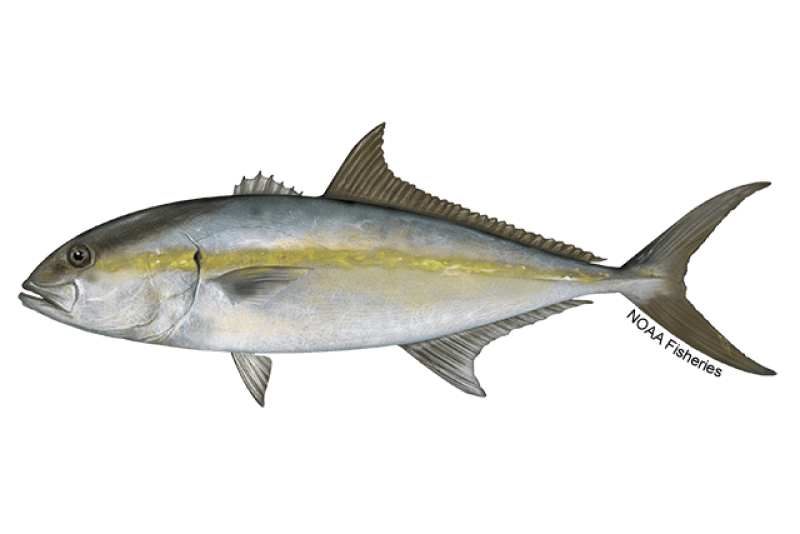
- Greater amberjack have a dark amber strip on their head, extending from their nose to their first dorsal (back) fin, which becomes more defined when the fish is excited or feeding.
- They have a brownish or bluish-grey back, a silvery-white belly, and an amber horizontal strip along the middle of their body.
- Juveniles have a yellow color and five or six dark vertical bars along the sides.
- Biology Greater amberjack can grow up to 6 feet long and live to be 17 years old.
- Adults can weigh up to 200 pounds, but are most commonly found to be up to 40 pounds.
- Females grow larger in size and live longer than males.
Where to see them around Ocean City
- Most reliable views are from head boats and private sportfish day trips when bluewater is close—watch for birds, bait, and surface activity from the rail.
- Shore viewers rarely see canyon pelagics; use the Inlet and Assateague for coastal species instead, then treat offshore sightings as trip bonuses.
- Keep a respectful distance if a vessel approaches whales, sharks, or rays—follow NOAA approach guidelines and captain instructions.
When to look
- Peak bluewater viewing usually tracks summer and early fall when warm water and bait move onto the shelf.
- Weather windows matter more than calendar weeks—canceled canyon days mean fewer offshore sightings for visitors.
- Winter and early spring sightings are possible but less predictable from a typical vacation schedule.
Viewing tips & etiquette
- Use binoculars or a long lens; do not enter the water to corner fish, rays, or sharks for photos.
- Respect beach nesting closures, stay off dunes, and keep dogs leashed where required.
- If you find a stranded or injured animal, contact official wildlife responders—do not attempt rescue yourself.
- For harvest rules, size limits, or charter planning, use the Fishing profile for Greater Amberjack —not this Nature Guide page.
Sources
- NOAA Fisheries species profile (biology reference; angling product stays on our Fishing hub)
- OCEANCITY.MD Fishing species profile