Winter Flounder
Pseudopleuronectes americanus · Also known as: Flounder, Sole, Lemon sole, Georges Bank flounder, Blackback flounder
U.S. wild-caught winter flounder is a smart seafood choice because it is sustainably managed and responsibly harvested under U.S. regulations.
This is a Nature Guide page (viewing and ID). Catch limits, tackle, and charter fit live on the separate Fishing species profile—we keep those products apart on purpose.
Quick facts
| Group | Fish · Mid-Atlantic |
|---|---|
| Viewing lane | Bay / nearshore |
| Likelihood nearby | ★★★☆☆ |
| Region | New England/Mid-Atlantic, Southeast |
How to recognize them
- Winter flounder live 15 to 18 years and grow to more than 2 feet in length.
- They spawn during the winter and spring in shallow inshore waters, often returning to the same areas where they were born to spawn.
- Females usually produce between 500,000 and 1.5 million eggs.
- They deposit their eggs on sandy bottoms and algal mats at night, usually about 40 times every spawning season.
- Newly hatched larvae have one eye on each side of the head.
- Five to six weeks after they hatch, larvae settle to the bottom to begin their transformation into juveniles.
- After weeks of adapting to living on the bottom, their left eye migrates to the right side of their body and their metamorphosis is complete.
- The growth and survival rates of larvae and juveniles depend on several factors, including temperature, salinity, water quality, and the availability of food.
- Winter flounder feed during the day because they depend on sight to locate prey.
- Their small mouths limit what they can eat.
- They feed on small invertebrates, shrimp, clams, and worms.
- Fish (mainly striped bass, bluefish, toadfish, and summer flounder), birds, invertebrates, winter skate, and marine mammals prey on larval and juvenile winter flounder.
- Atlantic cod, spiny dogfish, and monkfish prey on adults.
- Where They Live Range Winter flounder are found in estuaries and on the continental shelf of the Northwest Atlantic, from the Gulf of St.
- Lawrence, Canada to North Carolina.
- They are most common north of Delaware Bay.
- Habitat Winter flounder get their name because of their migrations.
- In the winter, adults migrate from offshore areas where they feed to inshore bays and estuaries where they spawn.
- While inshore, they live on muddy sand, clean sand, clay, and pebbly or gravelly bottom habitats.
- They often bury their whole body, except for their eyes, in bottom sediments.
- Larvae and some 1-year-olds live in the estuaries where they were born.
- Juveniles prefer sand or sand-silt bottoms with a wide range of salinity and temperature.
- Fishery Management There are three stocks of winter flounder in U.S. waters, the Gulf of Maine, Georges Bank, and Southern New England/Mid-Atlantic stocks.
- NOAA Fisheries and the New England Fishery Management Council manage the fishery in federal waters.
- The Atlantic States Marine Fisheries Commission coordinates management of winter flounder in state waters (0 to 3 miles offshore).
- Winter flounder, along with other groundfish in New England waters, are managed under the Northeast Multispecies Fishery Management Plan , which includes: Permitting requirements for commercial vessels.
- Separate management measures for recreational vessels.
- Time/Area Closures to protect spawning fish and habitat.
- Minimum fish sizes to prevent harvest of juvenile fish.
- Annual catch limits, based on best available science.
- An optional sector ( catch share ) program can be used for winter flounder and other groundfish species.
- The sector program allows fishermen to form harvesting cooperatives and work together to decide when, where, and how they harvest fish.
- A rebuilding plan to rebuild the Georges Bank stock to the target population level is in place with a target date of 2029.
- Harvest Commercial fishery: In 2024, commercial landings of winter flounder totaled approximately 1.9 million pounds, and were valued at $3.7 million, according to the NOAA Fisheries commercial fishing landings database .
- Gear types, habitat impacts, and bycatch: Winter flounder are commonly harvested using trawl nets and to a lesser extent gillnets.
- Areas closures and gear restrictions reduce habitat impacts from trawl nets.
- Fishermen follow management measures to designed to reduce interactions with marine mammals, including gear modifications, seasonal closures, and use of marine mammal deterrents.
- Recreational fishery: There is a small recreational fishery for winter flounder.
- Anglers use bait to target flounder in nearshore waters.
- Regulations include seasons, minimum fish sizes, and possession limits.
- Scientific Classification Kingdom Animalia Phylum Chordata Class Actinopterygii Order Pleuronectiformes Family Pleuronectidae Genus Pseudopleuronectes Species americanus Last updated by NOAA Fisheries on 06/25/2026
Biology notes
- Winter flounder are found in estuaries and on the continental shelf of the Northwest Atlantic, from the Gulf of St.
- Lawrence, Canada to North Carolina.
- They are most common north of Delaware Bay.
- Habitat Winter flounder get their name because of their migrations.
- In the winter, adults migrate from offshore areas where they feed to inshore bays and estuaries where they spawn.
- While inshore, they live on muddy sand, clean sand, clay, and pebbly or gravelly bottom habitats.
- They often bury their whole body, except for their eyes, in bottom sediments.
- Larvae and some 1-year-olds live in the estuaries where they were born.
- Juveniles prefer sand or sand-silt bottoms with a wide range of salinity and temperature.
- Fishery Management There are three stocks of winter flounder in U.S. waters, the Gulf of Maine, Georges Bank, and Southern New England/Mid-Atlantic stocks.
- NOAA Fisheries and the New England Fishery Management Council manage the fishery in federal waters.
- The Atlantic States Marine Fisheries Commission coordinates management of winter flounder in state waters (0 to 3 miles offshore).
- Winter flounder, along with other groundfish in New England waters, are managed under the Northeast Multispecies Fishery Management Plan , which includes: Permitting requirements for commercial vessels.
- Separate management measures for recreational vessels.
- Time/Area Closures to protect spawning fish and habitat.
- Minimum fish sizes to prevent harvest of juvenile fish.
- Annual catch limits, based on best available science.
- An optional sector ( catch share ) program can be used for winter flounder and other groundfish species.
- The sector program allows fishermen to form harvesting cooperatives and work together to decide when, where, and how they harvest fish.
- A rebuilding plan to rebuild the Georges Bank stock to the target population level is in place with a target date of 2029.
- Harvest Commercial fishery: In 2024, commercial landings of winter flounder totaled approximately 1.9 million pounds, and were valued at $3.7 million, according to the NOAA Fisheries commercial fishing landings database .
- Gear types, habitat impacts, and bycatch: Winter flounder are commonly harvested using trawl nets and to a lesser extent gillnets.
- Areas closures and gear restrictions reduce habitat impacts from trawl nets.
- Fishermen follow management measures to designed to reduce interactions with marine mammals, including gear modifications, seasonal closures, and use of marine mammal deterrents.
- Recreational fishery: There is a small recreational fishery for winter flounder.
- Anglers use bait to target flounder in nearshore waters.
- Regulations include seasons, minimum fish sizes, and possession limits.
- Scientific Classification Kingdom Animalia Phylum Chordata Class Actinopterygii Order Pleuronectiformes Family Pleuronectidae Genus Pseudopleuronectes Species americanus Last updated by NOAA Fisheries on 06/25/2026
Habitat & range
- There are three stocks of winter flounder in U.S. waters, the Gulf of Maine, Georges Bank, and Southern New England/Mid-Atlantic stocks.
- NOAA Fisheries and the New England Fishery Management Council manage the fishery in federal waters.
- The Atlantic States Marine Fisheries Commission coordinates management of winter flounder in state waters (0 to 3 miles offshore).
- Winter flounder, along with other groundfish in New England waters, are managed under the Northeast Multispecies Fishery Management Plan , which includes: Permitting requirements for commercial vessels.
- Separate management measures for recreational vessels.
- Time/Area Closures to protect spawning fish and habitat.
Population status
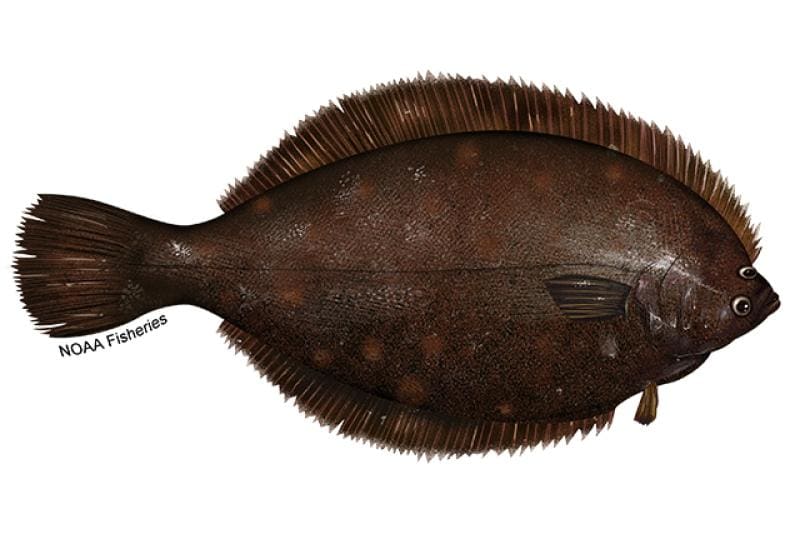
- Winter flounder have an oval shape and a thick body.
- Their eyes are on the right side of their body.
- They have a straight lateral line and dark coloring.
- Their coloring often varies with their habitat, ranging from muddy to slightly reddish brown, olive green, or dark slate, to an almost black upper side.
- Their underside is white, and their dorsal and anal fins are often tinged with pink, red, or yellow.
- Biology Winter flounder live 15 to 18 years and grow to more than 2 feet in length.
Where to see them around Ocean City
- Scan Assateague and Ocean City beaches, the Inlet jetties, and quiet bay overlooks for surface flashes, bait boils, and clear-water shape.
- Boardwalk and pier rails help with binoculars when the surf is busy—stay clear of anglers’ casting lanes and nesting closures.
- Kayak or skiff edges of salt marsh and spoil islands can reveal schools in shallow water; give wildlife wide berth and never chase.
When to look
- Warm months (late spring through early fall) bring the most shore-visible activity in the coastal bays and surf.
- Shoulder seasons can still be excellent after calm nights and clear water—cold snaps quiet the shallows.
- Tide changes near the Inlet often concentrate bait; check the tide table before you plan a viewing walk.
Viewing tips & etiquette
- Use binoculars or a long lens; do not enter the water to corner fish, rays, or sharks for photos.
- Respect beach nesting closures, stay off dunes, and keep dogs leashed where required.
- If you find a stranded or injured animal, contact official wildlife responders—do not attempt rescue yourself.
- For harvest rules, size limits, or charter planning, use the Fishing profile for Winter Flounder —not this Nature Guide page.
Sources
- NOAA Fisheries species profile (biology reference; angling product stays on our Fishing hub)
- OCEANCITY.MD Fishing species profile