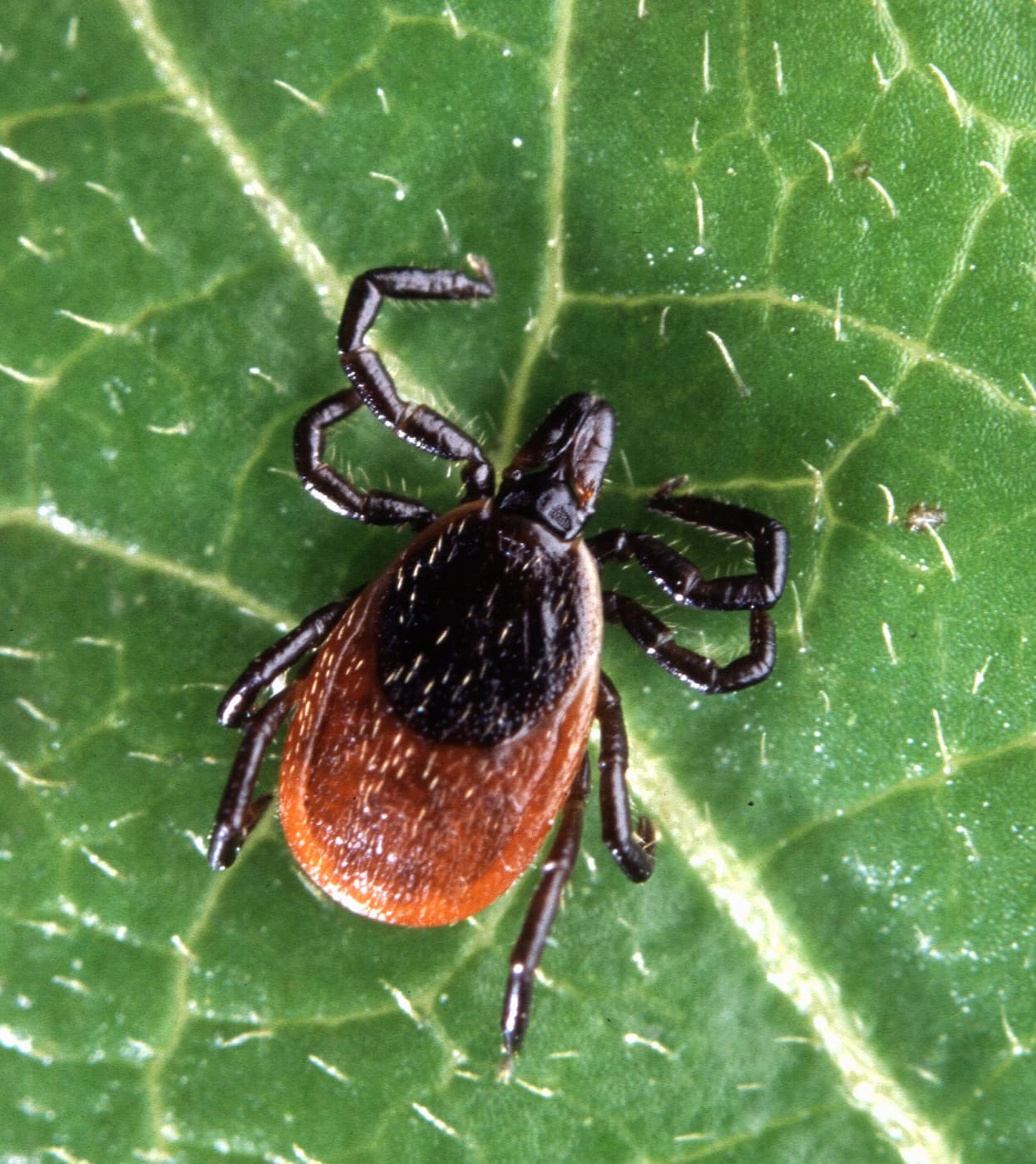
Blacklegged Tick
Ixodes scapularis · Also known as: deer tick
The Lyme-disease vector visitors should know about. Tiny nymphs lurk in Assateague woods and mainland trail edges. Not a beach-towel pest, but a real hiking precaution.
Quick facts
| Group | Tick |
|---|---|
| Likelihood nearby | ★★★★☆ |
| Habitats | Maritime forest, Dunes, Salt marsh, Assateague State Park, Assateague National Seashore, Mainland near OC |
| Seasons (this coast) | spring, summer, fall |
How to recognize them
- Small tick; nymphs are poppy-seed sized, adults slightly larger with dark legs and scutum (female) or darker all over (male).
- Attaches along sock lines, waistbands, and scalp after brushing low vegetation.
Biology notes
- Two-year life cycle using white-tailed deer and small mammals as hosts; nymphs peak in late spring and early summer.
- Can transmit Lyme disease and other pathogens—risk is trail and lawn-edge exposure, not open sandy beach.
Where to see them around Ocean City
- Assateague hiking and biking trails through maritime forest and shrubby dunes.
- Mainland nature paths, lawn edges, and brushy lots west of Coastal Highway.
- Not typical on open ocean beach, but dunes with bayberry and beach plum can hold ticks.
When to look
- Nymphs: May–July; adults: fall and early spring after leaf litter warms.
Viewing tips & etiquette
- Treat clothing with permethrin before multi-day camping; do a full-body tick check after trails.
- Shower within two hours of outdoor time and tumble-dry clothes on high heat.