Monarch
Danaus plexippus · Also known as: monarch butterfly
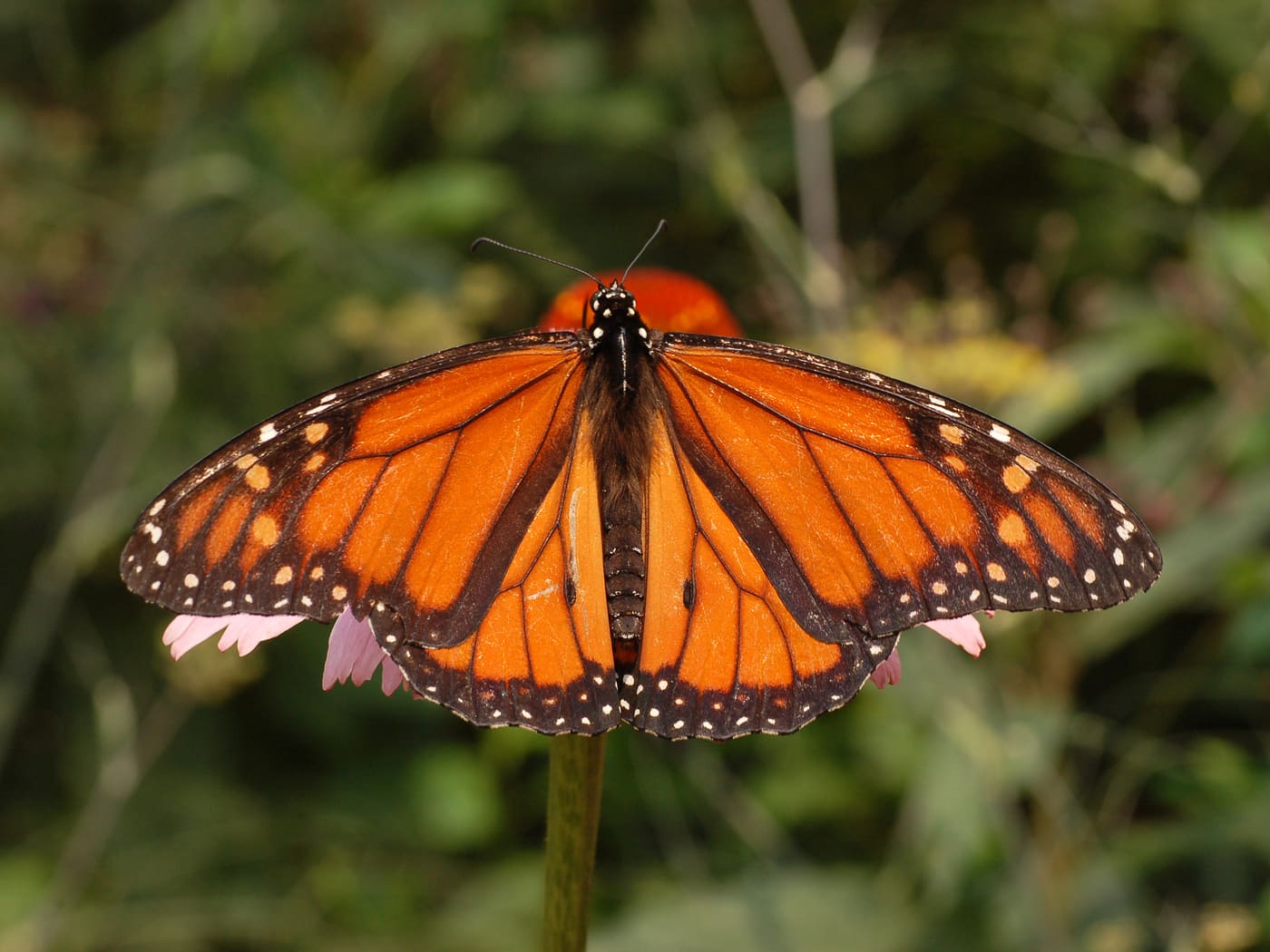
The iconic orange-and-black migrant, nectaring on seaside goldenrod and milkweed patches from Assateague dunes to mainland gardens around Ocean City.
Quick facts
| Group | Butterfly |
|---|---|
| Likelihood nearby | ★★★★★ |
| Habitats | Ocean beach, Dunes, Salt marsh, Maritime forest, Assateague State Park, Assateague National Seashore, Mainland near OC |
| Seasons (this coast) | spring, summer, fall, migration |
How to recognize them
- Medium-large butterfly with bright orange wings, black veins, and white-spotted black borders.
- Glides with wings in a shallow “V”; confused with viceroy but monarchs are larger and lack the viceroy’s extra black line across hindwings.
Biology notes
- Multi-generation migrant; fall butterflies funnel along the Atlantic coast toward Mexico overwintering sites.
- Caterpillars feed on milkweeds (Asclepias); adults sip nectar from goldenrod, aster, and garden flowers.
Where to see them around Ocean City
- Assateague dunes and maritime forest edges in September–October during goldenrod bloom.
- Ocean City community gardens, hotel plantings, and mainland parks with butterfly-friendly flowers.
- Marsh trails where seaside aster and marsh elder attract late-season nectar.
When to look
- Summer residents and migrants; peak coastal passage late August through mid-October.
- Warm, breezy afternoons along the beach flyway.
Viewing tips & etiquette
- Stand still downwind of goldenrod clumps—monarchs often work the same flower heads.
- Never handle butterflies; enjoy roosts on cool mornings when they are sluggish.
Conservation
- Population swings with milkweed loss and weather; planting native milkweed on the mainland helps the flyway.