Eastern Saltmarsh Mosquito
Aedes sollicitans · Also known as: saltmarsh mosquito, Aedes sollicitans
The notorious marsh breeder of the Mid-Atlantic coast. Hatches after high tides and moon phases can make Assateague evenings memorable for visitors.
Quick facts
| Group | Mosquito / biting fly |
|---|---|
| Likelihood nearby | ★★★★★ |
| Habitats | Salt marsh, Dunes, Ocean beach, Coastal bays, Assateague State Park, Assateague National Seashore, Inlet |
| Seasons (this coast) | spring, summer, fall |
How to recognize them
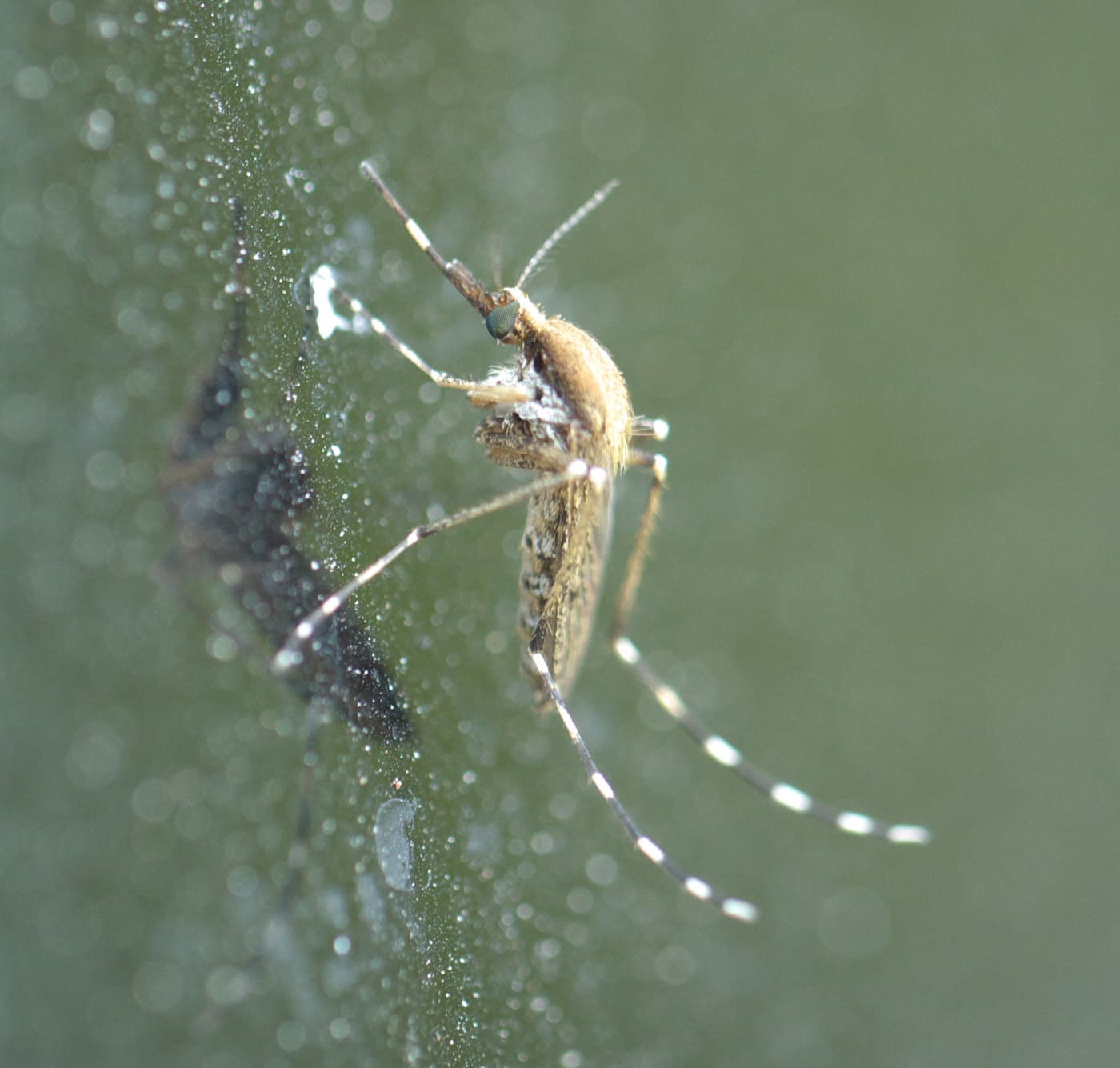
- Small mosquito with banded legs and a pale-scaled thorax; not flashy, but unmistakable when swarms rise from marsh pools.
- Rests on dune grasses and boardwalk railings after wind carries adults inland from the marsh.
Biology notes
- Eggs laid on damp marsh soil; larvae develop in shallow pools after spring tides, storms, and lunar high tides.
- Strong flier that travels miles downwind—beach towns feel marsh hatches even when local ditches are dry.
Where to see them around Ocean City
- Assateague campgrounds and bayside trails within a few miles of open salt marsh.
- Ocean City high-rise balconies on west-facing marsh breeze nights after new and full moons.
- Marsh kayaking routes through Sinepuxent and Isle of Wight Bay edges at dusk.
When to look
- May–October peaks; worst windows often 3–5 days after exceptional high tides or northeast storms.
- Dusk and calm, humid evenings.
Viewing tips & etiquette
- Check local mosquito-control advisories and Assateague ranger updates during hatch weeks.
- Long sleeves, repellent (EPA-registered), and breezy beach walks beat swatting alone.