Assateague Horse
Equus caballus · Also known as: Assateague pony, Chincoteague pony (Virginia herd), feral horse
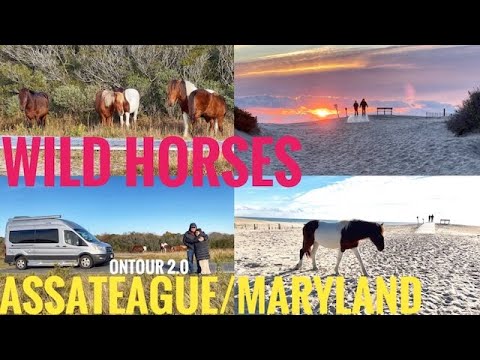
Assateague’s famous feral horses. Maryland’s free-roaming herd is the mammal most visitors come to see.
Quick facts
| Group | Hoofed mammal |
|---|---|
| Likelihood nearby | ★★★★★ |
| Habitats | Salt marsh, Dunes, Ocean beach, Maritime forest, Assateague State Park, Assateague National Seashore |
| Seasons (this coast) | year-round |
How to recognize them
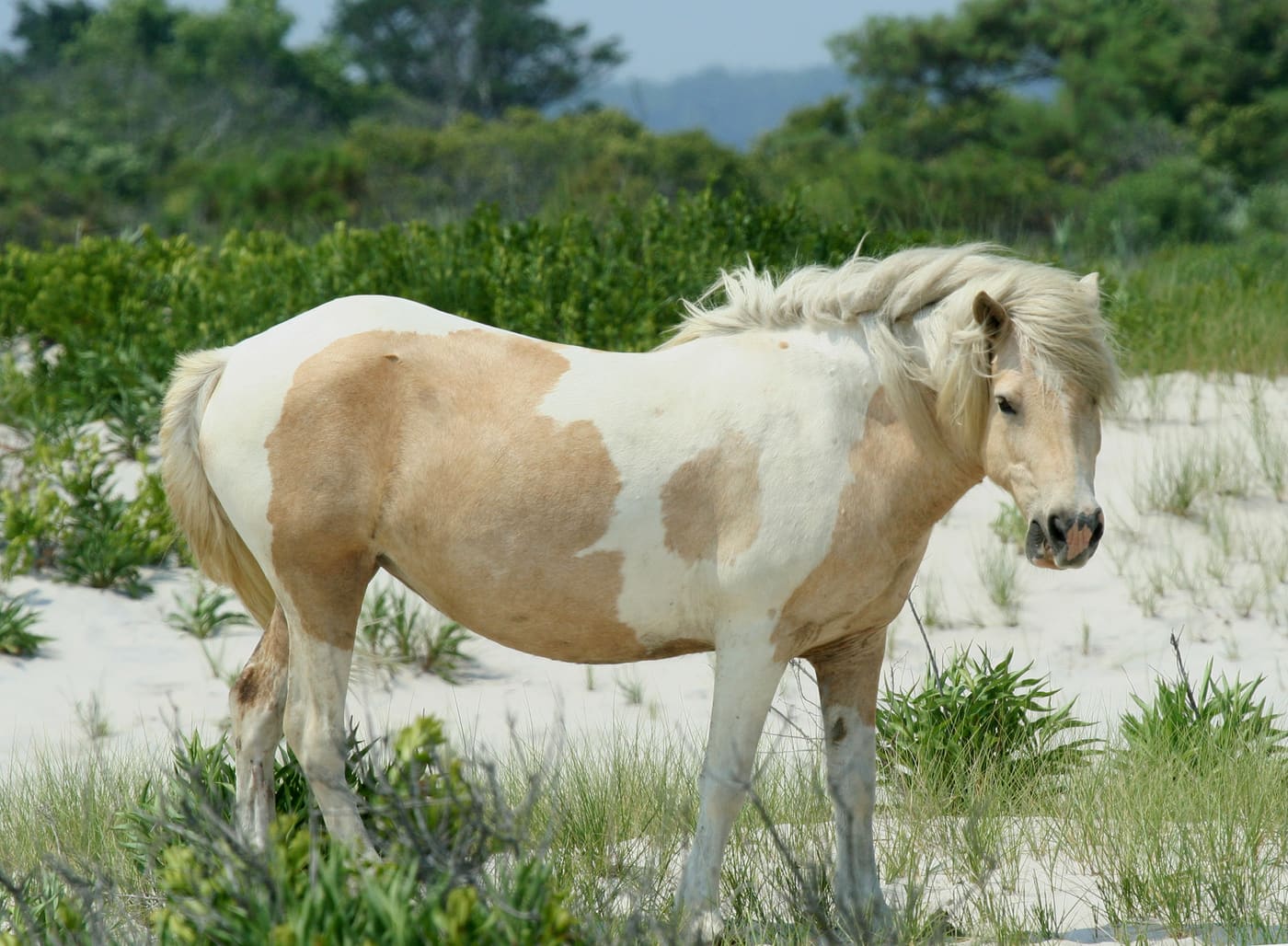
- Stocky, salt-marsh–tough horses; coats vary (bay, chestnut, pinto, and more).
- Often smaller and shaggier than typical domestic riding horses.
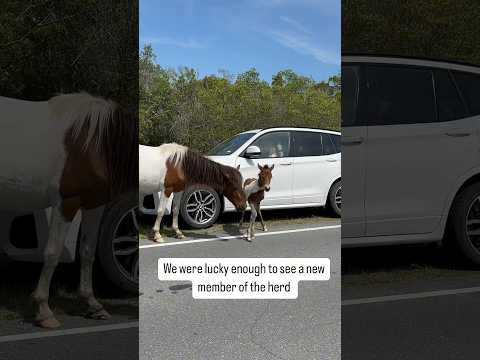
- Travel in small bands; foals stay close to mares.
Biology notes
- Feral descendants of domestic stock—not truly “wild” in the zoological sense, but free-living for generations.
- Graze saltmarsh cordgrass, beachgrass, bayberry, greenbrier, and other island plants.
- Maryland herd is managed by the National Park Service; Virginia herd (often called Chincoteague ponies) is managed separately south of the state line.
Where to see them around Ocean City
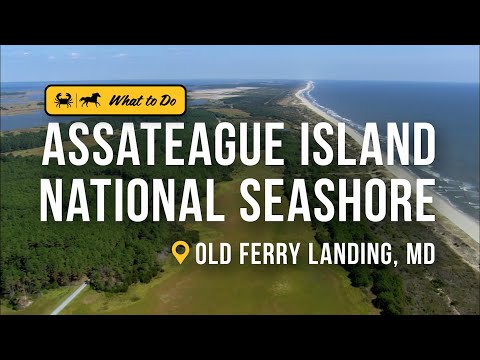
- Assateague Island National Seashore (Maryland)—roadsides, marsh edges, and beach approaches; horses roam freely.
- Assateague Island State Park—common near campgrounds, bike paths, and marsh overlooks.
- Not on Ocean City’s developed beach; plan the short drive/bridge south to Assateague.
When to look
- Year-round. Morning and evening often bring bands into open marsh and roadside habitat.
- Summer heat and insects can push horses into breezier shorelines—never approach for a selfie.
Viewing tips & etiquette
- Stay at least 40 feet (about a bus length) away—NPS rules protect both people and horses.
- Do not feed, pet, or chase. Human food and close contact injure horses and create dangerous animals.
- If a band blocks the road, wait patiently; do not honk them off.
Conservation
- Population is managed to protect island vegetation and other wildlife.
- Folklore shipwreck stories are popular; most historians point to colonial livestock turned loose on barrier islands.