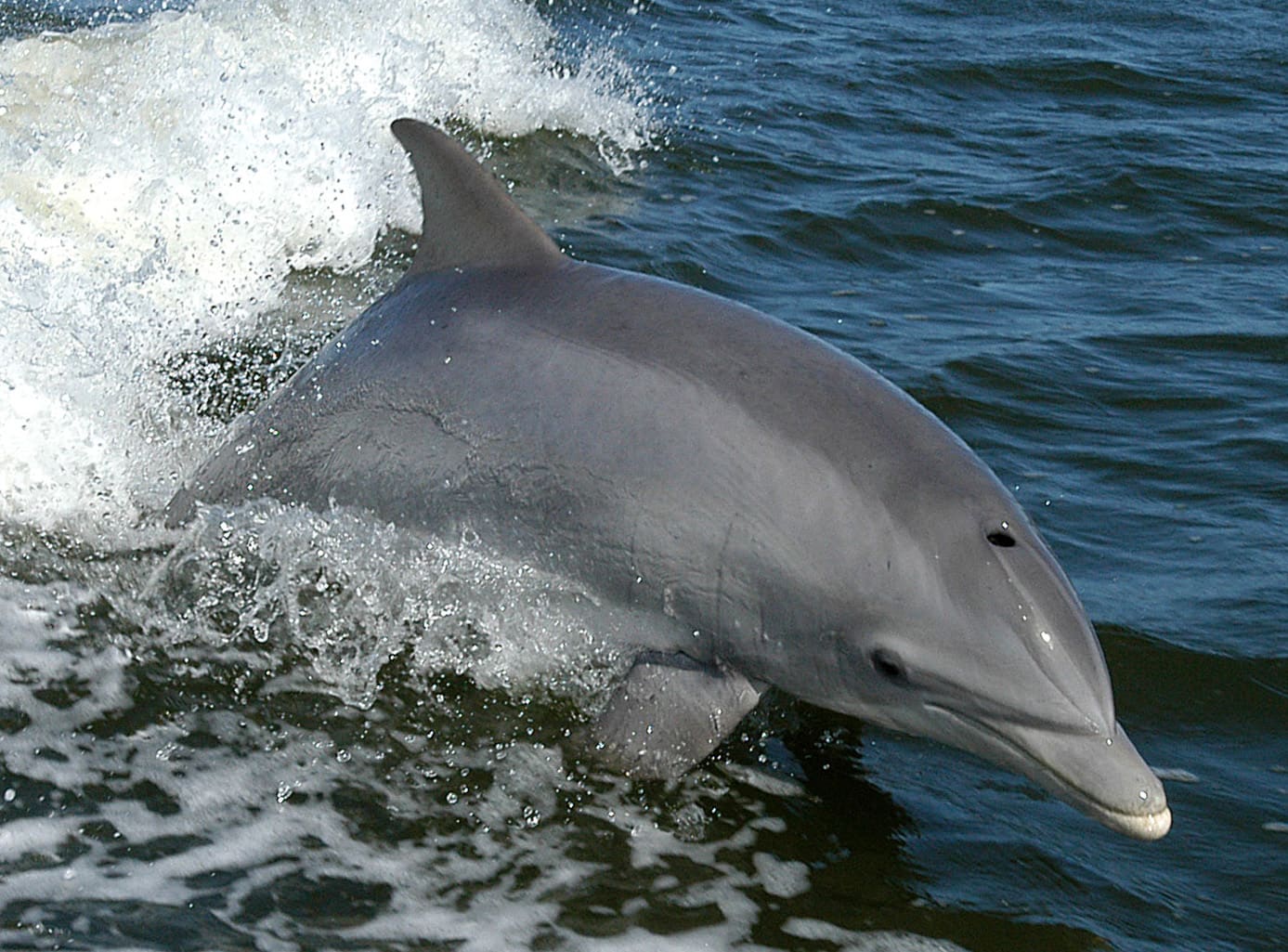
Common Bottlenose Dolphin
Tursiops truncatus · Also known as: bottlenose dolphin, Atlantic bottlenose
The everyday marine mammal off Ocean City. Pods surf the breakers and cruise the Inlet all warm season.
Quick facts
| Group | Marine mammal |
|---|---|
| Likelihood nearby | ★★★★★ |
| Habitats | Offshore / ocean, Ocean beach, Inlet, Coastal bays, Assateague National Seashore, Assateague State Park |
| Seasons (this coast) | spring, summer, fall |
How to recognize them
- Gray, robust dolphin with a short “bottle” beak and a tall, curved dorsal fin.
- Often seen in small groups; leaps, bows, and surges are common when bait is nearshore.
Biology notes
- Feeds on fish and invertebrates; follows bait schools along the Mid-Atlantic coast.
- NPS lists bottlenose dolphins among Assateague’s offshore mammals.
Where to see them around Ocean City
- Ocean City beach looking east—especially early morning and late day when seas are calmer; scan beyond the breakers with binoculars.
- Ocean City Inlet jetties and the nearshore zone just outside the inlet mouth—pods often work bait along the edge.
- Assateague ocean beach (State Park and National Seashore)—quieter shoreline than the Boardwalk corridor.
- Occasionally in coastal bays when chasing bait through the Inlet; treat bay sightings as bonuses, not guarantees.
- From a wildlife-minded dolphin cruise or calm nearshore boat day—still viewing, not a fishing charter substitute.
When to look
- Most reliable late spring through early fall (roughly May–October) when bait and warm water hold nearshore.
- Calm mornings and late afternoons improve shore odds; wind-chopped mid-days hide blows and dorsal fins.
- Winter sightings happen but are less consistent from shore—do not plan a winter trip around guaranteed pods.
Viewing tips & etiquette
- Binoculars help from the beach and Inlet; phone zoom is a weak substitute for distant pods.
- Do not chase pods with personal watercraft, kayaks, or jet skis—pursuit stresses animals and can violate federal rules.
- Federal law (Marine Mammal Protection Act) protects dolphins—keep boats a respectful distance, never feed, and never try to swim with wild pods.
- If a cruise advertises “guaranteed dolphins,” treat that as marketing; biology and sea state still decide the day.
Conservation
- Protected under the Marine Mammal Protection Act—harassment includes pursuit, feeding, and forcing animals to change path.
- Boat strikes and fishing gear interactions remain Mid-Atlantic concerns; give wild dolphins space and report injured animals to stranding responders.