Harbor Seal
Phoca vitulina · Also known as: common seal
Seasonal pinniped. Most Ocean City / Assateague seal reports come in cold months when seals haul out or cruise nearshore.
Quick facts
| Group | Marine mammal |
|---|---|
| Likelihood nearby | ★★☆☆☆ |
| Habitats | Offshore / ocean, Ocean beach, Inlet, Assateague National Seashore, Assateague State Park |
| Seasons (this coast) | winter, spring |
How to recognize them
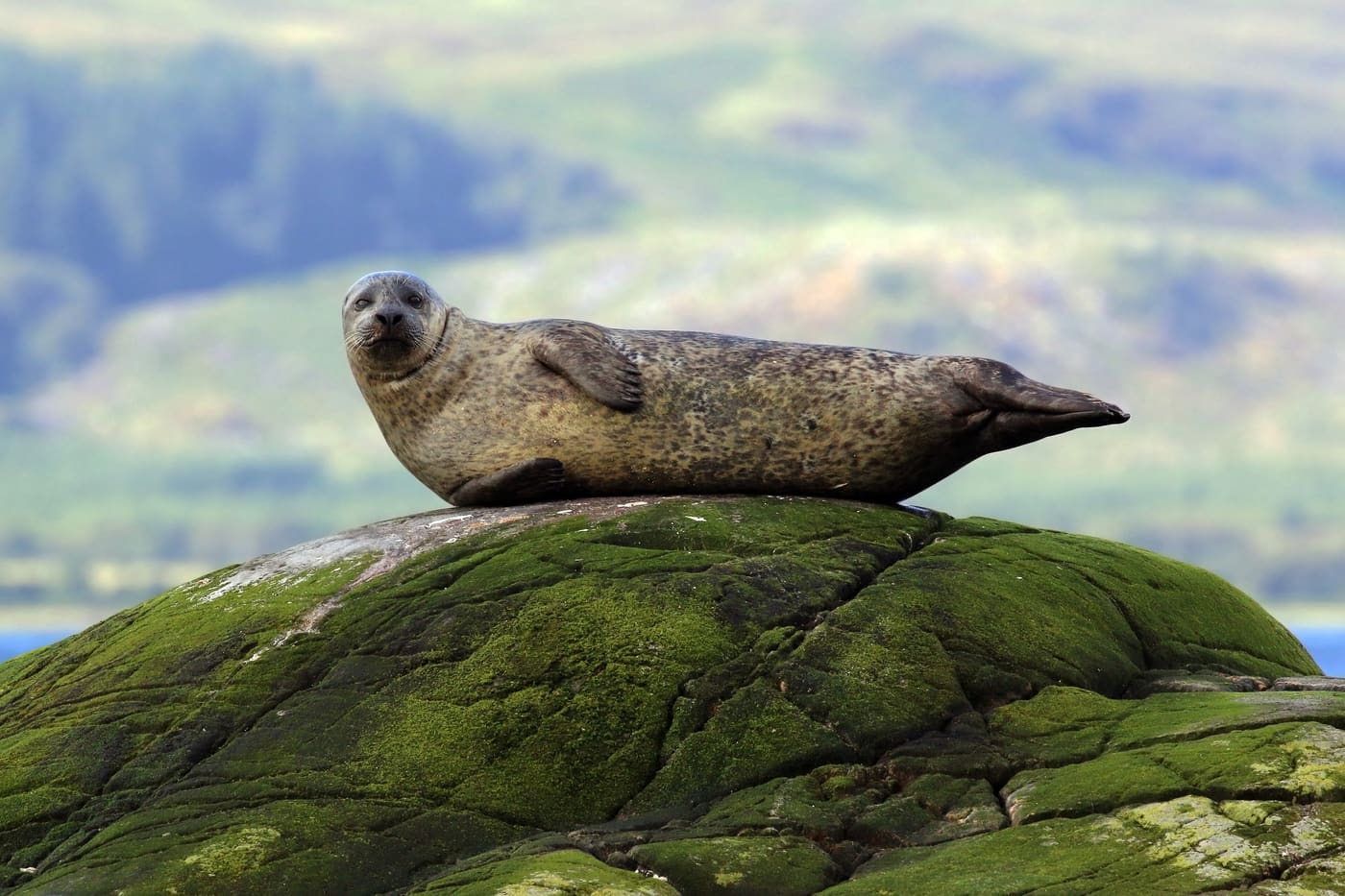
- Spotted gray-tan coat; dog-like face; no external ear flaps (true seal).
- On land, awkward “galumph”; in water, sleek and curious.
Biology notes
- Feeds on fish and invertebrates; Mid-Atlantic wintering and wandering seals use beaches and inlets.
- Pups and stressed animals sometimes haul out—needs space, not rescue unless officials say so.
Where to see them around Ocean City
- Assateague ocean beaches (State Park and National Seashore) in cold months—scan haul-outs and nearshore water with binoculars.
- Ocean City ocean beach and Inlet rocks / quiet sandbars on calm winter days.
- Rarely a summer beach show; if you see a seal in July, give it extra space and assume it may be stressed.
When to look
- Best late fall through early spring (roughly November–April) when Mid-Atlantic wintering and wandering seals use beaches and inlets.
- Low tide and calm seas make haul-outs easier to spot from a distance; mid-day glare still hides gray coats.
- Peak summer heat is the wrong season for planning a seal trip.
Viewing tips & etiquette
- Stay at least 150 feet (about 45+ meters) from hauled-out seals; if the animal looks at you or shifts toward the water, you are too close.
- Dogs must be leashed and kept away—curious pets cause seals to flush and can transmit disease both ways.
- Do not pour water on a hauled-out seal, throw sand, or try to “help” it back into the surf—resting on land is normal.
- Report injured, entangled, or clearly distressed marine mammals to local stranding hotlines or park staff; leave the animal alone until responders arrive.
Conservation
- Protected under the Marine Mammal Protection Act—approach, harassment, and feeding are illegal.
- Pups and molting animals may look abandoned; space and a phone call to responders beat DIY rescue every time.