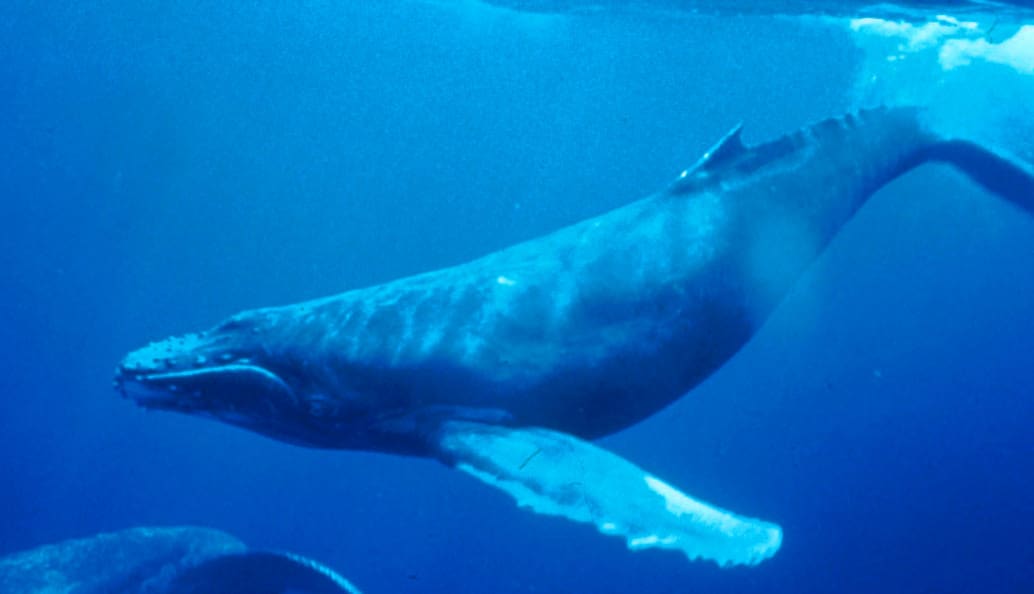
Humpback Whale
Megaptera novaeangliae
Occasional offshore giant. Assateague and Ocean City beaches can produce distant blows and breaches on migration.
Quick facts
| Group | Marine mammal |
|---|---|
| Likelihood nearby | ★★☆☆☆ |
| Habitats | Offshore / ocean, Ocean beach, Assateague National Seashore |
| Seasons (this coast) | winter, spring, fall |
How to recognize them
- Huge dark whale with long white-patterned pectoral fins; knobby head; bushy blow.
- Flukes lift on deep dives—underside patterns identify individuals.
Biology notes
- Migrates between feeding and breeding grounds; Mid-Atlantic is a travel corridor.
- Feeds on small fish and krill when conditions allow.
Where to see them around Ocean City
- From Ocean City and Assateague ocean beaches with binoculars on clear, calm days—look for bushy blows and fluke lifts beyond the nearshore trough.
- Quieter Assateague shoreline often beats Boardwalk glare for distant scanning.
- Offshore wildlife or head-boat days increase odds versus standing on the sand (sightings still not guaranteed).
- This is a viewing target—not a fishing species page; book wildlife-minded trips when whale watching is the goal.
When to look
- Migration corridors and winter–spring nearshore feeding events offer the best Mid-Atlantic chances.
- Calm, clear days after frontal passages can improve shore visibility; haze and whitecaps hide blows.
- Summer beach crowds and heat shimmer make distant whales harder to confirm—binoculars still help.
Viewing tips & etiquette
- If you see a whale from a boat, follow NOAA approach guidelines—slow down, never cut off the animal’s path, and do not pursue.
- North Atlantic right whales (rarer here) require even stricter approach distances when present—know the difference and give all large whales space.
- From shore, stay put and watch; do not enter the surf to “get closer.”
- Report entangled or injured whales immediately via official NOAA / stranding hotlines.
Conservation
- Protected; ship strikes and entanglements remain serious threats along the Mid-Atlantic coast.
- Responsible viewing means distance first—photos are secondary to animal welfare.