Atlantic Sea Nettle
Chrysaora chesapeakei · Also known as: sea nettle, Chesapeake sea nettle, Chrysaora quinquecirrha
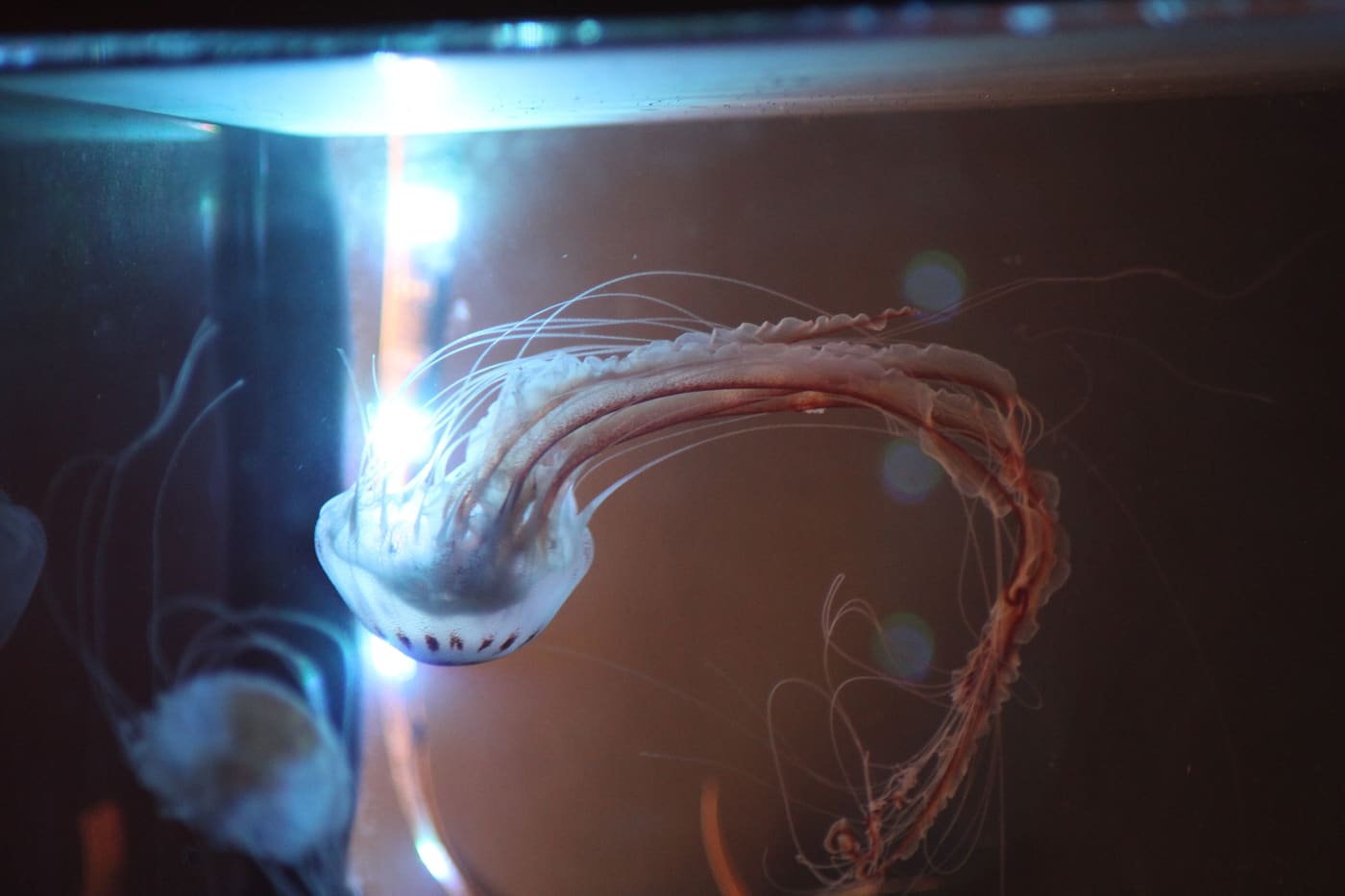
Maryland’s infamous summer stinger. White or milky bells with long trailing tentacles in the coastal bays and sometimes the ocean.
Quick facts
| Group | Jellyfish / siphonophore |
|---|---|
| Likelihood nearby | ★★★★★ |
| Habitats | Coastal bays, Salt marsh, Inlet, Ocean beach, Assateague State Park, Assateague National Seashore |
| Seasons (this coast) | summer, fall |
How to recognize them
- Milky-white to pale pink bell with long, trailing oral arms and fine tentacles.
- Often seen in swarms in warm, salty bay water; can wash onto ocean beaches.
Biology notes
- Bay-adapted sea nettle now treated as Chrysaora chesapeakei (split from the more southern C. quinquecirrha).
- Feeds on zooplankton and small fish; blooms thrive in warm summers with the right salinity.
Where to see them around Ocean City
- Isle of Wight, Sinepuxent, and Assateague bay waters on hot summer days.
- Ocean City Inlet and ocean beaches when bay water empties on outgoing tides.
When to look
- July–September peaks; cooler springs and winters are quieter.
Viewing tips & etiquette
- Respect the sting—wear rash guards if swimming in bay water during blooms.
- Vinegar can help for some jelly stings; avoid rubbing sand into the skin.