American Beachgrass
Ammophila breviligulata · Also known as: beach grass, dune grass
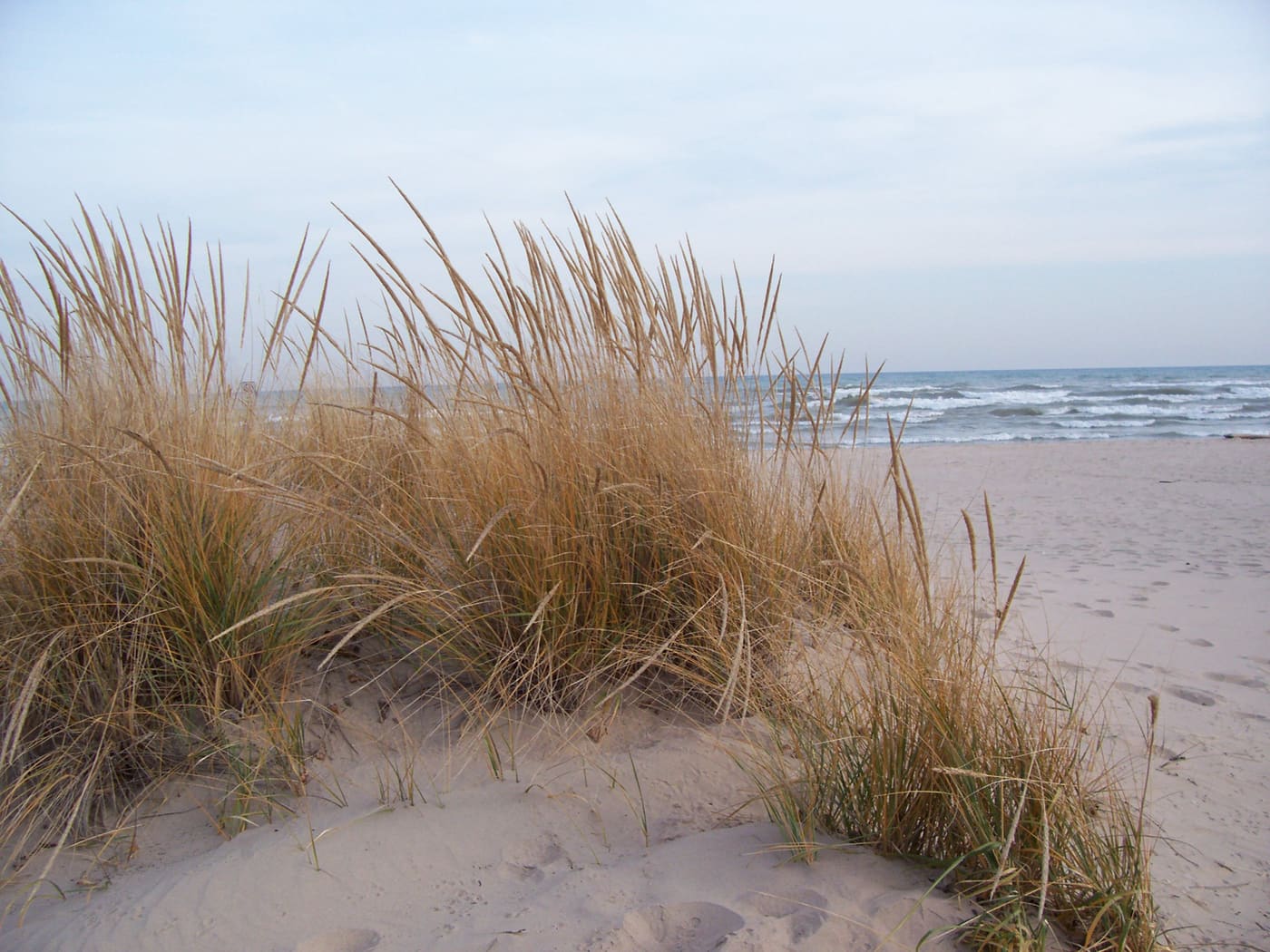
The backbone of Ocean City and Assateague dunes. Tall, tough grass that traps sand and holds the barrier island together.
Quick facts
| Group | Dune plant |
|---|---|
| Likelihood nearby | ★★★★★ |
| Habitats | Dunes, Ocean beach, Assateague State Park, Assateague National Seashore |
| Seasons (this coast) | year-round |
How to recognize them
- Long, narrow blue-green blades in dense clumps; stems can reach several feet tall.
- Sand often buries the lower stems; look for stiff, upright tufts on foredunes and blowouts.
Biology notes
- Rhizomes spread underground, building dune volume as wind-blown sand accumulates around stems.
- Tolerates salt spray and burial; native to Atlantic coast dunes from Newfoundland to North Carolina.
Where to see them around Ocean City
- Ocean City beach dunes from the Inlet north through the residential strip—planted and natural stands.
- Assateague Island National Seashore and State Park foredunes along the ocean side.
- Dune restoration fencing often marks active beachgrass planting zones after storms.
When to look
- Green and obvious spring through fall; tan winter stems still show dune structure year-round.
Viewing tips & etiquette
- Stay on boardwalks and marked paths—foot traffic kills dune grass and opens blowouts.
- Do not pick or pull; dunes are fragile habitat and often protected.
Conservation
- Dune loss from storms and trampling is a major coastal hazard; beachgrass restoration is standard after erosion events.