Eelgrass
Zostera marina · Also known as: seagrass, common eelgrass
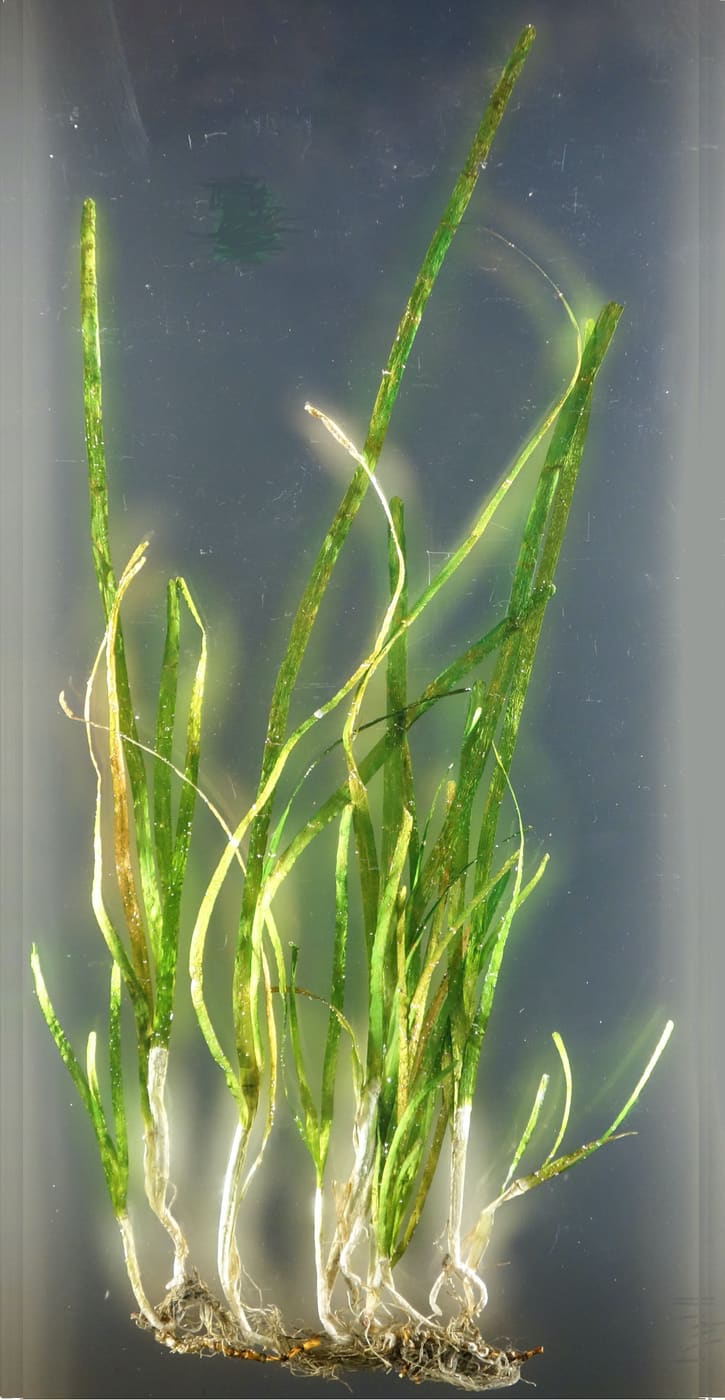
Underwater meadow grass of Maryland’s coastal bays. Nursery for blue crabs and scallops, visible at extreme low tide near Assateague.
Quick facts
| Group | Seagrass |
|---|---|
| Likelihood nearby | ★★★★☆ |
| Habitats | Coastal bays, Salt marsh, Assateague State Park, Assateague National Seashore |
| Seasons (this coast) | spring, summer, fall |
How to recognize them
- Ribbon-like green blades from rhizomes in sandy or muddy bay bottoms; forms continuous underwater lawns.
- Flowering spikes with tiny blooms occasionally surface at low tide; winter dieback leaves bare flats.
Biology notes
- True flowering plant (not algae) that photosynthesizes underwater; clarifies water and stabilizes sediments.
- Maryland tracks submerged aquatic vegetation (SAV) acreage—eelgrass is a key Chesapeake and coastal-bay indicator.
Where to see them around Ocean City
- Shallow flats of Sinepuxent and Isle of Wight bays at spring low tides from kayak or causeway pull-offs.
- Assateague bay-side shallows—look for green blades waving just below the surface on calm days.
When to look
- Green beds late spring through fall; some winter persistence in mild years; clearest viewing on calm, low-tide paddles.
Viewing tips & etiquette
- Polarized sunglasses help spot beds from a kayak; do not anchor or walk in eelgrass meadows.
- Prop scars from boats are a major threat—stay in marked channels.
Conservation
- Bay water quality and boat damage drive long-term SAV trends; restoration projects replant eelgrass in coastal bays.