Marsh Elder
Iva frutescens · Also known as: high-tide bush, seaside elder
Shrubby high-marsh sentinel of Assateague. Gray-green leaves and late-summer pollen that triggers hay fever for some visitors.
Quick facts
| Group | Salt marsh plant |
|---|---|
| Likelihood nearby | ★★★★☆ |
| Habitats | Salt marsh, Coastal bays, Dunes, Assateague State Park, Assateague National Seashore |
| Seasons (this coast) | year-round |
How to recognize them
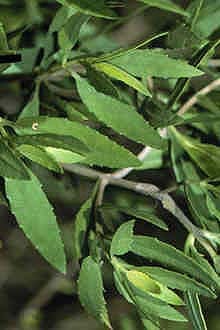
- Multi-stemmed shrub to ~6 feet with opposite, coarsely toothed leaves; often looks scraggly and wind-pruned.
- Inconspicuous greenish flower clusters in late summer; small dark drupes for birds in fall.
Biology notes
- Tolerates occasional saltwater flooding; marks the transition from daily-flooded cordgrass to high marsh.
- Wind-pollinated—blooms can aggravate allergies even though flowers are not showy.
Where to see them around Ocean City
- Assateague causeway and bay-side overlooks—marsh elder lines many high-marsh ecotones.
- Dune–marsh interfaces on the island’s bay side and mainland coastal edges near Ocean City.
When to look
- Shrub structure year-round; allergy season peaks late summer bloom; berries into fall.
Viewing tips & etiquette
- Scan marsh-elder edges for songbirds and migrating warblers in fall.
- If you are pollen-sensitive, windy August days near high marsh can be rough.