Rockweed
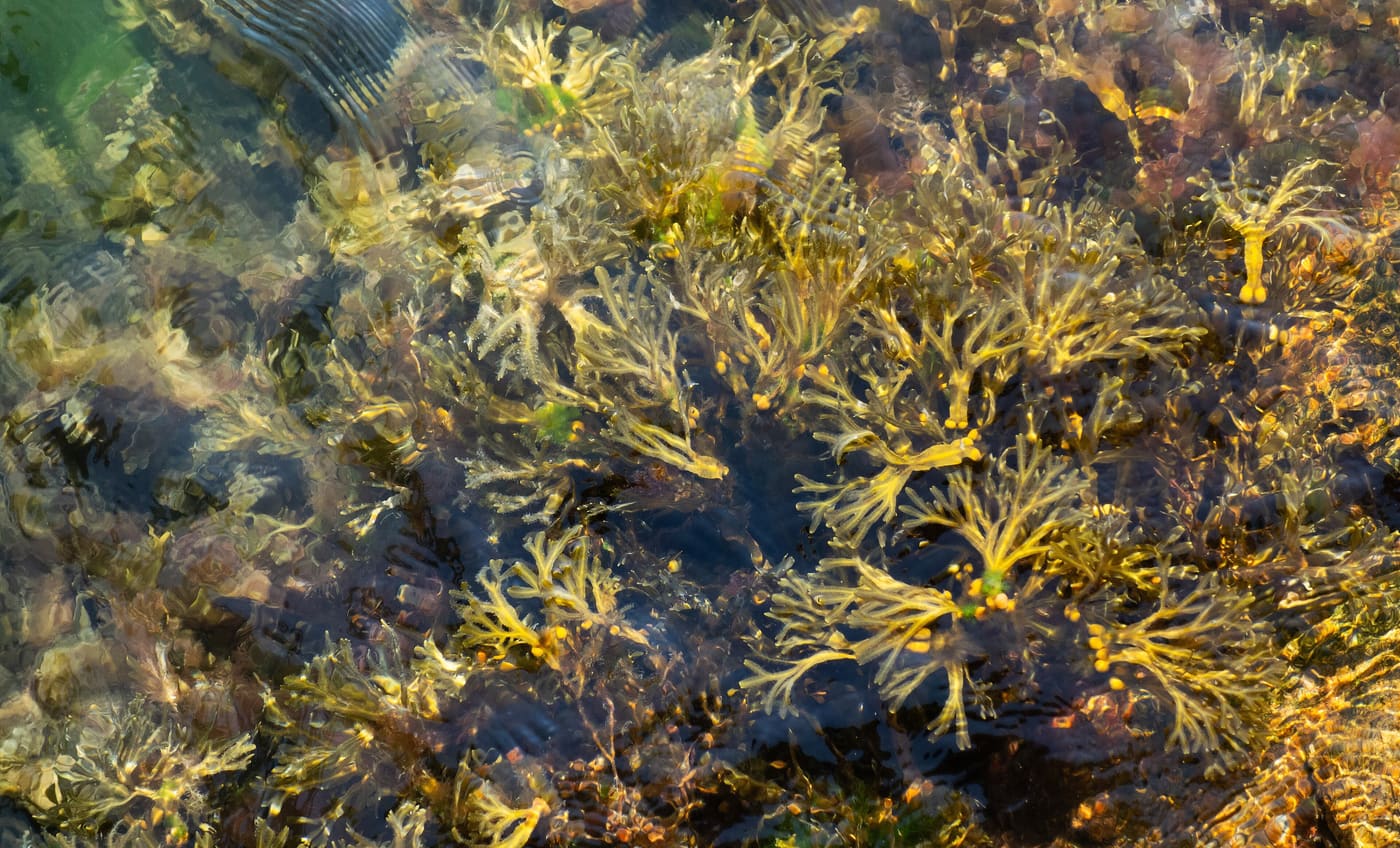
Fucus vesiculosus · Also known as: bladder wrack, black tang
Bladder-tipped brown seaweed of jetties and rocky structure. Ocean City Inlet groins at low tide, not typical open sandy beach.
Quick facts
| Group | Seaweed / algae |
|---|---|
| Likelihood nearby | ★★★★☆ |
| Habitats | Inlet, Ocean beach, Offshore / ocean |
| Seasons (this coast) | year-round |
How to recognize them
- Flat, forked olive-brown fronds with paired air bladders (“pop weed” when stepped on).
- Holdfast cements to rock or shell; no true roots—entire plant is the thallus.
Biology notes
- Intertidal brown alga that tolerates drying at low tide; bladders float fronds when submerged.
- More common on structured coast north of OC; local populations hang on Inlet hardscape and storm-cast wrack.
Where to see them around Ocean City
- Ocean City Inlet jetties and rock groins at low tide—scan wet rock for forked fronds and bladders.
- Storm wrack on Assateague beaches after northeast blows—mixed with mussels and kelp fragments.
When to look
- Visible at low tide year-round on structure; fresh cast seaweed after winter and spring storms.
Viewing tips & etiquette
- Mind slippery rocks and surge; never turn your back on Inlet waves.
- Pop bladders gently for kids—classic tide-pool moment where rockweed occurs.