Smooth Cordgrass
Sporobolus alterniflorus · Also known as: Spartina alterniflora, saltmarsh cordgrass
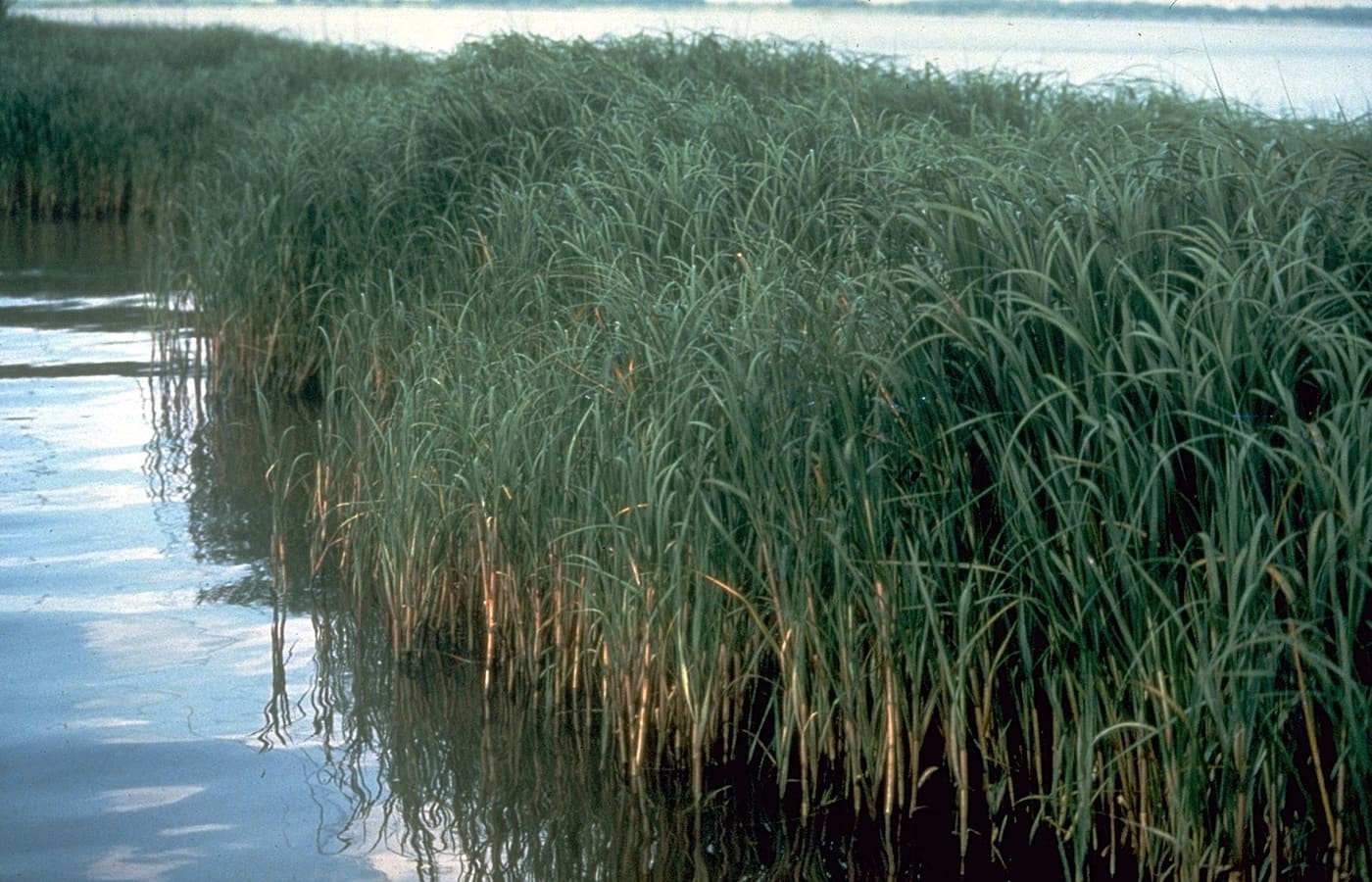
The defining grass of Maryland’s coastal marshes. Tall green bands along bay edges from West Ocean City to Assateague.
Quick facts
| Group | Salt marsh plant |
|---|---|
| Likelihood nearby | ★★★★★ |
| Habitats | Salt marsh, Coastal bays, Inlet, Assateague State Park, Assateague National Seashore |
| Seasons (this coast) | year-round |
How to recognize them
- Smooth, flat blades in dense stands; tallest form (up to 6+ feet) in low marsh flooded daily by tides.
- Turns golden tan in late fall; short “hay” stubble in winter after frost and storms.
Biology notes
- Engineers salt marsh platforms—traps sediment, dampens waves, and shelters crabs, fish, and birds.
- Reclassified from Spartina to Sporobolus; guides and signs may still say Spartina alterniflora.
Where to see them around Ocean City
- Isle of Wight and Sinepuxent Bay edges viewed from Assateague causeway and kayak launches.
- West Ocean City harbor marshes and Ocean City Inlet shorelines at low tide.
- Assateague OSV and bay-side trails overlooking cordgrass meadows.
When to look
- Green peak summer; golden fall color; winter skeletons still identify marsh zones year-round.
Viewing tips & etiquette
- Kayak or paddle at high tide to float through creek guts bordered by cordgrass.
- Watch for saltmarsh sparrows and rails in the short-grass high marsh ecotone.
Conservation
- Marsh loss to development and sea-level rise is a major Chesapeake and coastal-bay concern; living shorelines use cordgrass plantings.