Balcony telescope nights: dim lights, quiet voices
Grace Okonkwo on stargazing from Ocean City condo balconies—light discipline, neighbor courtesy, and when the rail beats the boardwalk glare.

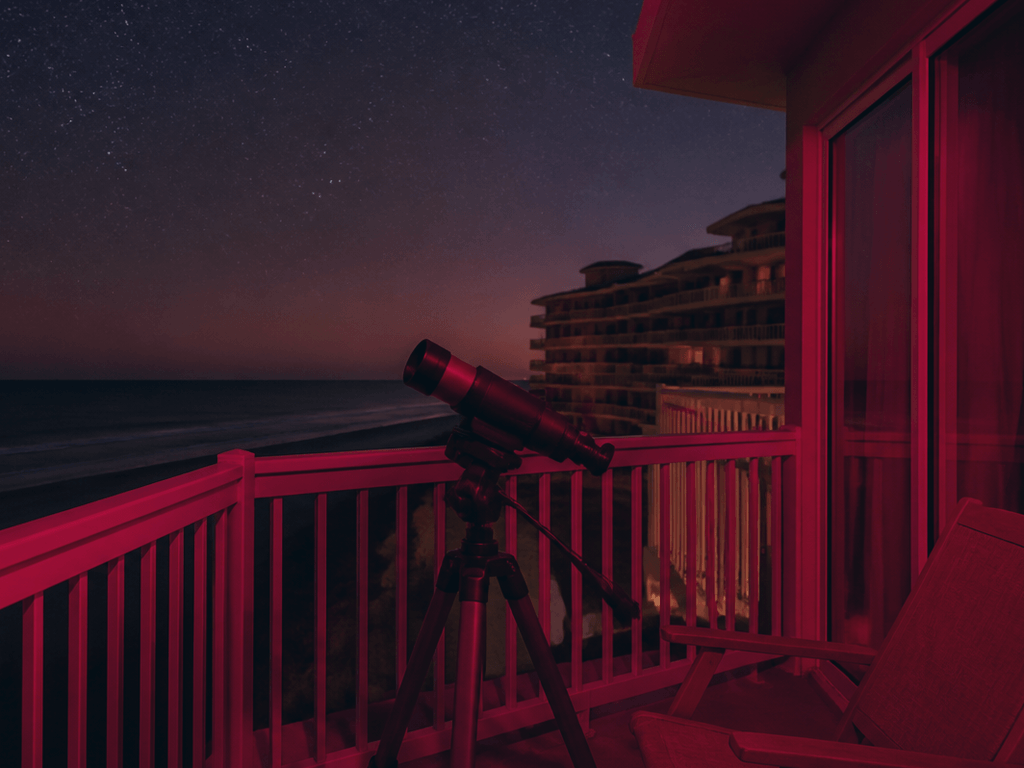
I’m Grace Okonkwo. I lead nature walks and field trips around the mid-Atlantic, which means I’ve seen a lot of people point telescopes at the wrong bright thing because the boardwalk glow turned the sky into gray soup. Ocean City isn’t Mauna Kea—but a high balcony away from direct glare can still deliver Jupiter, a modest Milky Way segment in late summer, and the kind of quiet wonder kids remember if you don’t ruin it for the neighbors below.
Dim lights, quiet voices. The balcony is a shared vertical street after dark.
Our nature guide covers darker spots. This covers the night my nephew shouted “I see the moon!” at volume ten.
The scramble that taught us about balcony telescope nights
Family condo week, I brought a small refractor—travel scope, tripod that fits a carry bag, good enough for lunar craters and bright doubles. Setup on the balcony looked perfect: ocean breeze, clear-ish August sky, kids taking turns.
First problem: balcony light. The unit’s warm LED strip stayed on because someone wanted “ambiance.” Moon washed out in glare.
Second problem: voices. Excitement is good; balcony acoustics are cruel. A neighbor’s slider opened below with the universal “hey, it’s quiet hours” tone—not angry, just done.
We killed the strip, switched to a red flashlight app for charts, lowered voices to museum whispers. The neighbor waved up later—same family, thumbs up. The moon looked sharper in the dark. Kids learned a lesson about sharing sky and building.
What balcony telescope nights ask of a crew
Turn off balcony string lights during observing—see Morgan’s timer essay; same family of rules.
Red light only for charts and adjustments—preserves night vision, less spill to neighbors.
Indoor lights off behind you—close slider partially to block kitchen glow.
No phone screens at full blast—night mode, brightness minimum.
If the building bans tripod equipment on rails, respect it—some docs cite wind and obstruction. Floor-standing inside with slider open may work better.
Our repeatable balcony telescope nights sequence
Excited kid energy belongs inside glass or in daytime programs. Pointing at Saturn whispering beats describing it at shout.
Set a one-minute giggle rule—laugh, then back to whispers. Works with teens too, barely.
Avoid late sessions past quiet hours unless you’re silent and lights-out—metal clinks from tripod adjustments carry.
What people search for on balcony telescope nights
Expect moon, Jupiter, Saturn when up, bright stars, maybe Pleiades in season. Don’t promise Andromeda from mid-strip light pollution—honesty keeps trust.
Assateague or bay-side darker pulls still beat balcony for deep sky; balcony wins on convenience and bedtime timing.
Check moon phase—new moon weeks reward; full moon weeks still wow kids on craters.
How balcony telescope nights quietly falls apart
Let the first eyepiece view be the moon—not a faint smudge they’ll pretend to see. Success builds patience for dimmer targets. One kid operator per five minutes reduces tripod kicks and sibling litigation.
Who should own balcony telescope nights
Tripod legs stay inside the rail plane—not hanging over. Wind gusts happen. Kids supervised, always.
No laser pointers at aircraft—obvious but tourists forget.
Pack in before dew soaks optics; salt air next morning needs lens cloth.
The short version of balcony telescope nights
- Balcony lights off; red light for charts only
- Quiet voices after quiet hours; excitement behind glass
- Realistic targets—moon and bright planets first
- Tripod inside rail; wind and rules respected
- Darker Assateague nights for deeper sky if needed
Pack this balcony telescope nights habit into the week
Dim lights, quiet voices. The balcony can be a fine small observatory if you treat neighbors like fellow astronomers who sleep.
If your crew is larger than three, write the balcony telescope nights rule in a shared note. Verbal plans dissolve between sunscreen and sneakers faster than anyone admits.
Next step: charge a red-light app and test scope setup before kids are awake. First light is practice, not performance.
Also on OCEANCITY.MD: nature guide · Ocean City rentals · Grace Okonkwo · Beach Blog