Boating safety briefing you should not skip: the five minutes that save the day
Drew Nolan on the five-minute pre-departure briefing that keeps Ocean City rental days and family bay loops from turning into shouted improvisation at the swim platform.

I’m Drew Nolan. Lewes, Delaware. Marine electronics tech by day, recreational boater always. People call me “Captain” as a joke—I fix the gear, I run my own boat, I’m not your licensed charter captain. What I am is a guy who has watched one skipped briefing turn a bay picnic into a shouting match at the swim platform.
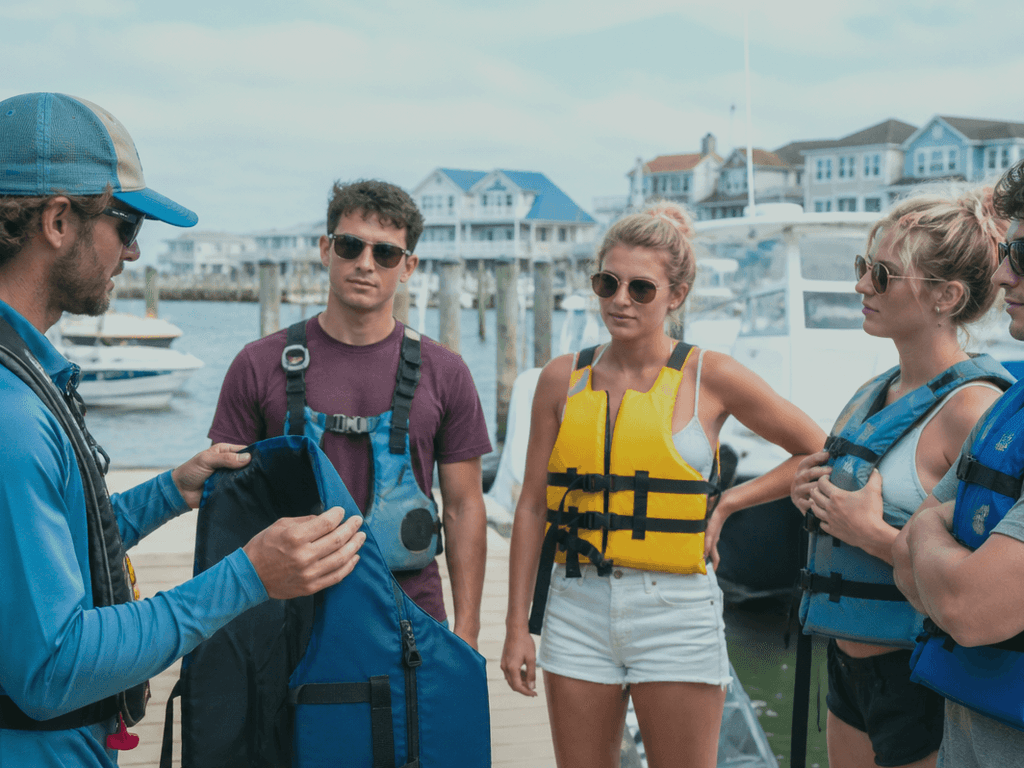
Five minutes at the dock. Say it out loud. Assign the jobs. That is the whole sermon. Everything else is story.
If you are still building your water-day systems, start with boating safety, then come back here for the habit that keeps the afternoon coherent when something actually happens.
The rental Saturday we almost edited out of the album
We picked up a pontoon at a West Ocean City marina—cousins in town, kids wired on gas-station donuts, everyone photographing the skyline like we’d never seen water before. The marina guy gave a solid walk-through: throttle, depth, where the PFDs live, no Inlet heroics. We nodded like responsible adults.
Then we skipped our own briefing because the ice was melting and somebody had already claimed the bow.
Two hours later: swim stop near a sandbar, warm water, vacation voice. My niece went in from the stern. Not dramatic. Not far. Then a little more wake than expected, a little more drift than anyone had budgeted, and three adults trying to remember where the throw bag lived while the person at the helm figured out whether to reverse or not.
We got her back. Nobody made the evening news. But the cousin who’d been filming the skyline deleted the middle of that clip, and I don’t blame him. The failure wasn’t the water. It was that we had never said out loud who stops the boat, who points, who throws, and where the safety kit actually lives.
What a briefing is actually for
A boating safety briefing is not a lecture and not a liability waiver performance. It is five minutes of shared vocabulary so that when tone shifts from picnic to work voice, nobody is inventing a plan mid-shout.
You are aligning on:
- Who drives and who backs them up
- Where PFDs are and who needs them on (kids, weak swimmers, law—follow official guidance)
- Where the throw bag / whistle / first-aid live and whether an adult who is not the “boat person” can reach them in one move
- What “stop the boat” sounds like versus normal conversation
- Where you are going, where you are not going (Inlet gates, weather turn-around, return time)
I am not writing operating instructions for an emergency. Use official guidance, your vessel’s equipment list, and local rules. Treat this as a staging habit from a second-home boater who would rather look slightly over-prepared than discover friction at the worst time.
For the throw-rope piece of that kit, see keep a throw rope in the boat day bag—reachable, not buried.
The five-minute script we use now
Before we leave the slip—or before a rental briefing ends and everyone starts photographing the skyline—I run this out loud. Adults only need one clear pass.
- Name the outing. “Bay loop, swim stop, home by four.” Different days need different staging.
- Point to PFDs. Fit the people actually on board. Not the sizes you wish you had.
- Point to the throw bag. Orange bag—here. Second adult owns it if needed.
- Assign helm backup. “If I’m on the swim platform, you drive. If you’re driving, she owns the throw.”
- Say the stop phrase. We use “hold up”—distinct from normal chat. Silly? Maybe. Works? Yes.
- Weather and turn-around. Match wind, tide, and daylight on boating. Name the hour we leave regardless of fun.
Thirty seconds if you’ve done it before. Five minutes the first time with a mixed crew. Still shorter than the argument you avoid later.
Bay-day realities that make the briefing non-optional
Ocean City boating is often a bay day with condo skyline in the background and weekend boat traffic in the foreground.
Swim-off-the-boat culture. Warm bay water feels like a pool with better scenery until wake and drift argue.
Mixed experience crews. Cousins who boat twice a year need the same brief as the person who owns the slip.
Rentals. You do not know this boat’s quirks yet. The briefing is how you learn where things hide before you need them fast.
Heat and hurry. July and August punish improvisation. Shoulder season forgives a little more. Either way, brief while patience is still high—before “we’re already late” energy decides the packing order for you.
Quiet ways crews still fail the habit
- Assuming the marina guy’s briefing counts as yours. His covers the boat. Yours covers the people.
- Skipping because “we’re just going for an hour.” Short trips still have water.
- Letting only the driver know the plan. Silent plans create loud arguments.
- Turning the brief into a scare lecture. You want calm clarity, not a pre-disaster movie trailer.
- No second adult assigned. Single point of failure at the helm when swim stops happen.
I write for people who like Ocean City enough to protect the fun on purpose. If your crew already runs a clean safety brief, steal the script and ignore the pep talk.
Pocket list
- Five-minute briefing before every departure—rental or owned
- PFDs that fit the actual people on board
- Throw bag / whistle staged where adults can reach them
- Stop phrase everyone knows
- Wind/tide/daylight check and a named return time
Bottom line
The briefing is boring on purpose. Boring at the dock is what keeps the memories from needing a scary middle.
Next step: before your next Ocean City launch, gather the crew for five minutes, point at the gear, assign the jobs, say the stop phrase once. Then go enjoy the part that cannot be checklisted—glass mornings, skyline in the distance, and a crew that comes back with the same number of people who left.
Also on OCEANCITY.MD: boating safety · boating · Drew Nolan · Beach Blog


