Dive flag when required: fly it, don't invent rules
Drew Nolan on when to fly the alpha dive flag on Ocean City bay days—snorkeling off the boat, swim stops, and the afternoon a cousin almost became invisible to passing traffic.

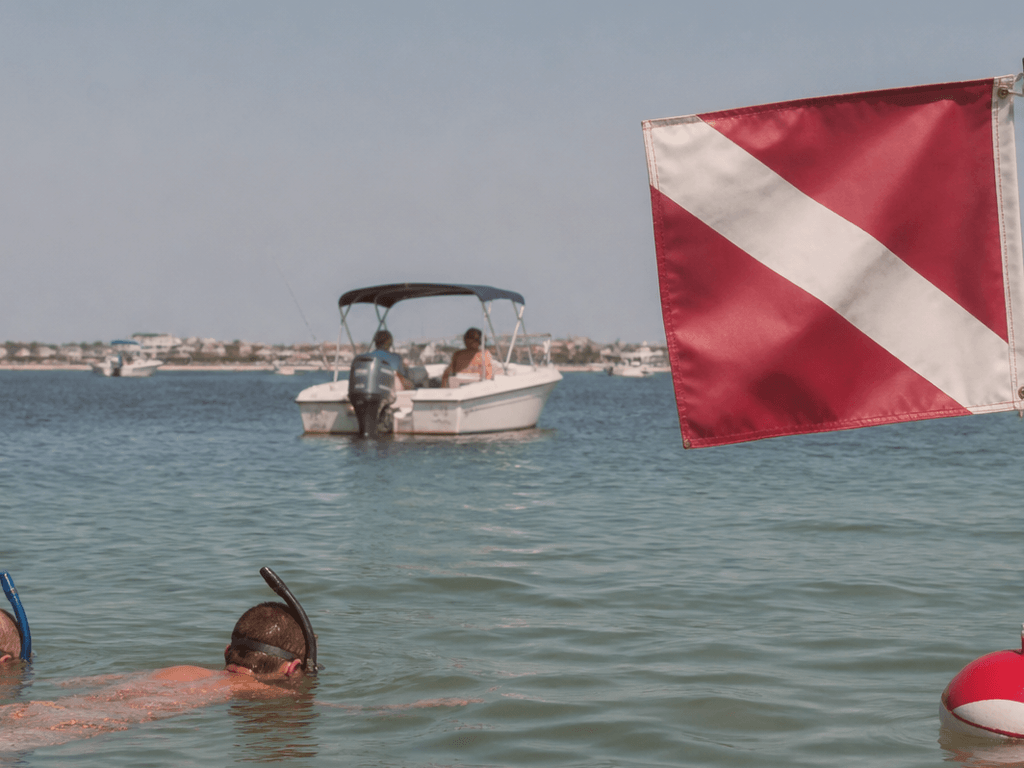
I’m Drew Nolan. Lewes, Delaware. Marine electronics tech by day, recreational boater always. “Captain” is a nickname from people who have watched me fix their plotters—not a license to invent maritime law at the swim platform.
On Ocean City bay days, the alpha dive flag is one of those rules people treat like a suggestion until a wakeboard boat passes close enough to read your sunscreen brand. Fly it when required. Do not invent your own version of “required.” Decide that before heat, hunger, and “we’re only going in for a minute” get a vote.
If you are still building your water-day systems, start with boating safety, then come back here for the flag that tells other skippers somebody is in the water near your boat.
The snorkel stop that almost got expensive
Last August we had a soft plan: short loop on Assawoman Bay, sandwiches, maybe a float if the wind stayed honest. Classic second-home optimism. My cousin Jake wanted to snorkel a grass bed he’d spotted from the rail the year before. Warm water, clear enough to see crabs doing crab things. Three of us in the water with masks. Fun. Vacation voice.
What we did not do—what I assumed we could skip because “it’s just the bay”—was rig the alpha flag before the first mask went on. We had one in a tube bag under the bow cushion. Technically present. Practically useless.
Twenty minutes later a center console came off a plane line we hadn’t noticed, wake stacked from two directions, and the driver only saw heads when he was already closing distance. He veered. Nobody got hurt. Nobody made the evening news. But the tone on our boat changed from picnic to work voice in one heartbeat, and Jake climbed back aboard quieter than I’d seen him all week.
The lesson stuck harder than the salt: a dive flag you haven’t flown yet is the same as no dive flag. Other boats are scanning for motion and color, not for your good intentions.
What the flag is actually for
The alpha flag—the red field with white diagonal stripe—is the universal signal that divers or swimmers are in the water near a vessel. On Maryland bay waters, that matters any time people are snorkeling, diving, or swimming in the vicinity of your boat where other traffic might not expect bodies in the water.
It is not a decorative pennant. It is not optional because the water looks shallow. It is not replaced by waving your arms when you finally notice traffic.
I am not writing statute text here. Use official Maryland boating guidance, your rental operator’s briefing, and local rules. Treat this as a staging habit from a second-home boater who would rather look slightly over-prepared than explain to a stranger why three heads were invisible from fifty yards out.
Related planning that belongs in the same calm brain: match the outing to wind, tide, and daylight on boating, and keep Inlet humility when the ocean side looks prettier than it is safe.
When we fly it now—and when we don’t pretend
Before anyone’s face goes under, we answer one question out loud: Is this a dive-flag moment?
For us, the answer is yes when:
- Anybody is snorkeling or free-diving off the boat, even in “only four feet” of bay water
- Kids or adults are swimming more than a few feet from the hull while the boat is anchored or drifting slowly
- We are stopped for a prolonged swim-off-the-boat session in an area with weekend traffic
The answer is no when we are simply anchored with nobody in the water—but the flag comes out of the tube bag before the first person says “I’m going in.”
Our routine takes about ninety seconds:
- Rig before the first splash. Stern staff, visible from the approach angles you can guess at. Not draped over a rod holder where it hides behind a Bimini.
- Name it out loud. “Dive flag is up—three in the water.” Adults who aren’t driving need one clear sentence.
- Assign a spotter. Someone on deck watches traffic while others swim. Helm stays attentive even at anchor.
- Take it down when the last person is aboard. Flag up with an empty swim zone is how you train other boats to ignore flags.
- Keep a lookout anyway. The flag buys attention. It does not replace courtesy distance or a human on watch.
If you want the wider safety stack—briefings, throw ropes, PFDs that fit—stay inside boating safety.
Bay-day realities that change the conversation
Ocean City boating is often a bay day with condo skyline in the background and weekend traffic in the foreground. That changes the dive-flag conversation in a few practical ways.
Swim-off-the-boat culture. People treat warm bay water like a pool with better scenery. Fine—until someone underestimates drift, fatigue, or how fast a boat can close when the driver is watching a GPS screen instead of the water.
Crowded weekends. More boats means more wake stacked from multiple directions. A swimmer needs a bright flag and a calm crew more than they need a motivational speech about staying chill.
Mixed experience crews. Second-home weeks often mean cousins and friends who boat twice a year. The flag is for them as much as for you. If only the most experienced person knows where it lives, you have built a single point of failure into the day.
Rentals and borrowed boats. Know where the flag is before you leave the dock. Rental briefings sometimes mention it once. Your job is to make it visible before the fun starts, not after somebody asks “do we have one of those?”
Quiet ways crews still fail the habit
- Owning a flag and leaving it in the console. Ownership is not readiness.
- Flying it after the first boat passes. Reactive is too late.
- Hiding it “so it doesn’t flap.” Flapping is the point.
- Assuming shallow water equals safe water. Bay traffic does not care about depth charts when it cares about plane lines.
- Skipping the spotter because “we’re right here.” Right here moves with wake and drift.
I write for people who like Ocean City enough to protect the fun on purpose. If your crew already flies the flag before the first mask strap goes on, steal the ninety-second routine and ignore the pep talk.
Pocket list for dive-flag days
Keep this short on purpose.
- Alpha flag rigged and visible before anyone enters the water
- Spotter assigned on deck while people swim or snorkel
- PFDs that fit the actual people on board (not the ones who “might come later”)
- Throw bag staged where adults can reach it—see throw rope habits if you haven’t read that one
- Return-time buffer so you are not rushing a swim stop into a dinner reservation
Closing note
A dive flag is a small red honesty check. If it is flying before the first splash, you respected the bay and the traffic sharing it with you. If it is still in a tube bag while heads are in the water, you assumed the afternoon would stay polite.
Next step: before your next Ocean City swim stop, locate the flag, rig it where approaching boats can see it, say out loud that it’s up, and then go enjoy the part that cannot be checklisted—grass beds, crab sightings, and cousins who tell the story later without the scary middle.
Also on OCEANCITY.MD: boating safety · boating · Drew Nolan · Beach Blog


