Beach Blog · How to catch crabs
A family crab day without the meltdown
Richmond pediatric nurse Casey Nguyen shares a calm, kid-ready Ocean City crabbing plan: short bay sessions, safe handling, legal checks, and the seafood cleanup plan.

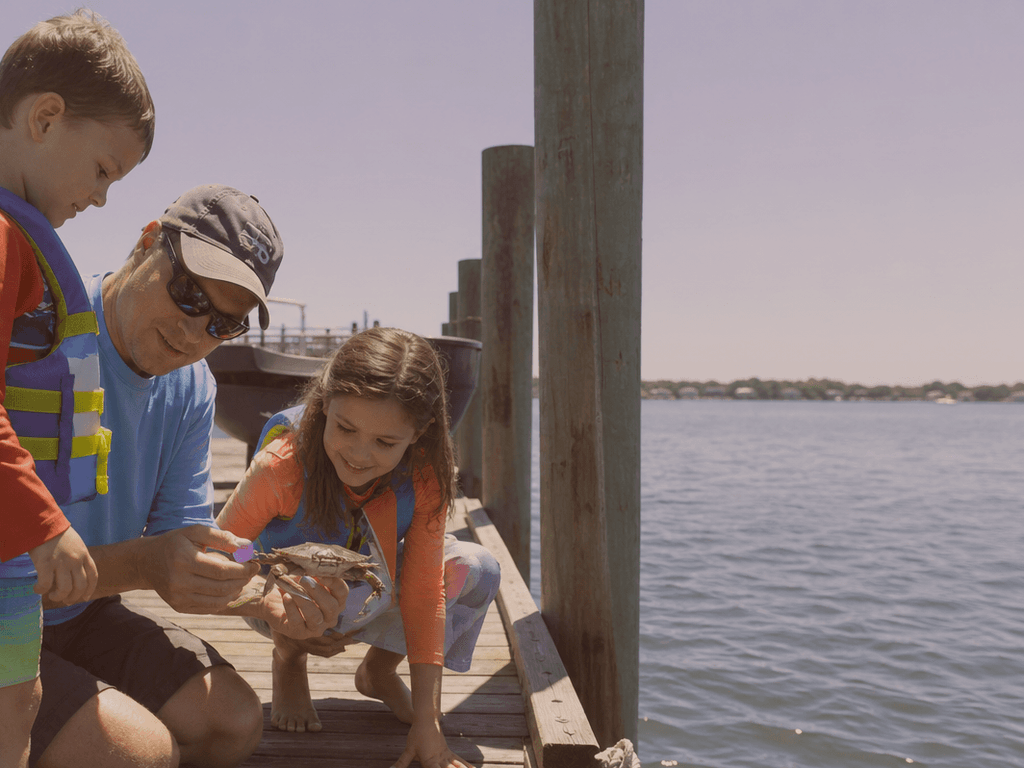
I’m Casey Nguyen, a Richmond pediatric nurse and the person in my family who turns an Ocean City bay day into a plan before anybody has found their second flip-flop. My children like catching crabs; they do not like long explanations, surprise pinches, overheating on a dock, or discovering at 1 p.m. that lunch was apparently “a handful of pretzels.”
Here is the answer up front: make a family crab day a short, supervised bay activity with a finish line, not an all-day mission. Bring simple gear, give each child one safe job, check current Maryland crabbing regulations before you keep anything, and have lunch plus a cleanup plan ready. Start with our crabbing hub, then use this as the calm version of the day.
The goal is not to fill a bushel basket. The goal is for everyone to want to do it again.
How we think about family crab day meltdown
For most elementary-age kids, about 90 minutes is the sweet spot. That includes setup, watching the lines, a few squeals when a crab appears, photos, and putting gear away. Younger children may be delighted for 30 minutes. Teenagers may last longer if you hand them responsibility and snacks.
We choose a morning or later-afternoon window, avoid the sharpest heat, and tell the kids the plan before we leave: “We are crabbing until the timer goes off, then we wash hands and eat.” Predictability is not boring. It is how a fun outing stays fun when one sibling catches three crabs and the other catches exactly one suspicious piece of sea grass.
Before leaving your lodging:
- Check the forecast at weather and the National Weather Service. Lightning, strong winds, and high heat are reasons to reschedule, not reasons to negotiate.
- Pick a legal, appropriate access point and review the broader options on crabbing. Follow posted rules; a private dock is not a public invitation.
- Confirm the adult who will handle measuring and any kept crabs. That is not a child job.
- Pack water, sunscreen, hats, a small first-aid kit, wet wipes, and a real snack.
- Decide now whether today is catch-and-release or a legal keep-and-cook outing. Both count.
What visitors need from family crab day meltdown
In my work, I spend a lot of time explaining that a child can participate without doing the riskiest part. Crabbing is a great example. Everybody gets a role; not everybody needs to touch a crab.
Little kids: spotters and bait helpers
They can help put bait into a container, watch a line, point out movement, and count crabs from a safe distance. I set a clear boundary: feet stay behind the adult’s line, hands stay off the rail, and nobody reaches into a bucket without permission.
School-age kids: line watchers and record keepers
These kids can gently tend a hand line with an adult beside them, call out when the float moves, and keep a silly tally: crab, fish, seaweed, “mystery blob.” A clipboard is wildly effective at making a child feel essential.
Older kids: net assistants
Once they can listen and move carefully, older kids can help slide a long-handled net under a crab while an adult manages the line. Use gloves if they want them, but teach them that gloves do not turn a crab into a stuffed animal. Crabs pinch to protect themselves. We protect them by handling them briefly and correctly.
An adult should be the one who picks up a crab, measures it, identifies whether it can legally be kept, and decides when to release it. Maryland’s rules can change by season, location, gear, and crab type, so use Maryland DNR as the source of truth, not an old dockside story.
How we handle family crab day meltdown now
You do not need a truckload of equipment to introduce a family to crabbing. Our basic setup is intentionally unglamorous:
- Hand lines or a simple ring net, bait, and a long-handled dip net
- A bucket or cooler with a secure lid for gear; a separate container if you are legally keeping crabs
- A crab measure or ruler that can measure the correct points
- Kid-size life jackets if the setting, dock rules, or child’s comfort warrants them
- Closed-toe water shoes or sturdy sandals with heel straps for uneven, wet surfaces
- Tongs or a crab grabber for the adult, plus gloves as an optional confidence tool
- Water, hand soap or wipes, and an insulated food bag for your human snacks
Avoid making the cooler a crab aquarium. If you are keeping legal crabs, follow current DNR handling guidance and keep the catch cool and protected. If you are releasing, keep handling brief, do not crowd the bucket, and return the crab gently to the water.
Set up family crab day meltdown while patience is high
I keep this to 30 seconds. Long safety lectures do not make children safer; clear, repeatable instructions do.
- “Walk near the water. No running on docks or rocks.”
- “Ask before you touch any animal or gear.”
- “If a crab pinches, freeze your hand and call an adult. Do not fling it.”
- “We wash hands before snacks and before getting in the car.”
- “When I say we’re done, we are done. The crabs will be here another day.”
If you are crabbing from a boat, the plan needs another layer: properly fitted life jackets for children, a weather check, a sober operator, and no child leaning over a rail to become the world’s most enthusiastic crab retriever. Review boating before you add watercraft to the equation. For many families, a shore or pier session is the better first chapter.
The family crab day meltdown recovery we refuse to repeat
This is the part vacation photos politely leave out: bait hands, wet towels, salt crust, and children who become ravenous the moment the last line comes in.
We bring a “transition bag”: wipes, a gallon of water for a quick rinse if needed, a trash bag for wet gear, and a clean shirt for the kid who somehow sat in bait water. Back at the rental or hotel, gear gets rinsed outside before anyone starts unpacking the snack bag.
If you keep crabs legally, make the cooking decision before you are exhausted. Do you have a kitchen, steaming equipment, and time? Are you staying somewhere that allows it? If not, do not turn a pleasant hour by the bay into a stressful food-safety project. A restaurant seafood dinner still celebrates the day. Our food and drink hub can help with the dinner half of the plan.
For food safety, keep perishable food cold, wash hands after bait and crab handling, and clean surfaces that touched raw seafood. The FDA’s seafood guidance is a sensible outside reference if you need a refresher.
How season changes family crab day meltdown
| Time | What we do |
|---|---|
| 8:00 a.m. | Breakfast, weather check, sunscreen, bathroom |
| 8:30 a.m. | Arrive, review the safety script, set the timer |
| 8:40-9:50 a.m. | Crab, tally, take a photo, release or legally store catch |
| 9:50 a.m. | Stop while everyone is still mostly cheerful |
| 10:00 a.m. | Wash hands, snack, pack wet gear |
| Late morning | Beach, pool, or family fun, not another mandatory activity |
That last line is important. Leave space after crabbing. The best family days have a little margin for a slow ice cream, a nap, or a child who needs to tell everyone in the condo about the crab that was “basically this big.”
How we keep family crab day meltdown steady
What if we catch nothing?
Then you watched the bay, handled gear safely, and learned what bait looks like after 45 minutes in warm water. Call it a nature hour, take a snack break, and move on. Do not chase success by doubling the session.
Can my child hold a crab?
Only if they can follow directions, an adult can show safe handling, and the crab is handled briefly. Watching is a fully valid way to participate.
Do we need a license?
Rules depend on method, location, species, and current regulations. Check Maryland DNR before the trip.
Is a boat better for kids?
Not automatically. A stable, supervised pier or shoreline setup is usually easier for a first crab day. A boat adds safety, weather, and attention demands.
Next step: pick a short weather-friendly window, read the current rules, and let your children choose one job each. A crab day works best when nobody has to be the hero.
Also on OCEANCITY.MD: Crabbing · Family fun · Boating · Weather · Food and drink · Beach Blog
Helpful outside the site: Maryland DNR blue crab information · National Weather Service · FDA seafood guidance