Ocean City Inlet observation hour: watch the water without rushing it
Grace Okonkwo on an unhurried hour at Ocean City Inlet—current lines, bird traffic, and why the best inlet visits start with watching instead of posting.

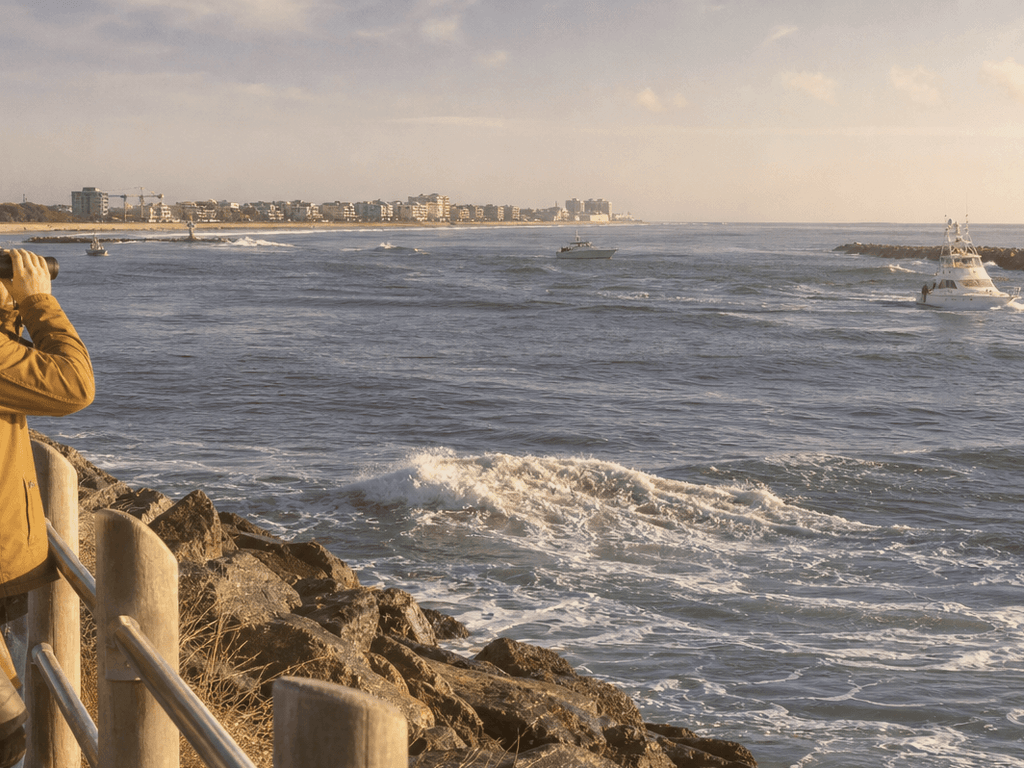
I’m Grace Okonkwo. My family treats the Ocean City Inlet like a speed bump on the way to fries—park, photo, keep moving. I treat it like a classroom with better acoustics. The inlet is where bay and ocean negotiate daily, and if you give it an hour without rushing, it teaches you more than a carousel line ever will.
The observation hour is not a tour. It is one bench, one notebook or one quiet phone on airplane mode, and permission to watch water behave.
A day built around Inlet observation hour
We arrived early on a shoulder-season morning—wind light, sky clean, crowds still inland eating pancakes. My nephew wanted the arcade. I promised forty-five minutes of “ocean TV” first. We sat on the south-side rocks where you can see the channel seam without leaning over guardrails like a dare.
Within ten minutes the show started: a trawler returning, gulls wheeling for scraps, a cormorant popping up where the current looked wrong for swimming. My nephew asked why the water looked darker on one side. That question—about density and outflow—is worth more than a rushed selfie with the lighthouse in frame.
We stayed seventy minutes. Nobody melted down. The arcade still existed.
The problem Inlet observation hour fixes
Pick a stable spot off the rock edge and jetty traffic. Fishermen have lines; boaters have lanes; you have eyes. Notice color breaks where fresh and salt water meet. Watch bait flickering—small fish often mean bigger predators nearby, which excites kids without requiring a shark documentary voice.
Birds are inlet punctuation. Pelicans dive. Terns hover. Gulls steal with commitment. If you bring binoculars, use them on birds and boats, not on people’s meals.
Spray and wind are real. Phone cameras die heroically here. I pack a zip bag and accept that some moments stay retinal-only. Our habitats hub links wider ecology; the inlet is the live feed.
Stage Inlet observation hour before the day gets loud
One hour max for first-timers. Set a timer if your group needs structure. Pair the inlet with breakfast nearby so the promise of food backs the promise of patience.
Teens engage when you assign roles: tide direction spotter, bird ID challenger, “what would you never do in that current” game. Little kids need distance rules repeated calmly—rocks are slippery, waves are not scheduled.
Do not feed wildlife. Do not throw chips for gulls because a toddler laughs. You are teaching the next hour’s headache for someone else.
Prep Inlet observation hour before anyone gets hangry
The inlet punishes hurry. Spray on lenses, missed porpoise rolls, arguments about where to stand—I have seen all three in five-minute visits. An hour sounds long until you realize how much movement fits inside it when you stop narrating and start noticing.
I still go alone sometimes with coffee and no agenda. The inlet does not care about my week. It keeps moving. That steadiness is the point.
If you leave Ocean City with one memory that is not commerce-shaped, let it be water doing math in front of you. Watch without rushing. The town gets louder behind you; the channel stays honest.
Don’t take these Inlet observation hour shortcuts
I started carrying a cheap notebook after my nephew asked why the current “looked angry.” We sketched arrows, labeled wind, guessed at outflow—wrong once, right enough to keep him engaged. Science on vacation does not need a worksheet; it needs permission to wonder aloud.
If you homeschool or road-school, the inlet is a free lab for density, navigation, and human behavior around risk. Boaters make case studies. Fishermen make ethics prompts. Gulls make comedy.
What not to skip with Inlet observation hour
Not every inlet viewpoint works for wheels or strollers. Check paved routes and railings before you promise a long sit. Spray can slick rocks within minutes; choose footwear like you mean it.
When crowds arrive, leave. The hour ends when the teaching window closes—not when Instagram runs out of angles.
Keep this Inlet observation hour rule
Long lenses on boats and birds: fine. Harassing working watermen for content: not fine. The inlet is a workplace with a view.
Sunrise and sunset paint the channel in colors apps exaggerate—stay for ten minutes after the obvious shot; often the second light is better.
The week Inlet observation hour stops being optional
Some families pair observation with learning where dinner comes from—dock to table without treating fishermen like props. Ask questions at legal public areas; tip and thank when you buy.