Cobia
Rachycentron canadum · Also known as: Crabeater, Sergeantfish, Ling, Cabio, Cubby yew, Lemonfish
U.S. wild-caught cobia is a smart seafood choice because it is sustainably managed and responsibly harvested under U.S. regulations.
This is a Nature Guide page (viewing and ID). Catch limits, tackle, and charter fit live on the separate Fishing species profile—we keep those products apart on purpose.
Quick facts
| Group | Fish · Mid-Atlantic |
|---|---|
| Viewing lane | Bay & offshore |
| Likelihood nearby | ★★★★☆ |
| Region | New England/Mid-Atlantic, Southeast |
How to recognize them
- Cobia are the only member of the family Rachycentridae in North America.
- They grow up to 6 feet and 100 pounds and live up to 12 years.
- They are able to reproduce when they are young—females mature at age 3 and males mature at age 2.
- Cobia spawn in coastal bays and estuaries several times throughout their spawning season, which lasts from late June to mid-August in the Southeast and from late summer to early fall in the Gulf of America.
- Females release between 375,000 and 2 million eggs each time they spawn.
- They are strong, aggressive predators, mainly feeding on crustaceans but also fish and squid.
- Larger pelagic fish prey on young cobia.
- Where They Live Range In U.S. waters, cobia are most abundant from Virginia south through the Gulf of America (formerly Gulf of Mexico).
- Cobia migrate seasonally in the Atlantic and Gulf of America.
- Along the Atlantic coast, they move south and offshore toward warmer waters during the late fall and winter.
- Cobia found in the northeastern Gulf of America during the summer move to south Florida waters in the winter, possibly spending the winter near the Florida Keys.
- Habitat Cobia are found near structures in the water (buoys, debris, shipwrecks, and artificial reefs) or large animals (sharks, turtles, and stingrays).
- Adult cobia travel alone or in small groups..
- Fishery Management NOAA Fisheries and the Gulf Council manage cobia in the Gulf of America and on the east coast of Florida.
- The Atlantic migratory group cobia (from Georgia through New York) are managed by the Atlantic States Marine Fisheries Commission .
- Managed under the Fishery Management Plan for Coastal Migratory Pelagics in the Atlantic and Gulf of Mexico : Fishermen do not need a federal permit to harvest cobia.
- Gear restrictions: Drift gillnets are prohibited.
- Authorized gear includes automatic reel, bandit gear, handline, rod-and-reel, and pelagic longline.
- Cobia must be a minimum size to be harvested, and must be landed with their heads and fins intact.
- Current minimum size limit is 33 inches fork length.
- Amendment 7 will be increasing the minimum size limit to 36 inches fork length.
- Commercial and recreational fishermen have size limits, trip limits, and per person per day or per vessel per day bag limits.
- Annual catch limits based on best available science.
- Harvest Commercial fishery: In 2024, commercial landings of cobia totaled 95,000 pounds and were valued at $360,000 according to the NOAA Fisheries commercial fishing landings database .
- Commercial fishermen do not directly target cobia and usually catch it while trawling for shrimp or fishing for other species such as mackerel.
- Recreational fishery: Recreational fishermen like cobia because it is a large, powerful fish that puts up a good fight and provides a tasty meal.
- In 2024, recreational anglers landed 3.2 million pounds of cobia, according to the NOAA Fisheries recreational fishing landings database .
- Scientific Classification Kingdom Animalia Phylum Chordata Class Actinopterygii Order Carangiformes Family Rachycentridae Genus Rachycentron Species canadum Last updated by NOAA Fisheries on 06/25/2026
Biology notes
- In U.S. waters, cobia are most abundant from Virginia south through the Gulf of America (formerly Gulf of Mexico).
- Cobia migrate seasonally in the Atlantic and Gulf of America.
- Along the Atlantic coast, they move south and offshore toward warmer waters during the late fall and winter.
- Cobia found in the northeastern Gulf of America during the summer move to south Florida waters in the winter, possibly spending the winter near the Florida Keys.
- Habitat Cobia are found near structures in the water (buoys, debris, shipwrecks, and artificial reefs) or large animals (sharks, turtles, and stingrays).
- Adult cobia travel alone or in small groups..
- Fishery Management NOAA Fisheries and the Gulf Council manage cobia in the Gulf of America and on the east coast of Florida.
- The Atlantic migratory group cobia (from Georgia through New York) are managed by the Atlantic States Marine Fisheries Commission .
- Managed under the Fishery Management Plan for Coastal Migratory Pelagics in the Atlantic and Gulf of Mexico : Fishermen do not need a federal permit to harvest cobia.
- Gear restrictions: Drift gillnets are prohibited.
- Authorized gear includes automatic reel, bandit gear, handline, rod-and-reel, and pelagic longline.
- Cobia must be a minimum size to be harvested, and must be landed with their heads and fins intact.
- Current minimum size limit is 33 inches fork length.
- Amendment 7 will be increasing the minimum size limit to 36 inches fork length.
- Commercial and recreational fishermen have size limits, trip limits, and per person per day or per vessel per day bag limits.
- Annual catch limits based on best available science.
- Harvest Commercial fishery: In 2024, commercial landings of cobia totaled 95,000 pounds and were valued at $360,000 according to the NOAA Fisheries commercial fishing landings database .
- Commercial fishermen do not directly target cobia and usually catch it while trawling for shrimp or fishing for other species such as mackerel.
- Recreational fishery: Recreational fishermen like cobia because it is a large, powerful fish that puts up a good fight and provides a tasty meal.
- In 2024, recreational anglers landed 3.2 million pounds of cobia, according to the NOAA Fisheries recreational fishing landings database .
- Scientific Classification Kingdom Animalia Phylum Chordata Class Actinopterygii Order Carangiformes Family Rachycentridae Genus Rachycentron Species canadum Last updated by NOAA Fisheries on 06/25/2026
Habitat & range
- NOAA Fisheries and the Gulf Council manage cobia in the Gulf of America and on the east coast of Florida.
- The Atlantic migratory group cobia (from Georgia through New York) are managed by the Atlantic States Marine Fisheries Commission .
- Managed under the Fishery Management Plan for Coastal Migratory Pelagics in the Atlantic and Gulf of Mexico : Fishermen do not need a federal permit to harvest cobia.
- Gear restrictions: Drift gillnets are prohibited.
- Authorized gear includes automatic reel, bandit gear, handline, rod-and-reel, and pelagic longline.
- Cobia must be a minimum size to be harvested, and must be landed with their heads and fins intact.
Population status
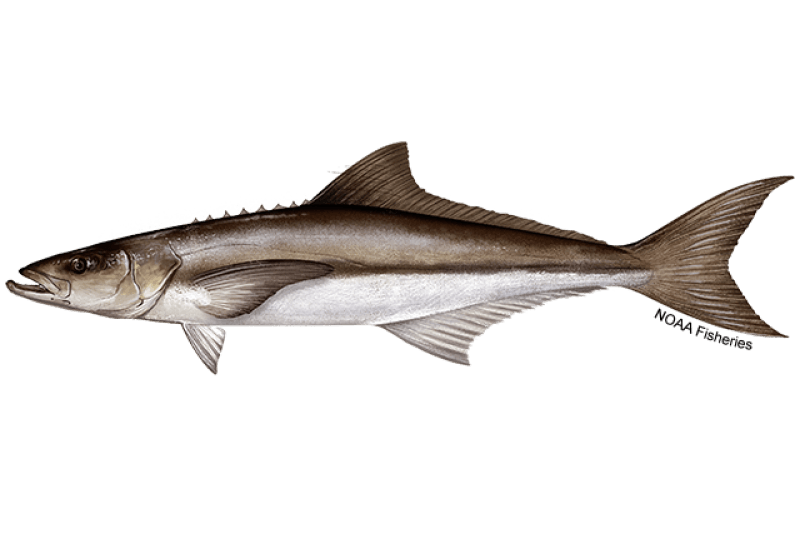
- Cobia are dark brown with a single dorsal fin.
- Young cobia have distinct coloring, with alternating black and white horizontal stripes and splotches of bronze, orange, and green.
- Cobia are often mistaken for sharks or remoras.
- In fact, their closest living relative is the remora (shark sucker).
- Biology Cobia are the only member of the family Rachycentridae in North America.
- They grow up to 6 feet and 100 pounds and live up to 12 years.
Where to see them around Ocean City
- Nearshore days: Inlet, guarded beaches, and bay overlooks. Farther days: watch for the same species from charter rails when water clarity and bait line up.
- Dawn and dusk often show more surface activity; midday heat can push fish deeper even when they are still in the area.
- Pair a beach walk with a short Inlet stop—two vantage points beat one crowded pier rail.
When to look
- Expect the richest shore viewing in summer; spring and fall migrations can still light up the Inlet and beaches.
- After storms, wait for water to clear—murky days hide even common species from the beach.
- Likelihood stars on this page reflect how often Maryland visitors can reasonably hope to encounter the species nearby—not fishing success rates.
Viewing tips & etiquette
- Use binoculars or a long lens; do not enter the water to corner fish, rays, or sharks for photos.
- Respect beach nesting closures, stay off dunes, and keep dogs leashed where required.
- If you find a stranded or injured animal, contact official wildlife responders—do not attempt rescue yourself.
- For harvest rules, size limits, or charter planning, use the Fishing profile for Cobia —not this Nature Guide page.
Sources
- NOAA Fisheries species profile (biology reference; angling product stays on our Fishing hub)
- OCEANCITY.MD Fishing species profile