Summer flounder (fluke) in Ocean City, Maryland
Flounder is a top inshore target around Ocean City. This guide covers bite timing, tides, structure, rigs, and gear, with local tips from Captain Tony Battista (U.S. Coast Guard licensed, guiding since 2007, 2,800+ days on the water) for OCEANCITY.MD readers.
Not in our directory yet? Browse the committed Charter Boat Directory listings grid (marketplace crosswalk).
Source & permission: Primary instructional content and photography come from Captain Tony’s guide on Saltwater Adventures (OC Saltwater), reproduced and expanded here with permission. Always confirm seasons, sizes, and bag limits on Maryland fishing regulations before you fish—rules change.
ID side trips on the same drifts: If the flatfish is not reading like fluke, check fourspot flounder, windowpane, Gulf flounder, witch flounder (grey sole), and winter flounder (blackback) in cool inshore windows, plus DNR ID sheets before you measure the wrong story.
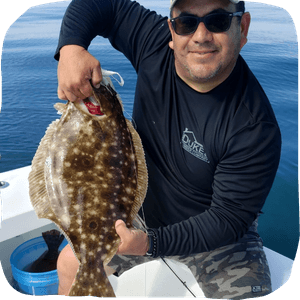
Fish with the author (optional)
If you want these techniques demonstrated on the water, Captain Tony runs Saltwater Adventures out of Bahia Marina (2107 Herring Way, Slip 5, Ocean City, MD 21842—near Fish Tales). Inshore and bay trips and nearshore wreck days are the natural fits for flounder. Call 443-235-9696 or use the charter pages on ocsaltwater.com to check availability.
Quick start: what to know before you fish
- Water temperature: Active from about 50°F; prime feeding often clusters near 62–66°F.
- Best tides: Roughly two hours before and after high tide, plus the last two hours of a falling tide—moving water stacks bait and turns flounder on.
- Top baits: Live peanut bunker, Norfolk spot, finger mullet; Berkley Gulp 4″ swimming mullet in the bay or 6″ grub offshore on structure.
- The bite: Often a distinct thud—pause 3–5 seconds before you engage and lift into the fish.
- Depth by season: Spring = shallow (under 4′); summer = follow the bait (sometimes knee-deep); fall = nearshore wrecks and structure, often 75–100′ when jigging late-season fish.
- Clarity: Flounder are visual ambushers—the cleanest water you can find usually wins.
About summer flounder (fluke)
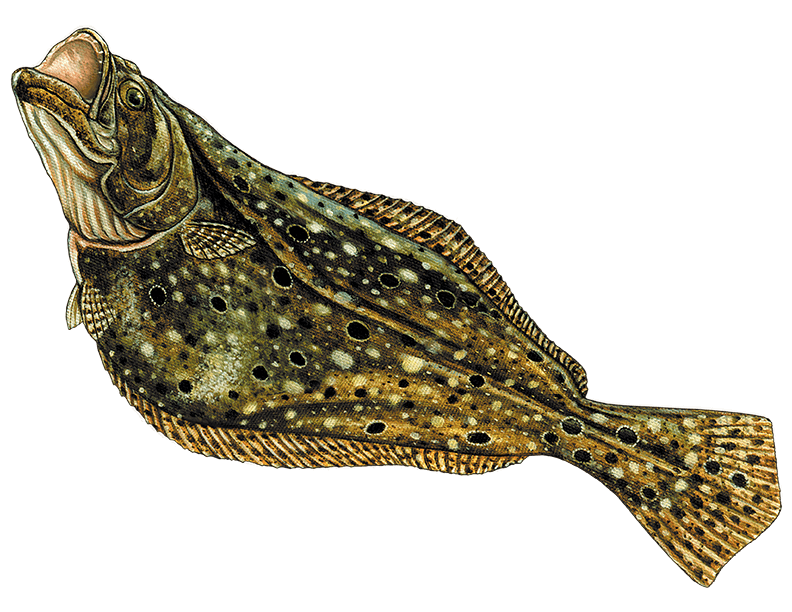
Globally there are hundreds of flatfish species; in the mid-Atlantic, “flounder” in the bay and nearshore conversation usually means summer flounder (Paralichthys dentatus)—called fluke from New Jersey north. They hatch with an eye on each side, then metamorphose: one eye migrates, the fish tips onto its side, and it becomes a bottom-hugging predator that matches bottom texture using chromatophores. Your offering has to be on or within inches of the bottom—that is non-negotiable.
Understanding the flounder bite
Captain Tony’s priority order starts here: detecting the bite matters more than expensive gear. The strike is often a very distinct thud. Once you learn that feel—and tell it apart from your sinker ticking shell, rock, or wreck—you are most of the way to consistent success.
What it feels like on the boat
For beginners he often rigs a chicken rig (high/low): in the back bay, tandem jig heads with a 4″ Gulp swimming mullet and a live minnow on each hook (flounder belly or squid can substitute). In deeper ocean drifts (about 35–100 feet), a chicken rig with a 3–4 oz sinker on the bottom; he builds his own rigs and also uses pre-tied Rig Mate dropper loops to save time.
Teaching beginners in a short charter window
Unlike sea bass or scup where “feel something, set the hook” works, flounder need a beat of time to fully eat— especially on larger baits. Tony starts many guests in rod holders for the first drifts so they can watch the tip chatter over rough bottom, then compares that to a real bite. Next they hold the rod to feel bumps vs. fish. Then he adds a subtle jigging motion—rod tip down for constant contact is his preference; others fish tip-up at 45° with small lifts. Either way, keep the bait roughly 6–12 inches off the bottom without uncontrolled slack.
After the thud: hook-set sequence
Whether you drift the bay or the ocean, boat speed sets bait speed. The flounder lays in ambush, then launches. When you feel the thud, stop the bait’s forward travel for 3–5 seconds (like letting line slip without dragging the fish forward). Then engage the reel, lift gently to feel weight, and sweep steadily—not a panicked trout strike. He often fishes with the bail open and a finger on the line above the reel for bite detection, especially on spinning tackle in deeper water.
When you miss: second chances
If you come tight and the fish falls off, get back to the bottom immediately; the same fish often grabs again if you free-spool down and jig a little harder like wounded prey. With live bait, you usually must reel in and re-bait. On big live baits he allows a touch more time before the hook set—think of how a bird turns a fish head-first; whether or not that old tale is literal, patience helps.
Water temperature and migration
In spring, warming water pulls flounder in from offshore wintering areas into bays and estuaries. Shallow mudflats and creek edges warm first—Tony looks for roughly four feet or less in late March into April when temperatures edge into the low 50s°F. As mid-60s arrive, fish spread and feed more predictably; science suggests peak feeding near 62–66°F, but bait location can override textbook depth—especially in August when peanut bunker flood the shallows even when the thermometer reads upper 70s. A cast net is a serious advantage then.
In fall, flounder stage toward spawning migration—by mid-October the nearshore wreck and reef bite can be excellent; Tony prefers many wrecks in 75–100 feet and jigs until roughly mid-December or later depending on temperature. January flounder on nearshore structure is unusual but not unheard-of when mild years hold fish inside 20 miles.
When to fish for flounder near Ocean City
| Time period | Where to target |
|---|---|
| Late March – early April | Shallows under ~4′ as water reaches low 50s°F |
| May – June | Prime window; 62–66°F feeding band; fish spread through the bay |
| July – August | Follow peanut bunker into very skinny water; cast net for live bait |
| September – October | Fall movement; more fish on nearshore structure a few miles out |
| November – December | Deep jigging on wrecks 75–100′; possible stragglers into January |

Tides and current
Flounder use moving water to feed efficiently. Ocean City sees two highs and two lows daily—think of four potential “feeding periods.” Common wisdom: the two hours bracketing high tide and the last two hours of falling tide produce strong bites. Remember current (horizontal flow) often matters more than the number printed for tide height; moon phase and basin geography change how each tide “feels.”
Free references: US Harbors local tide charts and NOAA’s tides tutorial kit. Tony also uses membership fishing apps for forecasts and spot planning when he is not on his own local pattern memory.
Water clarity
Clean water helps flounder see prey. After prolonged southwest wind, eelgrass and debris can stain the bay; heavy rain washes sediment. The ocean tide often gradually clears the system, sometimes over several days. In late summer, new flood tides can import cooler, clearer ocean water near the inlet, Route 50 bridge, and behind the north end of Assateague—worth a move when interior bays turn warm and dingy.
Depth strategy
Cold water = shallower first; warm stable periods = follow bait into mid-depths; late summer heat = don’t ignore ultra-shallow if bunker are there. Fall = wrecks and reef edges from a few miles out to twenty or more. Support local reef-building through the Ocean City Reef Foundation— structure plus current equals flounder real estate.
Structure
Bridge and dock pilings, bulkheads, jetties, oyster shell, natural hard bottom, shipwrecks, and artificial reef modules all hold fish when current sweeps bait past. If you are not occasionally snagging, you may not be fishing flounder structure aggressively enough—within reason and regulations.
Techniques that work
- Drifting: Most popular; ideal drift about 0.8–1.2 knots in bay or ocean. Covers ground and keeps baits swimming naturally.
- Trolling: Lets you control speed and line angle on windy days when wind opposes tide. Good for working short “sweet spots” instead of finishing a 200-yard drift away from fish.
- Spot-lock / anchoring: Bridge pilings (Route 50 and Route 90 are classic Mid-Atlantic examples) concentrate bait; a trolling motor with GPS anchor replaces awkward rope resets when you must stay on a piling line or wreck edge.
- Jigging: Speed jigging and slow-pitch styles both take flounder; Tony’s personal-best fluke (~27.75″, just under 8 lb) ate a small 80 g slow-pitch jig intended for sea bass—proof that mixed-target jig days are common off Maryland.
- Surf and pier: Land-based anglers use floats to drift baits along current seams; skill crosses over to boat presentations.
Best bait
Live bait is hard to beat when it matches the hatch: mud minnows, silversides, killifish, mummichogs, menhaden, mullet, and spot all have windows. Tackle shops often sell spot; mullet may require cast-net practice around sandbars, marsh drains, and shore breaks.
Gulp and strips: Scented Gulp (4″ swimming mullet bay / 6″ grub ocean) pairs well with a thin strip of flounder belly, spot, bluefish, sea robin, or tuna belly ½″ wide by 6–9″ long for scent and silhouette.
Frozen: Squid, shiners, or spearing keep trips alive when live bait is scarce.
Rigs
Chicken rig (high/low)
Two hooks above a sinker—or a bucktail substituting for the bottom weight for experienced anglers (bucktail + stinger). In the bay: tandem jigs with Gulp and minnows; offshore structure: heavier sinkers, OX-style flipping hooks (4/0–5/0), optional glow skirts (for example CJ Teasers-style), and 6″ Gulp grub plus strip bait.
Float rigs (bridge)
Anglers on the Ocean City Route 50 span sometimes fish floats to drift baits down-current from pilings—same “cover water” logic as boat drifts, different platform. Pair with our Route 50 bridge fishing notes for courtesy and safety.
Electronics
High-resolution relief shading on modern chartplotters (for example CMOR-style mapping paired with Simrad or other MFDs) reveals small ledges and wreck spines you would miss on flat contour lines. Combined with spot-lock, you can walk a jig down a wreck edge methodically instead of guessing.
Trolling motors
On charter boats, bow-mount electrics see heavy daily use. Features like anchor mode and 5-foot “jog” nudges matter when you are inching along structure. Tony runs Minn Kota Riptide-class hardware; whatever brand you choose, maintain it—salt eats contacts and bushings.
Equipment mindset
Gear is listed last on purpose: technique beats catalogs. That said, durable bay and nearshore kits help. Tony runs spinning reels such as Shimano Stradic FM 3000 and low-profile casters like Daiwa Lexa 300/400; rods from St. Croix, Bull’s Bay, Florida Fishing Products, and John Skinner’s Dark Matter series; braid in the 15–30 lb class for inshore work with 3–4′ fluorocarbon leaders (heavier braid for deep tilefish/sea bass days is a different conversation). Relationships with a local tackle shop beat saving a few dollars online when you need a rumor verified before tomorrow’s tide.
Five mistakes to avoid
- Setting too soon—count off the thud before you engage.
- Quitting after a miss—free-spool to the bottom and invite a second bite.
- Ignoring clarity—find cleaner water after blowouts or heavy rain.
- Depth superstition in summer—follow peanut bunker even into skinny warm water.
- Skipping precision boat control—spot-lock + good charts upgrade wreck and bridge consistency.
Final thoughts
Luck still plays a role, but skill and observation move the odds. The anglers who read water, tide, and clarity instead of only scrolling reports tend to be the names you see week after week in local catch chatter. Keep experimenting—small presentation tweaks compound over seasons.