Atlantic Shortfin Mako Shark
Isurus oxyrinchus · Also known as: Mako shark, Blue pointer, Bonito shark, Atlantic mako shark
U.S. fishermen may not land or retain Atlantic shortfin mako sharks.
This is a Nature Guide page (viewing and ID). Shark fishing seasons, tackle, and regs live on the separate Fishing species profile and shark fishing guide.
Quick facts
| Group | Shark / ray · Mid-Atlantic |
|---|---|
| Viewing lane | Offshore / bluewater |
| Likelihood nearby | ★★★★★ |
| Length | Up to 13 feet |
| Lifespan | Can live to over 30 years |
| Region | New England/Mid-Atlantic, Southeast |
How to recognize them
- Shortfin mako sharks grow slowly, reach up to 13 feet long, and can live to be over 30 years old.
- They are not able to reproduce until about 8 years old (~6 feet) for males and 19 years old (~9 feet) for females.
- They have a 3-year reproductive cycle and a gestation period of approximately 18 months.
- Mating occurs from summer to fall.
- Eggs are fertilized internally and develop inside the mother.
- Females bear live pups, which are approximately 2 feet long when born.
- This large size at birth helps reduce the number of potential predators and enhances the pups’ chance of survival.
- Mean litter size is 12, and up to 30 pups have been reported, though scientists have only examined a handful of litters.
- Shortfin mako sharks are aggressive predators that feed near the top of the food web on marine fishes such as bluefish, swordfish, tuna, marine mammals, and other sharks.
- They have few predators, mainly larger sharks that may prey on smaller shortfin mako sharks.
- Where They Live Range Off the East Coast, Atlantic shortfin mako sharks are found from New England to Florida, in the Gulf of America (formerly Gulf of Mexico) from Florida to Texas, and in the Caribbean Sea.
- They are highly migratory and can travel across entire oceans.
- Habitat Shortfin mako sharks are a pelagic species.
- Their habitat ranges widely in the upper zones of the oceans.
- Juveniles are common in coastal waters, from the low-tide line to the edge of the continental shelf.
- Adults are primarily found offshore.
- Fishery Management NOAA Fisheries , through the Atlantic Highly Migratory Species Division , manage the Atlantic shortfin mako shark fishery in the United States.
- NOAA Fisheries implemented regulations consistent with new ICCAT requirements adopted in 2021, based on the 2017 stock assessment.
- U.S. fishermen may not land or retain Atlantic shortfin mako sharks.
- If retention is allowed by ICCAT in the future, NOAA Fisheries could increase the shortfin mako shark retention limit, based on regulatory criteria and the amount of retention allowed by ICCAT.
- Until that happens, the retention limit will remain at zero.
- Atlantic sharks are managed under the Consolidated Atlantic Highly Migratory Species Fishery Management Plan : Permits are required, and only a limited number of permits are available.
- Commercial quotas and limits on how many sharks can be landed per fishing trip.
- Gear restrictions and requirements.
- Fishing season is generally year-round, but individual commercial shark fisheries close when the quota is reached.
- Shark dealers are required to attend Atlantic shark identification workshops to help them better identify shark species.
- Prohibited species—there are more than 20 species of sharks that cannot be landed (e.g., white, dusky, basking, longfin mako, night).
- Some of these species look similar to the species that can be landed.
- The recreational shark identification can help with identification.
- The Shark Conservation Act requires that all sharks, with one exception, be brought to shore with their fins naturally attached.
- Compliance guides are available for all commercial and recreational regulations across Atlantic highly migratory species fisheries.
- Management of highly migratory species, such as mako sharks, is complicated and requires international cooperation.
- A shark that is off the coast of Florida one week could be caught off the coast of Mexico the next.
- These resources must be managed both in the United States and at the international level.
- The United States negotiates with Regional Fisheries Management Organizations—including the International Commission for the Conservation of Atlantic Tunas , the Food and Agriculture Organization of the United Nations , and the Convention on International Trade in Endangered Species of Wild Fauna and Flora —to enhance shark management worldwide.
- While U.S. fishermen caught approximately 3 percent of the overall harvest of shortfin mako shark in the North Atlantic in 2020, NOAA Fisheries continues to take action at the international level to end overfishing of this species.
- A domestic rebuilding plan is in place for this stock.
- Harvest As of July 5, 2022, U.S. fishermen may not land or retain Atlantic shortfin mako sharks, Scientific Classification Kingdom Animalia Phylum Chordata Class Chondrichthyes Order Lamniformes Family Lamnidae Genus Isurus Species oxyrinchus Last updated by NOAA Fisheries on 06/20/2025
Biology notes
- Off the East Coast, Atlantic shortfin mako sharks are found from New England to Florida, in the Gulf of America (formerly Gulf of Mexico) from Florida to Texas, and in the Caribbean Sea.
- They are highly migratory and can travel across entire oceans.
- Habitat Shortfin mako sharks are a pelagic species.
- Their habitat ranges widely in the upper zones of the oceans.
- Juveniles are common in coastal waters, from the low-tide line to the edge of the continental shelf.
- Adults are primarily found offshore.
- Fishery Management NOAA Fisheries , through the Atlantic Highly Migratory Species Division , manage the Atlantic shortfin mako shark fishery in the United States.
- NOAA Fisheries implemented regulations consistent with new ICCAT requirements adopted in 2021, based on the 2017 stock assessment.
- U.S. fishermen may not land or retain Atlantic shortfin mako sharks.
- If retention is allowed by ICCAT in the future, NOAA Fisheries could increase the shortfin mako shark retention limit, based on regulatory criteria and the amount of retention allowed by ICCAT.
- Until that happens, the retention limit will remain at zero.
- Atlantic sharks are managed under the Consolidated Atlantic Highly Migratory Species Fishery Management Plan : Permits are required, and only a limited number of permits are available.
- Commercial quotas and limits on how many sharks can be landed per fishing trip.
- Gear restrictions and requirements.
- Fishing season is generally year-round, but individual commercial shark fisheries close when the quota is reached.
- Shark dealers are required to attend Atlantic shark identification workshops to help them better identify shark species.
- Prohibited species—there are more than 20 species of sharks that cannot be landed (e.g., white, dusky, basking, longfin mako, night).
- Some of these species look similar to the species that can be landed.
- The recreational shark identification can help with identification.
- The Shark Conservation Act requires that all sharks, with one exception, be brought to shore with their fins naturally attached.
- Compliance guides are available for all commercial and recreational regulations across Atlantic highly migratory species fisheries.
- Management of highly migratory species, such as mako sharks, is complicated and requires international cooperation.
- A shark that is off the coast of Florida one week could be caught off the coast of Mexico the next.
- These resources must be managed both in the United States and at the international level.
- The United States negotiates with Regional Fisheries Management Organizations—including the International Commission for the Conservation of Atlantic Tunas , the Food and Agriculture Organization of the United Nations , and the Convention on International Trade in Endangered Species of Wild Fauna and Flora —to enhance shark management worldwide.
- While U.S. fishermen caught approximately 3 percent of the overall harvest of shortfin mako shark in the North Atlantic in 2020, NOAA Fisheries continues to take action at the international level to end overfishing of this species.
- A domestic rebuilding plan is in place for this stock.
- Harvest As of July 5, 2022, U.S. fishermen may not land or retain Atlantic shortfin mako sharks, Scientific Classification Kingdom Animalia Phylum Chordata Class Chondrichthyes Order Lamniformes Family Lamnidae Genus Isurus Species oxyrinchus Last updated by NOAA Fisheries on 06/20/2025
Habitat & range
- NOAA Fisheries , through the Atlantic Highly Migratory Species Division , manage the Atlantic shortfin mako shark fishery in the United States.
- NOAA Fisheries implemented regulations consistent with new ICCAT requirements adopted in 2021, based on the 2017 stock assessment.
- U.S. fishermen may not land or retain Atlantic shortfin mako sharks.
- If retention is allowed by ICCAT in the future, NOAA Fisheries could increase the shortfin mako shark retention limit, based on regulatory criteria and the amount of retention allowed by ICCAT.
- Until that happens, the retention limit will remain at zero.
- Atlantic sharks are managed under the Consolidated Atlantic Highly Migratory Species Fishery Management Plan : Permits are required, and only a limited number of permits are available.
Population status
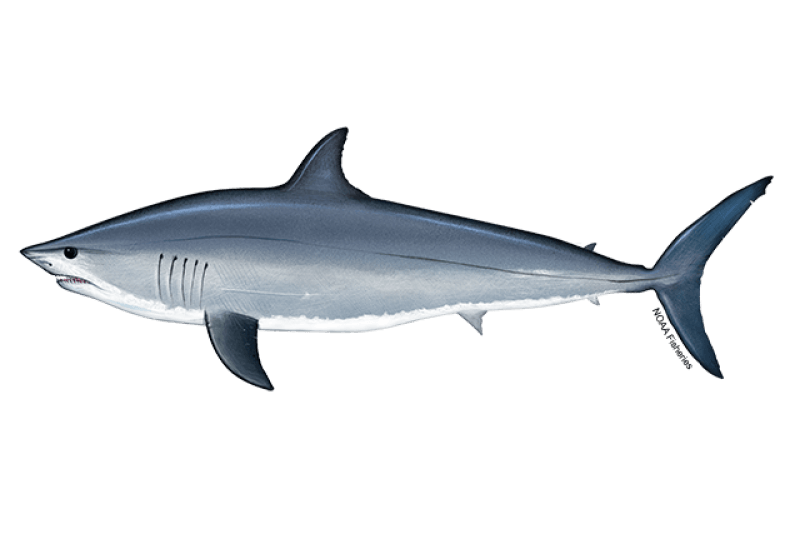
- Shortfin mako sharks have very pointed snouts and long gill slits.
- They have dark blue/gray backs, light metallic blue sides, and white undersides.
- Shortfin mako sharks can be differentiated from longfin mako sharks.
- Compared to shortfin mako sharks, longfin mako sharks have much longer pectoral fins and larger eyes, a different body shape, and the underside of their snout is darker.
- Biology Shortfin mako sharks grow slowly, reach up to 13 feet long, and can live to be over 30 years old.
- They are not able to reproduce until about 8 years old (~6 feet) for males and 19 years old (~9 feet) for females.
Where to see them around Ocean City
- Most reliable views are from head boats and private sportfish day trips when bluewater is close—watch for birds, bait, and surface activity from the rail.
- Shore viewers rarely see canyon pelagics; use the Inlet and Assateague for coastal species instead, then treat offshore sightings as trip bonuses.
- Keep a respectful distance if a vessel approaches whales, sharks, or rays—follow NOAA approach guidelines and captain instructions.
- Atlantic Shortfin Mako Shark sightings are usually brief—watch for a fin, wing, or dark shape rather than lingering surface shows.
When to look
- Peak bluewater viewing usually tracks summer and early fall when warm water and bait move onto the shelf.
- Weather windows matter more than calendar weeks—canceled canyon days mean fewer offshore sightings for visitors.
- Winter and early spring sightings are possible but less predictable from a typical vacation schedule.
Viewing tips & etiquette
- Use binoculars or a long lens; do not enter the water to corner fish, rays, or sharks for photos.
- Respect beach nesting closures, stay off dunes, and keep dogs leashed where required.
- If you find a stranded or injured animal, contact official wildlife responders—do not attempt rescue yourself.
- For harvest rules or shark fishing trips, use the Fishing profile for Atlantic Shortfin Mako Shark or the shark fishing guide.
Sources
- NOAA Fisheries species profile (biology reference)
- OCEANCITY.MD Fishing species profile